
Share how you use frozen food
Tell us how often you buy frozen food, what you buy and how you rate it against fresh. Your answers are combined with other people's and reported only as totals.
Start the frozen foods surveyAbout 5 minutes. No account needed. You can stop at any time.
What frozen foods include
Frozen food is food that has been frozen to preserve it and is kept frozen until it is used. Common types include:
- frozen vegetables and fruit, such as peas, spinach, mixed vegetables and berries;
- frozen meat, poultry and fish, including fillets, prawns and burgers;
- ready meals that only need heating;
- pizzas, pies and snacks;
- bread, pastries and doughs;
- chips, potato products and other sides;
- ice cream and frozen desserts;
- frozen dumplings, flatbreads and international foods.
Households also freeze their own food: leftovers, batch-cooked meals, bread, meat bought on offer, and garden produce.
Access to frozen food depends on having a freezer at home and on reliable electricity. In homes and places without these, frozen food plays a much smaller part.
Why people buy frozen food
Shoppers give several reasons:
- Convenience: food is ready to cook with little preparation.
- Less waste: people can use only what they need and keep the rest.
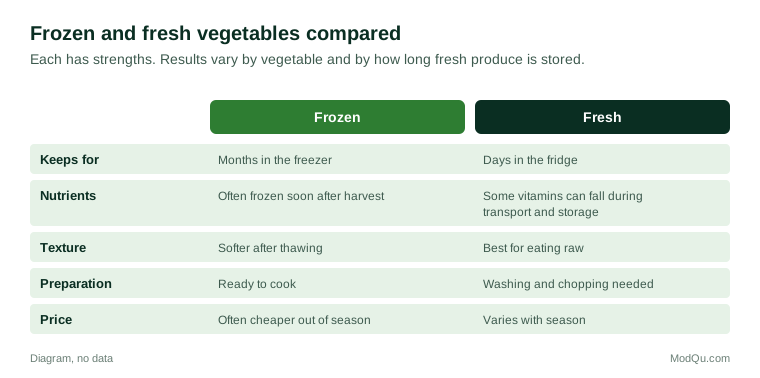
- Price: frozen vegetables, fruit and fish can be cheaper than fresh, especially out of season.
- Availability: fruit and vegetables out of season, and fish in areas far from the sea.
- Storage: fewer shopping trips are needed.
- Emergencies: a stock of food for busy days or when unwell.
Example
A parent of two young children keeps frozen peas, sweetcorn, fish fillets and a bag of mixed berries in the freezer at all times. On days when they have not had time to shop, they can still make a meal in 20 minutes. They buy fresh fruit and vegetables twice a week but say the freezer stops them ordering takeaway.
How freezing affects quality and nutrition
Freezing slows the growth of bacteria and the chemical changes that make food spoil. It does not kill most bacteria; they become active again when food thaws.
For many fruits and vegetables, freezing happens soon after harvest, often after brief blanching in hot water. Because fresh produce can lose some vitamins during transport and storage, frozen vegetables can be similar in nutrients to fresh ones bought from a shop, and sometimes higher. Results vary by food and by vitamin.
Freezing does change texture in some foods. Water in food forms ice crystals that can break cell walls, so some foods become softer after thawing. That is why frozen strawberries are softer than fresh ones and why lettuce does not freeze well. Fast freezing forms smaller crystals and causes less damage.
Ready meals and processed frozen foods vary widely. Some are similar to home-cooked food; others are high in salt, fat or sugar. Shoppers who are concerned check the nutrition label, as they would for any processed food.
Storing frozen food safely
Food safety agencies in many countries give similar advice:
- keep the freezer at about -18°C (0°F) or colder;
- do not refreeze raw food that has fully thawed, unless it has been cooked first;
- thaw food in the fridge, in cold water or in a microwave, rather than on the counter for long periods;
- wrap food well to prevent freezer burn;
- label home-frozen food with the date.
Food kept frozen at -18°C stays safe, but quality slowly drops over time. "Best before" dates on frozen food mostly relate to quality rather than safety.
Example
During a two-day power cut, a family's freezer slowly warms. When power returns, they check the food. Items that still have ice crystals are refrozen. Meat that has fully thawed is cooked that day and the cooked dishes are frozen again. They throw away ice cream that has melted and refrozen.
Cost and value
Example (hypothetical figures)
A shopper compares green beans. Fresh beans cost 4 for 500 grams, in local currency, but about a fifth is usually thrown away because they go soft before use. Frozen beans cost 3 for 750 grams and none is wasted. The fresh beans cost about 10 per kilogram actually eaten (4 divided by 0.4 kilograms), while the frozen beans cost 4 per kilogram.
Value comparisons depend on how much fresh food is wasted, the season, and whether the frozen product is plain or processed. Plain frozen vegetables, fruit and fish often give good value; ready meals and branded snacks usually cost more per portion than cooking from basic ingredients.
Views on frozen versus fresh
Many shoppers believe fresh food is always better. Others see frozen food as practical and nutritious. Views differ by product: people may be happy with frozen peas but not frozen fish, or the opposite. They also differ between countries and generations. In some places, frozen food is seen as a modern convenience; in others, as lower in quality than food bought fresh at a market.
Freezers themselves vary in size, from a small compartment above the fridge to a large chest freezer, which shapes how much frozen food a household can keep.
What people disagree about
People disagree about whether frozen food is as healthy as fresh, whether ready meals have a place in a balanced diet, and whether frozen food reduces or adds to environmental costs, since freezing reduces waste but needs energy along the supply chain and at home. Opinions also differ on how long it is acceptable to keep food frozen.
Questions that food brands, grocers and appliance makers want answered include how often people buy frozen food, which products they buy most, whether they see frozen food as as good as fresh, and how much freezer space they have.
Key terms
- Frozen foodFood preserved by freezing and kept frozen until use.
- BlanchingBriefly heating vegetables in hot water or steam before freezing.
- Freezer burnDry, discoloured patches caused by air reaching frozen food.
- Flash freezingFreezing food very quickly to form small ice crystals.
- ThawingLetting frozen food return to an unfrozen state.
- Ready mealA pre-cooked meal that only needs heating.
- Best before dateA date that shows when food is at its best quality.
- Cold chainKeeping food at the right low temperature from production to sale.
Full glossary: food processing terms on EditingTests.com.
Frozen foods vocabulary test
How well do you know the language of this topic? Try 8 quick questions. Your score is shown straight away and is not saved.
What the frozen foods survey asks
This survey is part of ModQu's Food and Drink survey. The frozen foods part takes about five minutes and covers:
- How often you buy frozen food.
- Which frozen foods you buy most.
- Why you choose frozen over fresh, or the reverse.
- Whether you think frozen food is as good as fresh, and for which foods.
- How much freezer space you have, and what you freeze yourself.
- How price and offers affect what frozen food you buy.
After that you can choose to continue with other short parts of the Food and Drink survey, such as eating habits or coffee, tea and beverages, or stop.
Ready to take part?
Your answers help show what people really think and do. Results are only ever reported as totals; no one can see your individual answers.
Start the surveyQuestions about this survey
Who can take part?
Adults who buy groceries.
Do I have to give my name?
No. You may be asked for your age group, region and similar details so results can be broken down, but not your name. ModQu never asks for passwords, card numbers or account numbers.
How are the results used?
Answers are combined into totals and percentages and published in ModQu reports. Individual answers are never shown.
Is the vocabulary test part of the survey?
No. It is optional and separate, and your score is not stored.
Is it safe to cook food from frozen?
Many products are designed to be cooked from frozen, and packs give instructions. Some foods, such as large pieces of meat, are usually thawed first so they cook evenly.
Does the survey ask about freezer size?
Yes. Freezer space affects how much people can buy in bulk or cook ahead, so it helps explain shopping habits.
Does food I freeze myself count?
Yes. The survey asks about both shop-bought frozen food and food you freeze at home.
Is ice cream included?
Yes. Frozen desserts are one of the categories in the survey.
Can I take part if I do not have a freezer?
Yes. Your answers help show how access to a freezer affects what people buy.