
Share your drinking habits
Tell us how much coffee you drink, how often you buy it out and which other drinks you are drinking more of. Your answers are combined with other people's and reported only as totals.
Start the coffee, tea and beverages surveyAbout 5 minutes. No account needed. You can stop at any time.
What this topic covers
This topic is about non-alcoholic drinks that people choose every day:
- Coffee, brewed at home, at work or bought at cafés, drive-throughs and convenience stores.
- Tea, including black, green, herbal, chai and bubble tea.
- Soft drinks and sparkling drinks.
- Water, from the tap, filtered or bottled, still or sparkling, plain or flavoured.
- Juices and smoothies.
- Energy drinks and sports drinks.
- Milk and plant-based drinks, which are also covered in the topic on dairy and dairy alternatives.
- Functional drinks, such as drinks with added protein, vitamins, fibre or probiotics, and kombucha.
Alcoholic drinks are covered in the separate topic on beer, wine and spirits.
Coffee
Coffee is one of the most popular drinks in Canada. People drink it for taste, routine, alertness and social reasons, such as meeting a friend or taking a break at work.
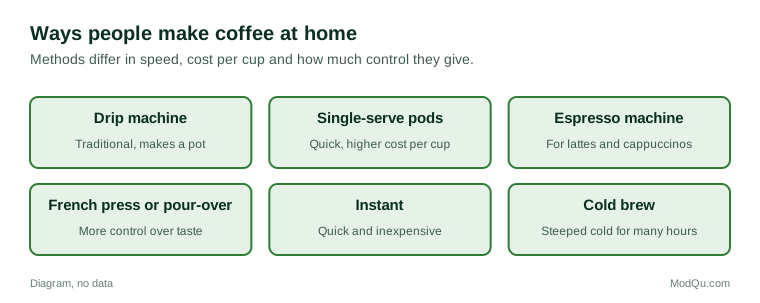
Ways people make coffee at home include:
- drip coffee makers, the most traditional home method;
- single-serve pod machines, quick and convenient;
- espresso machines, from simple to high-end;
- French press and pour-over, favoured by people who want more control;
- instant coffee, quick and inexpensive;
- cold brew, steeped in cold water for many hours.
Coffee drinks range from plain black coffee to milk-based espresso drinks such as lattes and cappuccinos, flavoured and sweetened drinks, and iced coffee, which has grown in popularity.
Example
An office worker makes a pot of drip coffee at home every morning and drinks two cups before leaving. On office days they buy one more coffee at a drive-through on the way in, and on Fridays they meet a colleague at a café for a latte. On home days they drink only the coffee they make themselves.
Tea
Tea is drunk in many forms. Black tea, often with milk, has long been popular in Canada. Green tea, herbal teas, which are made from plants other than the tea plant, and spiced chai are also common. Bubble tea, a tea-based drink with tapioca pearls that started in Taiwan, has become popular with younger people in many Canadian cities.
People choose tea for taste, for less caffeine than coffee, for herbal blends with no caffeine, for cultural traditions, and for routine. Tea is mostly made at home and at work, though cafés and specialty tea shops sell it too.
Brewing at home versus buying out
One of the main decisions people make is whether to make their coffee or tea at home or buy it out. Buying out offers convenience, variety and a social break; making it at home is cheaper and fits into routines.
Example (hypothetical figures)
A person buys a medium latte for $5.25 five days a week for 48 weeks a year. That comes to $1,260 a year. Making a similar drink at home costs them about $1.10 a cup in coffee and milk, or $264 a year for the same number of cups, plus a $300 espresso machine in the first year. In the first year they save $696; in later years, about $996.
Where people buy coffee out includes:
- national and international café and doughnut chains;
- independent cafés;
- drive-throughs, very common in Canada;
- convenience stores and gas stations;
- workplace cafeterias and vending machines;
- grocery store cafés.
Price, speed, location, taste, loyalty apps and rewards, and habit all influence which one people choose. Questions that businesses want answered here include how often people buy coffee out, how much they spend, and how rising prices have changed their habits.
Caffeine
Caffeine is a stimulant found naturally in coffee, tea and cocoa, and added to colas and energy drinks. Many people use it to feel more alert.
Health Canada publishes guidance on caffeine intake, with suggested maximum daily amounts for healthy adults and lower amounts for women who are pregnant or breastfeeding, children and teenagers. The amount of caffeine in a drink varies widely with the type, size and preparation. Energy drinks sold in Canada must carry labels stating caffeine content and cautions, and have limits on the amount of caffeine per container.
This page describes caffeine in general terms; people with health questions about caffeine can speak to a health professional or pharmacist.
People cut down on caffeine for reasons such as sleep, anxiety, pregnancy or medical advice, often switching to decaffeinated coffee, half-caf, or herbal tea.
Other non-alcoholic drinks
Beyond coffee and tea, people's drink choices have been shifting:
- Sparkling water, flavoured or plain, has grown as a lower-sugar alternative to soft drinks. Some households use home carbonation machines.
- Regular soft drinks compete with diet and zero-sugar versions.
- Energy drinks are popular with some younger adults, shift workers and gamers.
- Functional drinks promise benefits such as protein, electrolytes, fibre or probiotics, and include kombucha.
- Juices and smoothies, some sold as healthy, though many contain a lot of sugar.
- Non-alcoholic versions of alcoholic drinks, such as alcohol-free beer, wine and cocktails, covered in the beer, wine and spirits topic.
- Water remains the most basic choice; many people carry a reusable bottle, and bottled water use is debated for its cost and environmental impact.
Example
A teenager drinks two cans of cola a day. After a sports coach talks about sugar, they switch to sparkling water flavoured with fruit on weekdays and keep cola for weekends. Their parent notices the household now buys more sparkling water and fewer soft drinks.
Packaging, waste and price
Drink choices create a lot of packaging: disposable cups, pods, cans, bottles and cartons. Many cities have deposit-return systems for some drink containers. Some cafés offer a discount for bringing a reusable cup, and some areas have rules on single-use items. Coffee pods raise questions about recycling.
Prices for coffee and some other drinks have risen in recent years because of costs for ingredients, labour and shipping, as well as weather affecting crops. Some people have responded by buying out less often, switching to cheaper options, or making more drinks at home.
Trends and what people disagree about
Trends in this area include iced and cold coffee, plant-based milks in coffee, specialty and single-origin coffee, low-sugar and sugar-free drinks, functional drinks and more non-alcoholic options at social events.
There are debates about drinks too. How much sugar is in drinks, and should governments tax sugary drinks, as some countries and cities do? Are energy drinks a concern for teenagers? Is bottled water necessary where tap water is safe? And how much are people willing to pay for ethically sourced coffee and tea, such as fair trade certified products?
Key terms
- EspressoA strong coffee made by forcing hot water through finely ground coffee.
- LatteEspresso with steamed milk.
- Cold brewCoffee steeped in cold water for many hours.
- Single-serve podA pre-filled capsule used in a coffee or tea machine.
- Herbal teaA drink made from plants other than the tea plant.
- CaffeineA natural stimulant found in coffee, tea and cocoa.
- Functional drinkA drink with added ingredients such as protein, vitamins or probiotics.
- Fair tradeA certification for products traded under set standards meant to support producers.
Full glossary: beverage production terms on EditingTests.com.
Coffee, tea and beverages vocabulary test
How well do you know the language of this topic? Try 8 quick questions. Your score is shown straight away and is not saved.
What the coffee, tea and beverages survey asks
This survey is part of ModQu's Food and Drink survey. The coffee, tea and beverages part takes about five minutes and covers:
- How many cups of coffee and tea you drink on a typical day.
- How you make coffee or tea at home, if you do.
- How often you buy coffee or tea out, where, and what you spend.
- Which non-alcoholic drinks you are drinking more or less of.
- How you feel about caffeine and sugar in drinks.
- Whether rising prices have changed what you drink or where you buy it.
After that you can choose to continue with other short parts of the Food and Drink survey, such as eating habits or food safety and labels, or stop.
Ready to take part?
Your answers help show what people really think and do. Results are only ever reported as totals; no one can see your individual answers.
Start the surveyQuestions about this survey
Who can take part?
Adults.
Do I have to give my name?
No. You may be asked for your age group, region and similar details so results can be broken down, but not your name. ModQu never asks for passwords, card numbers or account numbers.
How are the results used?
Answers are combined into totals and percentages and published in ModQu reports. Individual answers are never shown.
Is the vocabulary test part of the survey?
No. It is optional and separate, and your score is not stored.
I do not drink coffee. Can I take part?
Yes. The survey covers tea, water, soft drinks and other non-alcoholic drinks as well.