
Share your views on plant-based foods
Tell us whether you have bought plant-based meat or milk, why or why not, and whether you would try cultivated meat. Your answers are combined with other people's and reported only as totals.
Start the plant-based and alternative proteins surveyAbout 5 minutes. No account needed. You can stop at any time.
What alternative proteins are
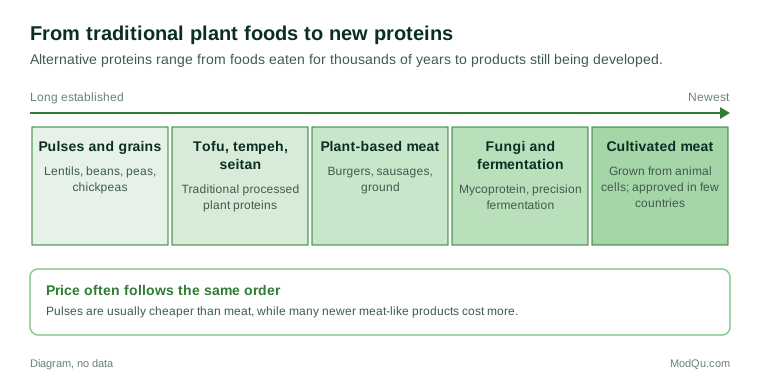
"Alternative proteins" is a broad term for protein foods that replace or reduce meat, poultry, fish, eggs and dairy from animals. They include:
- Traditional plant proteins: beans, lentils, chickpeas, peas, nuts, seeds and whole grains, eaten around the world for thousands of years. Canada is one of the world's largest growers and exporters of pulses, such as lentils, dry peas and chickpeas.
- Traditional processed plant proteins: tofu, tempeh, seitan and soy milk.
- Plant-based meat alternatives: burgers, sausages, nuggets and ground "meat" made from pea, soy, wheat or other proteins, designed to look, cook and taste like meat.
- Plant-based dairy alternatives: drinks, yogurts, cheeses and ice cream made from oats, soy, almonds, coconut and other plants (covered in more detail in the dairy topic).
- Plant-based eggs and seafood alternatives.
- Mycoprotein and other fungi-based foods.
- Cultivated meat, also called cell-cultured or lab-grown meat: animal cells grown in tanks without raising and slaughtering animals. It has been approved for sale in only a few countries, such as Singapore and the United States, and is not widely available.
- Precision fermentation: microbes engineered to make specific proteins, such as dairy proteins, without animals.
- Insect protein, such as cricket flour, sold in small amounts in Canada and more common elsewhere.
Who eats them
People who buy plant-based and alternative proteins include:
- vegetarians, who do not eat meat or fish;
- vegans, who avoid all animal products;
- pescatarians, who eat fish but not other meat;
- flexitarians, who eat mostly plant-based food but still eat some meat, and who make up a large share of buyers;
- people with allergies or intolerances, such as lactose intolerance;
- people trying new foods out of curiosity.
Many people who buy plant-based products are not vegetarian or vegan. They swap some meals or products, for example oat milk in coffee or a plant-based burger once a week.
Why people try them
When people are asked why they have tried plant-based alternatives, common reasons include:
- Health: wanting to eat less red or processed meat, or more fibre;
- Environment: concern about the climate and land and water use of livestock farming;
- Animal welfare;
- Curiosity and trying something new;
- Taste, for some products they genuinely prefer;
- Diet and allergies, including lactose intolerance;
- Cost, especially for beans, lentils and tofu, which are often cheaper than meat.
Example
A household of four decides to have two meat-free dinners a week. They start with plant-based burgers and sausages but find them expensive. Within a few months they switch mostly to lentil curries, bean chili and tofu stir-fries, which cost less, and keep plant-based burgers for barbecues.
Why many do not buy them again
Sales of plant-based meat alternatives grew quickly in the late 2010s, then slowed or fell in several markets, including Canada and the United States, while plant-based milks held up better. Reasons people give for not buying plant-based meat again include:
- Price, often higher than the meat they replace;
- Taste and texture that did not match expectations;
- Ingredients: concern about long ingredient lists and processing;
- Health doubts, as some products are high in sodium or saturated fat;
- Habit: returning to familiar foods;
- Family preferences, when others in the household do not like them.
Questions that businesses want answered here include how many people have tried plant-based products, how many buy them regularly, and what would bring lapsed buyers back.
Price and value
Price is one of the biggest factors in whether people keep buying alternative proteins.
Example (hypothetical figures)
A shopper compares protein for a family dinner. Lean ground beef costs $13.00 per kg. A plant-based ground alternative costs $11.00 for a 340 g package, about $32.35 per kg. Dry lentils cost $4.50 per kg and roughly double in weight when cooked, so about $2.25 per kg cooked. For a 500 g portion, beef costs $6.50, the plant-based ground about $16.18 and cooked lentils about $1.13.
Traditional plant proteins are usually much cheaper than meat, while many newer meat-like products cost more. That gap is one reason many flexitarians use beans and lentils more than branded alternatives.
Health and nutrition
Plant-based diets can be healthy, and Canada's Food Guide encourages people to choose protein foods that come from plants more often. But "plant-based" does not automatically mean healthy. Some products are highly processed, high in salt, or lower in some nutrients than the foods they replace. Plant-based milks vary widely in protein and in whether they are fortified with calcium and vitamins.
People who change their diet significantly, especially to a vegan diet, may need to think about nutrients such as vitamin B12, iron, calcium and omega-3 fats. This page describes general issues and does not give dietary advice; a dietitian or doctor can help.
Labels and what people disagree about
Plant-based foods raise several debates:
- Names: should plant-based products be allowed to use words such as "milk", "burger" or "sausage"? Dairy and meat groups in several countries have pushed for limits, and rules differ. In Canada, labels must not mislead, and simulated meat products have specific labelling requirements.
- Environment: many studies find plant proteins have a smaller environmental footprint than beef, but comparisons with other meats and between products vary.
- Processing: whether highly processed meat alternatives are better for health than meat, or should be compared with whole plant foods instead.
- Cultivated meat: whether it is safe, how it should be regulated and labelled, whether it can be made at a reasonable price, and whether people will want to eat it. Views range from enthusiasm to strong opposition.
- Farmers: how a shift in diets would affect livestock farmers, and the opportunity for crop farmers growing peas, lentils, canola and oats.
Example
Two friends are asked whether they would try cultivated meat. One says yes, if it were approved and tasted the same, because it would avoid raising animals. The other says no, because it sounds unnatural and they do not trust a new process, though they already eat plant-based burgers. Both say they would want clear labels.
Key terms
- Plant-basedMade from plants rather than animal products.
- FlexitarianSomeone who eats mostly plant-based food but still eats some meat.
- PulseThe dried seed of a legume, such as lentils, dry peas, chickpeas and beans.
- TofuA food made from pressed soy milk curds.
- Cultivated meatMeat grown from animal cells without raising and slaughtering animals.
- Precision fermentationUsing engineered microbes to make specific proteins.
- MycoproteinA protein food made from fungi.
- FortifiedHaving vitamins or minerals added.
Full glossary: cellular agriculture terms on EditingTests.com.
Plant-based and alternative proteins vocabulary test
How well do you know the language of this topic? Try 8 quick questions. Your score is shown straight away and is not saved.
What the plant-based and alternative proteins survey asks
This survey is part of ModQu's Food and Drink survey. The plant-based and alternative proteins part takes about five minutes and covers:
- Whether you have bought plant-based meat, milk or other alternatives.
- How often you buy them now, and which kinds.
- Why you started, and if you stopped, why.
- How price, taste and health affect your choices.
- Whether you would try cultivated meat or insect protein.
- How you feel about how these products are named and labelled.
After that you can choose to continue with other short parts of the Food and Drink survey, such as eating habits or coffee, tea and beverages, or stop.
Ready to take part?
Your answers help show what people really think and do. Results are only ever reported as totals; no one can see your individual answers.
Start the surveyQuestions about this survey
Who can take part?
Adults.
Do I have to give my name?
No. You may be asked for your age group, region and similar details so results can be broken down, but not your name. ModQu never asks for passwords, card numbers or account numbers.
How are the results used?
Answers are combined into totals and percentages and published in ModQu reports. Individual answers are never shown.
Is the vocabulary test part of the survey?
No. It is optional and separate, and your score is not stored.
I eat meat and have no plans to change. Can I take part?
Yes. The survey wants to hear from people who do not buy plant-based foods as well as those who do.