
Share your experience of street food
Tell us how often you buy street food, what you buy and how safe you feel eating it. Your answers are combined with other people's and reported only as totals.
Start the street food surveyAbout 5 minutes. No account needed. You can stop at any time.
What street food is
The Food and Agriculture Organization of the United Nations describes street foods as ready-to-eat foods and beverages prepared or sold by vendors, especially in streets and similar public places. That covers a wide range of sellers:
- mobile carts and bicycles selling snacks, fruit, drinks or ice cream;
- fixed stalls on pavements, in markets or at transport stations;
- food trucks and vans;
- hawker centres and night markets, where many stalls share an organized site;
- vendors who walk with food in baskets or containers;
- home-based sellers who cook at home and sell from a window or doorstep.
Street food includes snacks, breakfasts, full meals, sweets, fresh fruit, tea, coffee and juices. Dishes are often local and traditional, and many cities are known for their street food.
Why people buy street food
People give many reasons:
- Price: street food is often cheaper than restaurants and sometimes cheaper than cooking.
- Convenience: it is sold where people are, at stations, schools, offices and markets.
- Speed: food is ready quickly for people on the move.
- Taste and tradition: many dishes are best known from street vendors.
- Opening hours: early breakfasts and late-night food when other places are closed.
- Social life: eating with friends at a market or stall.
For many workers in cities, especially those with long commutes or no kitchen at work, street food is a daily meal rather than a treat.
Example
A construction worker buys breakfast from the same stall near the bus station every morning: rice, eggs and a hot drink. It costs less than the ingredients would at home once fuel is counted, and the vendor knows their order. On payday they add fruit from a cart nearby.
Who sells street food
Street vending is an important source of income in many countries, especially for women, migrants and people without formal jobs. Many vendors run small family businesses with long hours and low, uncertain earnings. They often buy ingredients daily, cook early in the morning and work in all weather.
Vendors face costs and risks: ingredients, fuel, equipment, permits, rent for a pitch where charged, and losses from bad weather or unsold food. Many have no access to clean water, toilets or storage at their selling place. Some face harassment, fines or removal by authorities.
Food safety and hygiene
Safety is the main concern people raise about street food. Risks can come from:
- unsafe water used for cooking, washing or drinks;
- food kept at warm temperatures for long periods;
- raw foods such as salads or cut fruit washed in unsafe water;
- poor handwashing, especially without running water;
- cross-contamination between raw and cooked food;
- dust, flies and traffic fumes.
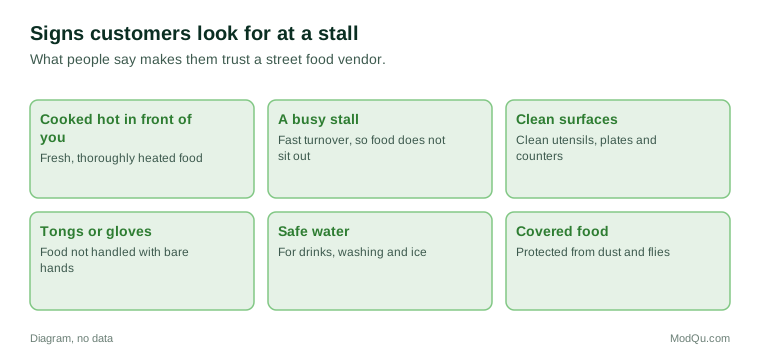
Customers judge safety using signs they can see: food cooked fresh and hot in front of them, busy stalls with fast turnover, clean utensils and surfaces, gloves or tongs for handling food, and the vendor's own cleanliness. Many say they trust vendors they have bought from for years.
The World Health Organization's "Five Keys to Safer Food" (keep clean, separate raw and cooked, cook thoroughly, keep food at safe temperatures, use safe water and raw materials) are widely used in training for street vendors. Some cities provide vendor training and hygiene certificates.
Example
A city builds a covered street-food market with running water, handwashing points and shared refrigerated storage. Vendors who move there pay a small monthly fee. Customers say they feel safer eating there, though some vendors miss the passing trade at their old spot outside a station.
Licences and rules
Rules on street food differ between countries and cities. Some cities issue licences that allow vendors to sell in set places and times. Others restrict street vending or ban it in some areas. Health inspections, hygiene training and registration may be required. In many places most vendors work without a licence, either because licences are limited, too costly or hard to obtain.
Authorities often try to balance several goals: food safety, clear pavements, traffic, the interests of shops and restaurants, and vendors' right to earn a living. Some cities have moved from removing vendors to organizing them into markets or zones.
Costs and spending
Example (hypothetical figures)
An office worker buys lunch from a street stall five days a week at 4 a meal, in local currency, a total of 20 a week. A sit-down restaurant nearby charges 10 for a similar dish. Bringing food from home would cost about 2 a day, or 10 a week. They choose street food for most days and bring lunch from home on Fridays, spending 18 a week.
Trends and what people disagree about
Street food has grown in popularity with tourists and food lovers in many places, with festivals, night markets and food trucks attracting visitors. In some cities, this has raised prices and pushed out traditional vendors. Delivery apps now also carry food from some stalls.
People disagree about whether cities should protect, regulate or remove street vendors, how strict hygiene rules should be, and whether upgraded markets help vendors or price them out. Customers also differ in how much risk they are willing to accept for cheap and tasty food.
Questions that food brands, food safety bodies and city authorities want answered include how often people buy street food, what they buy, how much they spend, and how safe they feel eating it.
Key terms
- Street foodReady-to-eat food and drink sold by vendors in public places.
- VendorA person who sells goods, often from a stall or cart.
- Hawker centreAn organized site with many food stalls and shared seating.
- PitchThe spot where a street vendor sells.
- Street vending licencePermission from authorities to sell in a public place.
- Food handlerA person who prepares or serves food.
- TurnoverHow quickly food is sold and replaced.
- Informal economyWork and businesses not registered or regulated by the state.
Full glossary: restaurant chains terms on EditingTests.com.
Street food vocabulary test
How well do you know the language of this topic? Try 8 quick questions. Your score is shown straight away and is not saved.
What the street food survey asks
This survey is part of ModQu's Food and Drink survey. The street food part takes about five minutes and covers:
- How often you buy street food, and at what times of day.
- What you usually buy, and how much you spend.
- Why you choose street food over other options.
- How safe you feel eating it, and what makes you trust a stall.
- Whether you have been ill after eating street food.
- What would improve street food where you live.
After that you can choose to continue with other short parts of the Food and Drink survey, such as eating habits or coffee, tea and beverages, or stop.
Ready to take part?
Your answers help show what people really think and do. Results are only ever reported as totals; no one can see your individual answers.
Start the surveyQuestions about this survey
Who can take part?
Adults.
Do I have to give my name?
No. You may be asked for your age group, region and similar details so results can be broken down, but not your name. ModQu never asks for passwords, card numbers or account numbers.
How are the results used?
Answers are combined into totals and percentages and published in ModQu reports. Individual answers are never shown.
Is the vocabulary test part of the survey?
No. It is optional and separate, and your score is not stored.
Is street food the same as fast food?
Not quite. Fast food usually means chain restaurants with standard menus, while street food is sold by independent vendors in public places, though the two can overlap.
Why does the survey ask about illness?
Food safety bodies and city authorities want to know how often people feel unwell after eating out, so they can target hygiene support where it is needed.
Do food trucks count as street food?
Yes. The survey includes carts, stalls, trucks, night markets and similar sellers.
Can street food vendors take part?
This survey is for customers. Vendors may be invited to a separate module on running a food business.
Do I have to say where I buy food?
No. You may be asked about your region, but not about specific vendors.