
Share your experience of short videos
Tell us how much time you spend on short videos, which apps you use and what you watch less of. Your answers are combined with other people's and reported only as totals.
Start the short-form video surveyAbout 5 minutes. No account needed. You can stop at any time.
What this topic covers
Short-form video means video clips that are usually under a minute or a few minutes long, filmed mostly in a vertical format to fit a phone screen and watched one after another. It is offered by dedicated short-video apps and as a feature inside most large social media and video platforms.
This topic covers:
- how much time people spend watching short videos, and when;
- which apps and features they use;
- what kinds of content they watch;
- whether they also create or share clips;
- how short videos affect watching television, films, long videos and reading;
- how people feel about their own viewing.
How short-form video works
Short-video apps differ from older social media in one main way: the feed is mostly chosen by a recommendation system rather than by the people a user follows. The app watches how long each clip is viewed, whether it is replayed, liked, shared or skipped, and uses that to choose the next clip.
Typical features include:
- a full-screen vertical feed that moves to the next clip with a swipe;
- clips that loop automatically;
- sound and music that can be reused by other creators, so trends spread quickly;
- simple editing tools, filters and captions in the app;
- likes, comments, shares and the option to follow creators;
- links to shops, so products shown in videos can be bought in the app.
Because each clip is short and the next one starts straight away, it is easy to watch many in one sitting.
What people watch
The range of content is very wide. Common types include:
- comedy, sketches and pranks;
- music, dance and trends that many people copy;
- cooking, recipes and food reviews;
- how-to videos, tips and repairs;
- news, commentary and explainers;
- sport highlights;
- beauty, fashion and shopping hauls;
- learning: languages, science, history and study tips;
- clips cut from television shows, films and longer videos;
- everyday life, travel and pets.
Example
A teenager in a large city mostly watches comedy and football highlights on a short-video app. Over a few weeks the app also starts showing them cooking clips after they watched one to the end. They begin making simple recipes for the family and say they learned more about cooking from short clips than from any book.
How much people watch, and when
People use short-video apps in many small moments: while waiting, on public transport, during breaks and before sleep. Some use them for a few minutes a day; others for several hours. Viewing tends to be highest among teenagers and young adults, but use has spread across age groups.
Because sessions are frequent and short, people often find it hard to estimate how long they spend. Many surveys therefore ask people to check the screen-time figure on their phone, or ask about particular times of day.
Example (hypothetical figures)
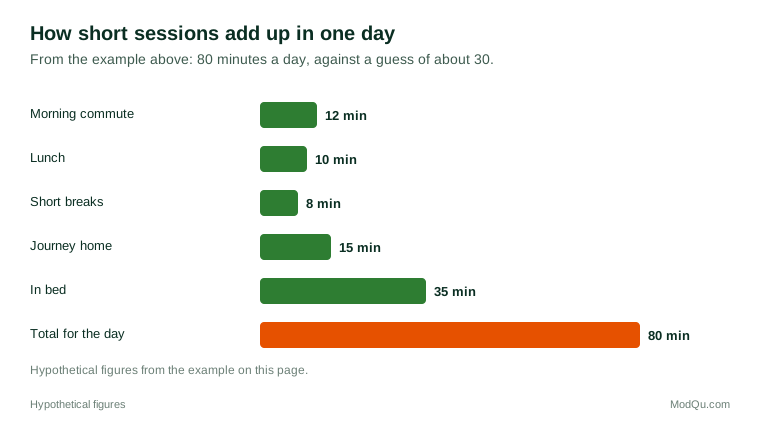
An office worker checks their phone's screen-time report. They watched short videos for 12 minutes on the morning commute, 10 minutes at lunch, 8 minutes in short breaks, 15 minutes on the way home and 35 minutes in bed. That is 80 minutes a day, or about 9 hours and 20 minutes a week. They had guessed "about half an hour a day".
Figure 1 shows how the short sessions in the example add up across a day.
Why people enjoy it
People give many reasons for watching short videos:
- it is quick, easy and fits into small gaps in the day;
- it is entertaining and often funny;
- the feed seems to know what they like;
- they learn useful things in a short time;
- it keeps them up to date with trends, music and jokes that friends talk about;
- it helps them relax after work or study;
- it connects them with creators and communities they relate to.
Effects on other media and daily life
Short videos compete for time with other activities. Some people say they watch less television, fewer films or fewer long videos, or read less. Others say short clips lead them to new things, such as a series they then watch in full, a band they then listen to, or a book they then buy.
Broadcasters, film studios, publishers and musicians now post short clips themselves to reach viewers. Songs can become popular through short videos, and some television shows are promoted mainly through clips.
People also mention effects on their own habits:
- staying up later than planned;
- finding it harder to concentrate on long videos, films or books;
- feeling that time passes without being noticed;
- feeling happier, less lonely or more informed.
How strong these effects are, and whether short videos cause them, is still debated by researchers.
Example
A retired teacher started watching short videos to see clips of their grandchildren. They now spend an hour most evenings on the app, watching history explainers and gardening tips. They say it has replaced some of the television they used to watch, and that they enjoy it more because they choose what to watch next.
Creating and sharing
Many people only watch, but a sizeable share also post their own clips, whether for friends, as a hobby or to build an audience. Short-video apps have made it easier to create, because filming and editing can be done on a phone in minutes. Some creators earn money through brand deals, gifts from viewers or payments from the platform, which is covered in a separate topic on influencers and creators.
Sharing is also common: people send clips to friends in private messages, often several times a day, which is part of how trends spread.
Concerns and debates
Short-form video raises several debates:
- Time and attention: whether endless feeds encourage people to watch more than they intended.
- Young users: age limits, what children see, and how much time they spend. Some countries are considering or have introduced stricter rules for minors.
- Misinformation: how false or misleading clips spread, and how platforms label or remove them.
- Data and privacy: how much information apps collect to power recommendations, and where it is stored. Some governments have restricted particular apps on these grounds.
- Creators' rights: reuse of music and clips, and pay for creators.
- Mental health: comparisons with others and exposure to harmful content.
Questions that businesses want answered here include how much time people spend on short videos, which apps they use, what types of content they prefer, whether they buy products seen in clips and what they watch less of as a result.
Key terms
- Short-form videoVideo clips usually under a few minutes long, designed to be watched on a phone.
- Vertical videoVideo filmed in portrait format to fill a phone screen held upright.
- FeedThe stream of content an app shows, one item after another.
- Recommendation systemSoftware that chooses what to show next based on what a user watches and does.
- TrendA sound, format or challenge that many people copy in a short time.
- EngagementViewer actions such as likes, comments, shares and watch time.
- LoopWhen a clip restarts automatically after it ends.
- Social commerceBuying products directly through a social media or video app.
Full glossary: digital content platforms terms on EditingTests.com.
Short-form video vocabulary test
How well do you know the language of this topic? Try 8 quick questions. Your score is shown straight away and is not saved.
What the short-form video survey asks
This survey is part of ModQu's Media and Entertainment survey. The short-form video part takes about five minutes and covers:
- How much time a day you spend watching short videos, and at what times.
- Which apps you use for short videos.
- What kinds of short videos you watch most.
- Whether you post or share clips yourself.
- Whether you watch less television, fewer long videos or read less because of short videos.
- Whether you have bought something after seeing it in a short video.
After that you can choose to continue with other short parts of the Media and Entertainment survey, such as streaming tv and video or music and podcasts, or stop.
Ready to take part?
Your answers help show what people really think and do. Results are only ever reported as totals; no one can see your individual answers.
Start the surveyQuestions about this survey
Who can take part?
Adults who watch online video.
Do I have to give my name?
No. You may be asked for your age group, region and similar details so results can be broken down, but not your name. ModQu never asks for passwords, card numbers or account numbers.
How are the results used?
Answers are combined into totals and percentages and published in ModQu reports. Individual answers are never shown.
Is the vocabulary test part of the survey?
No. It is optional and separate, and your score is not stored.