
Share your experience of following creators
Tell us how many creators you follow, whether you have bought what they recommend and how much you trust them. Your answers are combined with other people's and reported only as totals.
Start the influencers and content creators surveyAbout 5 minutes. No account needed. You can stop at any time.
What this topic covers
A content creator is a person who makes and publishes videos, photos, posts, podcasts or streams online for an audience. An influencer is a creator whose audience is large or loyal enough that their opinions affect what followers think, do or buy. The two words overlap, and many creators prefer "creator" to "influencer".
This topic covers:
- how many creators people follow, and on which platforms;
- what kinds of creators they follow and why;
- whether they have bought products or services a creator recommended;
- how much they trust creators, and what affects that trust;
- how people feel about sponsored content and advertising by creators.
Kinds of creators
Creators vary in subject, size and style. By subject, common groups include:
- beauty, fashion and lifestyle;
- gaming and technology;
- food and cooking;
- fitness, health and wellbeing;
- travel;
- parenting and family life;
- personal finance;
- education and science;
- comedy and entertainment;
- news and commentary.
By size, the industry often uses rough labels such as nano-influencers (a small following, often a few thousand), micro-influencers, mid-tier, macro-influencers and celebrities. Smaller creators often have closer relationships with their audience and are sometimes seen as more trustworthy, even if fewer people see their posts.
Why people follow creators
People give many reasons for following creators:
- Entertainment: they are funny, interesting or relaxing to watch.
- Learning: tutorials, reviews and explanations.
- Relatability: the creator seems like a real person with a similar life, body, budget or background.
- Community: comments, live chats and groups where fans talk to each other.
- Inspiration: ideas for outfits, recipes, trips, workouts or home projects.
- Shopping advice: honest reviews before buying.
Many followers feel they know a creator personally, even though the creator does not know them. Researchers call this a parasocial relationship. It helps explain why creators' recommendations can be persuasive.
Example
A new parent follows several creators who post about babies. One shares honest videos about sleepless nights and feeding problems, which the parent finds more reassuring than advice from books. When the creator recommends a baby carrier, the parent buys one, because the creator had shown it in daily use for months.
How creators earn money
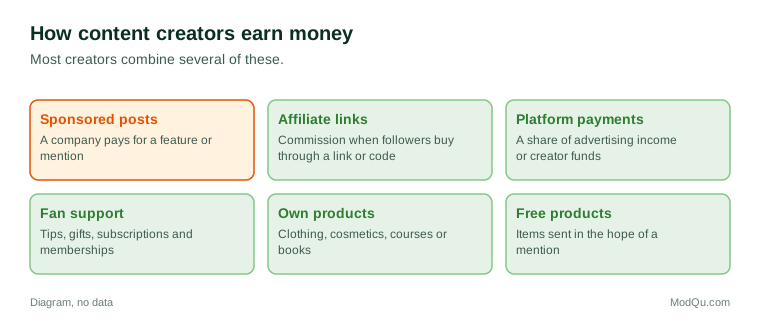
Creators earn money in several ways, often combined:
- Sponsored posts: a company pays the creator to feature or mention a product.
- Affiliate links: the creator earns a commission when followers buy through a special link or code.
- Platform payments: a share of advertising income or creator funds paid by the platform.
- Fan support: tips, gifts, subscriptions and memberships paid directly by followers.
- Their own products: clothing, cosmetics, courses, books or other goods.
- Free products: items sent by companies in the hope of a mention, sometimes without payment.
Figure 1 shows these main income sources.
Sponsored posts and the rules on disclosure
Many countries have rules that require creators to make it clear when content is paid for or when they have received free products or commission. This is usually called disclosure. Labels such as "ad", "sponsored" or "paid partnership" are common. Rules come from consumer protection and advertising regulators and differ by country; in the European Union, the United Kingdom, the United States, India, Australia and elsewhere, authorities have published guidance for influencers, and some have fined creators or brands for hidden advertising.
Followers' reactions to sponsored content vary. Some accept it as how creators earn a living, especially if the creator only promotes things they genuinely use. Others trust a recommendation less once they know it is paid.
Example
A fitness creator posts a video praising a protein snack without saying they were paid. Several followers notice the same snack in other creators' videos that week and ask in the comments whether it is an advert. The creator adds a "paid partnership" label and apologizes, but some followers say they will no longer trust the creator's reviews.
Buying what creators recommend
Many people have bought something after seeing it recommended by a creator, from clothes and cosmetics to gadgets, books, recipes and holidays. Products can sell out quickly after a popular creator features them. Common patterns include:
- buying after seeing a product used over time, not just in one post;
- using a discount code shared by the creator;
- checking other reviews before buying;
- being disappointed when a product does not match how it looked on screen.
Example (hypothetical figures)
A creator with 50,000 followers shares a skincare product with a discount code. The post is seen by 20,000 people, 600 click the link (3% of viewers), and 60 of those buy (10% of clickers). Each buyer spends 25 dollars, so the post leads to 1,500 dollars of sales. At a 10% affiliate commission, the creator earns 150 dollars.
What shapes trust
Trust in creators varies between people and between creators. Things that tend to increase trust include:
- showing both good and bad points of products;
- clearly labelling paid content;
- having real expertise or long experience in the subject;
- being consistent over time;
- not promoting too many products.
Things that reduce trust include hidden advertising, promoting products that seem unrelated to the creator's life, fake followers or bought likes, and advice that turns out to be wrong. Advice on health and money is a particular worry, because followers may act on advice from creators who have no professional training.
Concerns and debates
Debates about influencers include:
- Honesty: hidden adverts, fake reviews and edited images.
- Children: young audiences, child influencers and family channels, and how children's earnings and privacy are protected. Some countries have introduced rules on children who appear in paid content.
- Health and finance advice: risky claims about diets, supplements, investments or cryptocurrencies.
- Body image: the effect of filtered photos and idealized lifestyles on followers.
- Creators as workers: unstable income, pressure to post constantly and burnout.
Questions that businesses want answered here include how many creators people follow, which subjects they trust creators on, how sponsored content affects trust and how often recommendations lead to purchases.
Key terms
- Content creatorA person who makes and publishes videos, posts, podcasts or streams for an online audience.
- InfluencerA creator whose audience is large or loyal enough that they affect what followers think or buy.
- Sponsored postContent a company has paid a creator to make or share.
- Affiliate linkA special link that earns the creator a commission when followers buy through it.
- DisclosureMaking clear that content is paid for or that the creator received something.
- Parasocial relationshipA one-sided feeling of knowing someone you follow, who does not know you.
- Micro-influencerA creator with a modest but engaged following.
- Engagement rateThe share of followers or viewers who like, comment or share content.
Full glossary: influencer marketing terms on EditingTests.com.
Influencers and content creators vocabulary test
How well do you know the language of this topic? Try 8 quick questions. Your score is shown straight away and is not saved.
What the influencers and content creators survey asks
This survey is part of ModQu's Media and Entertainment survey. The influencers and content creators part takes about five minutes and covers:
- How many creators or influencers you follow, and on which platforms.
- Which subjects you follow creators for.
- Whether you have bought something a creator recommended, and how it turned out.
- How much you trust creators' recommendations, and on which subjects.
- How you feel about sponsored posts and whether labels change your view.
- Whether you have used a creator's discount code or affiliate link.
After that you can choose to continue with other short parts of the Media and Entertainment survey, such as streaming tv and video or music and podcasts, or stop.
Ready to take part?
Your answers help show what people really think and do. Results are only ever reported as totals; no one can see your individual answers.
Start the surveyQuestions about this survey
Who can take part?
Adults who use social media.
Do I have to give my name?
No. You may be asked for your age group, region and similar details so results can be broken down, but not your name. ModQu never asks for passwords, card numbers or account numbers.
How are the results used?
Answers are combined into totals and percentages and published in ModQu reports. Individual answers are never shown.
Is the vocabulary test part of the survey?
No. It is optional and separate, and your score is not stored.