
Tell us about pregnancy and early parenthood
Tell us who provided your care, where you found information and what you needed most. Your answers are combined with other people's and reported only as totals.
Start the pregnancy and early parenthood surveyAbout 5 minutes. No account needed. You can stop at any time.
Pregnancy care
In Canada, prenatal care is covered by provincial health plans. People can receive care from:
- family physicians, some of whom provide pregnancy and birth care;
- obstetricians, specialists who often care for higher-risk pregnancies and perform caesarean births;
- registered midwives, who provide care during pregnancy, birth and the first weeks after birth for low-risk pregnancies, in hospital, birth centres or at home;
- nurse practitioners, in some areas.
Prenatal care usually includes regular checkups, blood tests, ultrasounds and screening tests offered at particular stages. Availability of each type of provider varies by region, and in some areas midwifery care is in high demand.
Choosing a provider and place of birth
People choose their care provider and place of birth based on:
- their health and the risk level of the pregnancy;
- what is available locally;
- personal preferences about birth;
- recommendations from friends and family;
- previous birth experiences.
Most births in Canada take place in hospital. Some people choose birth centres or planned home births with midwives when the pregnancy is low risk.
Example
A first-time parent in a large city applies for midwifery care early in pregnancy but is placed on a waitlist. She begins care with a family doctor and is offered a midwife at 16 weeks. She chooses to stay with the doctor because she has built a relationship and plans a hospital birth.
Information and advice
Expectant parents gather information from many sources:
- health care providers;
- prenatal classes, in person or online;
- public health websites and pregnancy guides;
- books, apps and newsletters that track the pregnancy week by week;
- online forums and social media;
- family and friends.
The amount of information can be overwhelming, and advice often conflicts. Many parents say they trust their own provider most but turn to apps and online groups for everyday questions.
Preparing for a baby
Preparing for a baby often involves major purchases and planning:
- a car seat, which must meet Canadian safety standards;
- a crib or bassinet that meets current safety rules;
- a stroller, baby carrier and clothing;
- feeding supplies;
- arranging parental leave and finances.
Parents decide between new and second-hand items, borrowed items and gifts. Safety rules for car seats and cribs mean some second-hand items are not recommended.
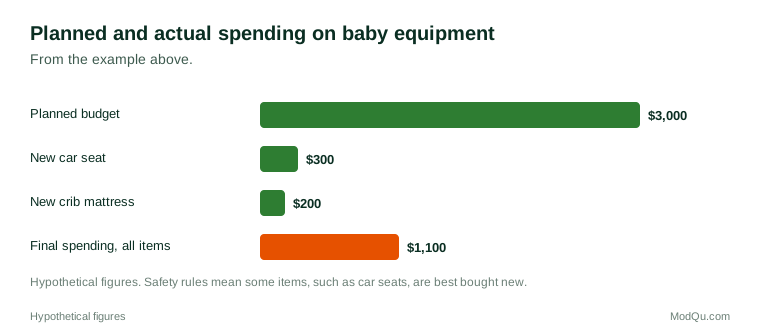
Example (hypothetical figures)
A couple plans a budget of $3,000 for baby equipment. They buy a new car seat ($300) and crib mattress ($200) for safety reasons, accept a stroller and crib from relatives, and buy clothes second-hand. Their final spending is $1,100, and they put the difference toward the months of reduced income during leave.
Feeding
Health organizations recommend breastfeeding where possible and offer support for families who choose or need to use formula. Parents' experiences vary widely. Some find breastfeeding comes easily; others face pain, low supply or return-to-work challenges. Lactation consultants, public health nurses and peer support groups provide help. Formula shortages and price increases have affected some families in recent years.
The first weeks at home
The weeks after birth bring recovery, little sleep and learning to care for a newborn. Support may come from midwives, public health nurses, family doctors, partners, family and friends. Common concerns include feeding, sleep, crying, the parent's own recovery and mood.
Postpartum depression and anxiety affect a significant share of new parents. Screening and support are increasingly part of postnatal care, but many parents say they did not know where to turn.
Example
A father notices that his partner seems withdrawn and anxious three weeks after the birth. He mentions it at the baby's checkup, and the public health nurse arranges a follow-up and connects her with a local support group for new parents.
Parental leave and returning to work
In Canada, Employment Insurance provides maternity and parental benefits to eligible workers, and Quebec has its own plan. Parents can choose standard or extended parental leave, and benefits can be shared between parents. Some employers top up benefits. Decisions about who takes leave, for how long, and how to manage child care afterwards are among the biggest choices new families make.
Child care and the first years
Finding child care is a major concern for many parents, with waitlists in many areas. Federal and provincial agreements have reduced fees for many licensed child care spaces, but availability remains a challenge. Parents also rely on family members, home-based care and nannies.
Products and spending
Parents spend on diapers, formula, clothing, toys, furniture and health products. Many rely on reviews, recommendations from other parents and social media. Brands and retailers pay close attention to how new parents choose, because habits formed early often last.
Fertility and the road to parenthood
Some people's path to parenthood includes fertility treatment, adoption or surrogacy. Public funding for fertility treatment varies by province, and costs can be substantial. These experiences shape how people feel about pregnancy and early parenthood.
What health planners and businesses want to know
Health systems, public health agencies, employers and companies that make baby products want to understand how parents choose care, where they find information, what support they lack and what they buy.
Key terms
- Prenatal careHealth care during pregnancy.
- MidwifeA regulated health professional who provides care in low-risk pregnancy, birth and after birth.
- ObstetricianA doctor who specializes in pregnancy and birth, including higher-risk care.
- PostpartumThe period after giving birth.
- Postpartum depressionDepression that develops during pregnancy or after birth.
- Lactation consultantA professional who helps with breastfeeding.
- Parental leaveTime off work to care for a new child, with benefits for eligible parents.
- UltrasoundAn imaging test that uses sound waves to see the baby during pregnancy.
Full glossary: maternal fetal medicine terms on EditingTests.com.
Pregnancy and early parenthood vocabulary test
How well do you know the language of this topic? Try 8 quick questions. Your score is shown straight away and is not saved.
What the pregnancy and early parenthood survey asks
This survey is part of ModQu's Health and Wellness survey. The pregnancy and early parenthood part takes about five minutes and covers:
- Who provided your pregnancy care, and how you chose them.
- Where your baby was born, and how you felt about the experience.
- Where you found most of your information, and which sources you trusted.
- Which baby products you researched most and where you bought them.
- What support you had in the first months, and what you were missing.
- How you and your partner arranged parental leave and child care.
After that you can choose to continue with other short parts of the Health and Wellness survey, such as access to family doctors or virtual care and telehealth, or stop.
Ready to take part?
Your answers help show what people really think and do. Results are only ever reported as totals; no one can see your individual answers.
Start the surveyQuestions about this survey
Who can take part?
People who were pregnant or had a baby in the last three years.
Do I have to give my name?
No. You may be asked for your age group, region and similar details so results can be broken down, but not your name. ModQu never asks for passwords, card numbers or account numbers.
How are the results used?
Answers are combined into totals and percentages and published in ModQu reports. Individual answers are never shown.
Is the vocabulary test part of the survey?
No. It is optional and separate, and your score is not stored.
Can partners take part?
Yes. Partners of people who were pregnant or had a baby in the last three years can take part. Some questions are shown only to the person who gave birth.
Will you ask about complications or medical details?
No detailed medical questions are asked. Questions about your experience of care are optional.