
Tell us about what you eat
Tell us about your eating habits, any diet you follow, the supplements you take and where you get advice. Your answers are combined with other people's and reported only as totals.
Start the nutrition and diet surveyAbout 5 minutes. No account needed. You can stop at any time.
What influences food choices
People choose food for many reasons at once:
- taste and enjoyment;
- cost, especially when grocery prices rise;
- convenience and time available to cook;
- health, including weight, heart health, blood sugar and digestion;
- culture, religion and family traditions;
- ethics and the environment, such as animal welfare and climate concerns;
- allergies and intolerances;
- habits built over many years.
These reasons often pull in different directions. A person may want to eat more vegetables but buy what is quick and affordable after a long day.
Healthy eating guidance
Canada's Food Guide, updated in 2019, encourages people to eat plenty of vegetables and fruits, choose whole grain foods and protein foods, with more protein from plants, and make water the drink of choice. It also encourages cooking more often, eating with others, being mindful of eating habits and being aware of food marketing. Other countries have similar guides.
Many people know the general messages but find it hard to follow them every day.
Popular diets
People follow many eating patterns, for health, weight or personal reasons:
- vegetarian and vegan diets, which exclude meat or all animal products;
- flexitarian eating, mostly plant-based with some meat;
- Mediterranean-style eating, rich in vegetables, legumes, whole grains, fish and olive oil;
- low-carbohydrate and ketogenic diets;
- intermittent fasting, which limits eating to certain hours or days;
- gluten-free diets, necessary for people with celiac disease and chosen by others;
- high-protein diets, popular with people who exercise.
Some of these have good evidence for particular health goals; others are popular mainly through social media and personal stories.
Example
A 50-year-old with high cholesterol is advised by his doctor to change his diet. Friends recommend a ketogenic diet, but a dietitian suggests a Mediterranean-style pattern instead, which fits his love of cooking and has strong evidence for heart health. He finds it easier to keep up than strict diets he tried before.
Plant-based eating
Interest in eating more plants has grown, driven by health, environmental and animal welfare concerns. People may reduce meat, try meatless days, or switch to plant-based milks and meat alternatives. Barriers include taste, cost of some products, uncertainty about protein and nutrients, and family preferences.
Reading nutrition labels
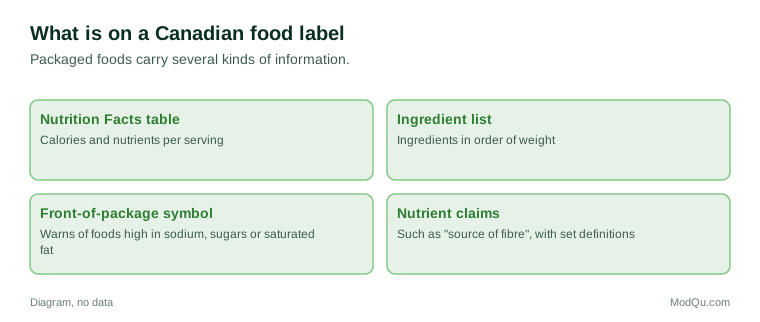
In Canada, packaged foods carry a Nutrition Facts table and an ingredient list. Front-of-package labels warning about foods high in sodium, sugars or saturated fat are required on many products under federal rules. Labels also carry claims such as "low fat", "source of fibre" or "no added sugar", which must meet set definitions.
Some people read labels carefully, especially those managing health conditions or allergies. Others rarely look, citing time or confusion.
Example (hypothetical figures)
A shopper compares two cereals. One lists 12 g of sugar per 40 g serving and the other 4 g per 30 g serving. Converted to the same serving size, the first has 12 g per 40 g and the second about 5.3 g per 40 g. The shopper realizes serving sizes differ and starts comparing per 100 g instead.
Supplements and vitamins
Many people take vitamins, minerals or other supplements. Common ones include vitamin D, multivitamins, omega-3 fatty acids, magnesium, protein powders and probiotics. Health Canada regulates these as natural health products. Some supplements are recommended for specific groups, such as folic acid before and during pregnancy, or vitamin D for some people in winter. Others have little evidence of benefit for most people.
People often take supplements on the advice of friends, online sources or health professionals, and some do not tell their doctor what they take.
Where people get nutrition advice
Sources of nutrition information include:
- registered dietitians;
- doctors, nurses and pharmacists;
- government food guides;
- social media influencers and online videos;
- books, podcasts and news articles;
- friends and family;
- food packaging and advertising.
Trust in these sources varies. Registered dietitians are regulated health professionals, while "nutritionist" is a protected title only in some provinces.
Food and health conditions
Many people change what they eat because of a health condition, such as diabetes, heart disease, high blood pressure, digestive disorders, food allergies or kidney disease. These changes can be difficult to maintain, especially when eating out or cooking for a family with different needs.
Example
After a diagnosis of type 2 diabetes, a woman attends a diabetes education program run by her local health authority. A dietitian shows her how to plan meals with the foods her family already eats, rather than buying special products. She says the practical approach made the biggest difference.
Eating on a budget
When food prices rise, people change what and where they buy: more store brands, fewer prepared foods, more home cooking, more beans and lentils, and buying in bulk. Some people skip meals or rely on food banks. Budget pressures can make healthy eating harder, especially for families with children.
Eating together and eating out
Where and with whom people eat also shapes their diets. Family meals at home have become less frequent in many households because of work schedules, activities and screens. Meals eaten out or delivered tend to be larger and higher in salt, fat and sugar than home-cooked meals. Some restaurants now show calories on menus, and in Ontario large chains are required to do so.
What food companies and health planners want to know
Food manufacturers, grocers, supplement brands and public health agencies want to understand what people eat, which diets they follow, how they use labels, what supplements they take and whom they trust for advice.
Key terms
- Nutrition Facts tableThe label on packaged food listing calories and nutrients per serving.
- Registered dietitianA regulated health professional who provides nutrition advice.
- Plant-based dietAn eating pattern centred on vegetables, fruits, legumes, grains, nuts and seeds.
- Intermittent fastingLimiting eating to certain hours or days.
- Natural health productA regulated product such as a vitamin, mineral or herbal remedy.
- Celiac diseaseA condition in which gluten damages the small intestine.
- Whole grainGrain that keeps all parts of the seed, including bran and germ.
- SodiumA mineral found in salt that many people eat too much of.
Full glossary: nutrition science terms on EditingTests.com.
Nutrition and diet vocabulary test
How well do you know the language of this topic? Try 8 quick questions. Your score is shown straight away and is not saved.
What the nutrition and diet survey asks
This survey is part of ModQu's Health and Wellness survey. The nutrition and diet part takes about five minutes and covers:
- How you would describe your usual eating habits.
- Whether you follow any particular diet, and why.
- How often you read nutrition labels, and what you look for.
- Which vitamins or supplements you take regularly.
- Where you get information about nutrition, and whom you trust most.
- How rising food prices have changed what you eat.
After that you can choose to continue with other short parts of the Health and Wellness survey, such as access to family doctors or virtual care and telehealth, or stop.
Ready to take part?
Your answers help show what people really think and do. Results are only ever reported as totals; no one can see your individual answers.
Start the surveyQuestions about this survey
Who can take part?
Adults.
Do I have to give my name?
No. You may be asked for your age group, region and similar details so results can be broken down, but not your name. ModQu never asks for passwords, card numbers or account numbers.
How are the results used?
Answers are combined into totals and percentages and published in ModQu reports. Individual answers are never shown.
Is the vocabulary test part of the survey?
No. It is optional and separate, and your score is not stored.
Will you ask my weight or health conditions?
Some optional questions may ask in general terms whether a health condition affects what you eat. You can skip any question.
Does ModQu give diet advice?
No. For advice about your own diet, talk to a registered dietitian or your health care provider.