
Tell us about natural health care
Tell us which natural or alternative health care you use, why and how it fits with your other care. Your answers are combined with other people's and reported only as totals.
Start the natural and alternative health surveyAbout 5 minutes. No account needed. You can stop at any time.
What natural and alternative health covers
"Natural", "complementary" and "alternative" health care are broad terms. They are usually used for health practices and products outside conventional medical care. When used alongside conventional medicine, they are often called complementary; when used instead of it, alternative. The combination is sometimes called integrative health.
Common practices and products include:
- naturopathy, provided by naturopathic doctors, who use nutrition, herbal medicine and lifestyle approaches;
- acupuncture and traditional Chinese medicine;
- herbal remedies and supplements, such as echinacea, turmeric or St. John's wort;
- homeopathy;
- chiropractic and massage therapy, sometimes grouped with complementary care;
- mind-body practices, such as yoga, tai chi, meditation and breathing techniques;
- Ayurveda and other traditional medicine systems;
- Indigenous traditional healing practices.
Who uses it and why
People of all ages and backgrounds use some form of complementary care. Common reasons include:
- managing chronic pain, stress, sleep problems or digestive issues;
- feeling that conventional medicine has not helped;
- wanting a more holistic or personal approach and more time with a practitioner;
- preferring "natural" products;
- cultural and family traditions;
- avoiding side effects of medicines;
- general wellness and prevention.
Example
A woman with long-term neck pain has tried physiotherapy and medication with limited relief. A friend recommends acupuncture. She tries six sessions, finds the pain eases for several days after each, and continues monthly visits alongside the exercises her physiotherapist gave her.
Regulation and qualifications
How practitioners are regulated varies by profession and province. In Canada:
- naturopathic doctors are regulated in several provinces, including Ontario, British Columbia, Alberta, Saskatchewan, Manitoba and Nova Scotia;
- acupuncture and traditional Chinese medicine are regulated in some provinces, including British Columbia, Alberta, Ontario, Quebec and Newfoundland and Labrador;
- massage therapy and chiropractic are regulated in many provinces;
- many other practices, such as homeopathy, reiki or reflexology, are not regulated as health professions.
Natural health products, including herbal remedies, vitamins and homeopathic products, are licensed by Health Canada, which assigns a product number (NPN or DIN-HM) to approved products.
Evidence
The scientific evidence varies widely. Some practices, such as exercise-based mind-body programs and acupuncture for certain types of pain, have research support for specific uses. Others have little or no good evidence of effectiveness beyond placebo. Some herbal products can interact with prescription medicines, for example St. John's wort, which affects how several drugs work.
People who use complementary care often value their own experience over research findings, while health professionals emphasize evidence and safety.
Paying for care
Most complementary care is paid privately. Some workplace benefit plans cover naturopathy, acupuncture, massage therapy and chiropractic, usually with yearly limits. Natural health products are usually paid out of pocket.
Example (hypothetical figures)
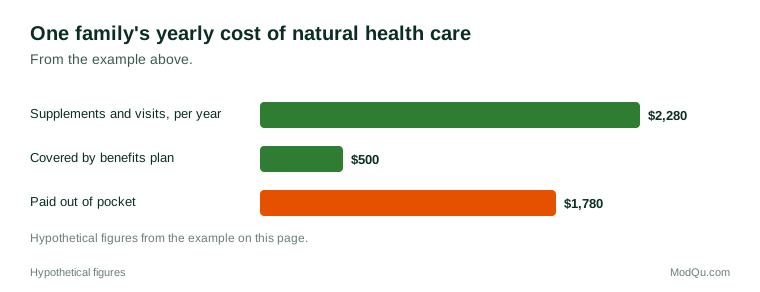
A family spends about $90 a month on supplements and $100 a month on naturopathic visits, a total of $2,280 a year. Their benefits plan covers $500 a year for naturopathy. Their out-of-pocket cost is $1,780, which they say is worth it for their child's eczema management, though their doctor has suggested trying a prescription cream as well.
Talking with doctors and pharmacists
Many people who use complementary care do not tell their doctor or pharmacist. Reasons include not being asked, thinking it is not relevant or expecting disapproval. Health professionals encourage patients to share what they use, because some products interact with medicines or affect surgery and tests.
Example
Before a scheduled surgery, a man mentions to his pharmacist that he takes ginkgo and fish oil supplements. The pharmacist advises him to tell the surgical team, since both can affect bleeding, and he is asked to stop them before the operation.
Integrative care
Some hospitals, cancer centres and clinics offer integrative programs that combine conventional treatment with evidence-informed complementary therapies, such as massage, acupuncture, yoga and mindfulness for symptom relief. Patients often appreciate the extra support, especially during long treatments.
Concerns and risks
Concerns about complementary care include:
- delaying effective treatment for serious conditions;
- interactions between herbal products and medicines;
- products that are contaminated or contain undeclared ingredients, especially when bought from unlicensed sellers online;
- cost without clear benefit;
- misleading health claims in advertising and on social media.
Traditional and cultural practices
For many communities, traditional medicine is part of culture, identity and family life. Indigenous healing practices, traditional Chinese medicine and Ayurveda have long histories. Health systems are paying more attention to culturally safe care that respects these traditions while ensuring safety.
Choosing a practitioner
People looking for a complementary practitioner often rely on recommendations from friends and family, online reviews and whether their benefits plan covers the service. Questions worth asking include whether the practitioner is registered with a regulatory college, what training they have, what results to expect and over what time, what it will cost, and whether they will work alongside the person's doctor. Regulatory colleges publish public registers where people can check a practitioner's standing and any disciplinary history.
The market for natural products
Natural health products are sold in pharmacies, grocery stores, health food shops and online. Brands compete on ingredients, certifications and claims. Shoppers rely on recommendations, reviews, practitioners and labels, and many find it hard to judge quality.
What practitioners and businesses want to know
Practitioners, product makers, retailers, insurers and health systems want to understand who uses complementary care, which types, for what reasons, how they pay, how satisfied they are and whether they tell their other health providers.
Key terms
- Complementary careHealth practices used alongside conventional medicine.
- Alternative careHealth practices used instead of conventional medicine.
- Integrative healthCombining conventional and complementary approaches.
- Naturopathic doctorA practitioner trained in naturopathic medicine, regulated in several provinces.
- AcupunctureInsertion of thin needles at specific points on the body.
- Natural health productA regulated product such as a vitamin, herbal remedy or homeopathic medicine.
- NPNThe Natural Product Number Health Canada assigns to licensed natural health products.
- Placebo effectAn improvement caused by the expectation of treatment rather than the treatment itself.
Full glossary: alternative medicine terms on EditingTests.com.
Natural and alternative health vocabulary test
How well do you know the language of this topic? Try 8 quick questions. Your score is shown straight away and is not saved.
What the natural and alternative health survey asks
This survey is part of ModQu's Health and Wellness survey. The natural and alternative health part takes about five minutes and covers:
- Which natural or complementary health practices or products you have used in the last year.
- Why you chose them, and for what health concerns.
- How you pay, including any benefits coverage.
- How satisfied you are with the results.
- Whether you tell your doctor or pharmacist about what you use.
- Where you get information about natural health products and practitioners.
After that you can choose to continue with other short parts of the Health and Wellness survey, such as access to family doctors or virtual care and telehealth, or stop.
Ready to take part?
Your answers help show what people really think and do. Results are only ever reported as totals; no one can see your individual answers.
Start the surveyQuestions about this survey
Who can take part?
Adults.
Do I have to give my name?
No. You may be asked for your age group, region and similar details so results can be broken down, but not your name. ModQu never asks for passwords, card numbers or account numbers.
How are the results used?
Answers are combined into totals and percentages and published in ModQu reports. Individual answers are never shown.
Is the vocabulary test part of the survey?
No. It is optional and separate, and your score is not stored.
Does ModQu recommend any treatments?
No. ModQu does not give health advice or recommend practitioners or products. Talk to a regulated health professional about your own care.