
Tell us about rehabilitation care
Tell us which practitioners you have seen, how you paid and whether the treatment helped. Your answers are combined with other people's and reported only as totals.
Start the physiotherapy and rehabilitation surveyAbout 5 minutes. No account needed. You can stop at any time.
Why people seek rehabilitation
People look for rehabilitation care for many reasons:
- back and neck pain, among the most common reasons for missing work;
- sports and recreation injuries such as sprains and torn ligaments;
- recovery after surgery, such as knee or hip replacement;
- workplace injuries and repetitive strain;
- injuries from car collisions;
- long-term conditions such as arthritis, multiple sclerosis or the effects of a stroke;
- pelvic health problems, including after childbirth;
- balance problems and preventing falls in older adults.
The goal is usually to reduce pain, restore movement and strength, and help people return to work, sport and daily activities.
The main types of practitioner
Several regulated professions provide rehabilitation and musculoskeletal care:
- Physiotherapists assess movement and function and treat with exercise, manual therapy, education and other methods. Many also offer specialized care, such as pelvic health or concussion rehabilitation.
- Chiropractors focus on the spine and musculoskeletal system, often using spinal manipulation alongside exercise and advice.
- Registered massage therapists use soft tissue techniques to relieve muscle tension and pain.
- Occupational therapists help people manage daily activities, return to work and adapt their homes after injury or illness.
- Kinesiologists design exercise programs, regulated as a profession in some provinces.
- Athletic therapists specialize in sports injuries.
People often see more than one type of practitioner, sometimes at the same multidisciplinary clinic.
Example
After a skiing injury, a 35-year-old sees a physiotherapist for a torn knee ligament. The physiotherapist designs a strengthening program and refers her to a massage therapist for tight muscles around the hip. Six months later she is back on the slopes, doing her exercises twice a week to prevent another injury.
How people pay for rehabilitation
In Canada, most community physiotherapy, chiropractic and massage therapy is not covered by provincial health plans, though some provinces cover physiotherapy in hospitals, after surgery, or for seniors and other groups through funded clinics. Common ways people pay include:
- workplace health benefits, often with yearly limits per type of practitioner;
- car insurance, for injuries from collisions;
- workers' compensation, for workplace injuries;
- publicly funded programs, with eligibility rules and waitlists;
- out of pocket.
Example (hypothetical figures)
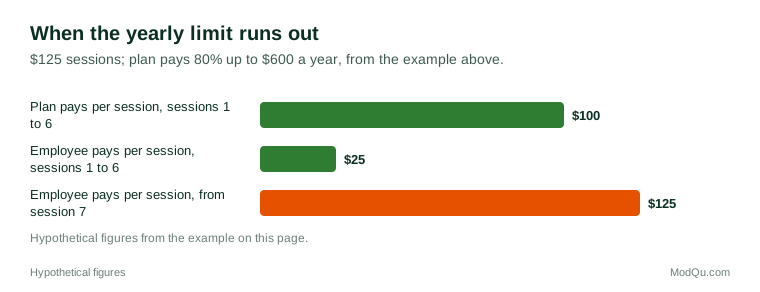
An employee's plan pays 80% of physiotherapy costs up to $600 a year. Each session costs $125, so the plan pays $100 per session and the limit is reached after six sessions. The employee pays $25 for each of those six sessions and the full $125 for every session after that. Many people stop treatment when the yearly limit runs out, even if they have not fully recovered.
How people choose a clinic
Common reasons people choose a clinic include:
- a doctor's or surgeon's recommendation;
- word of mouth from friends, family and coworkers;
- location and hours;
- direct billing to their insurer;
- online reviews;
- a practitioner with experience in their particular problem.
In most provinces, people can see a physiotherapist or chiropractor without a referral, though some insurance plans require one to pay claims.
What happens at a visit
A first visit usually includes questions about the problem and medical history, a physical assessment and a discussion of goals. Treatment may include:
- exercises to do at home and in the clinic;
- hands-on treatment such as joint mobilization or soft tissue work;
- education about posture, activity and pain;
- taping or bracing;
- other methods such as heat, ice, ultrasound or acupuncture, depending on the practitioner's training.
What patients expect and experience
Patients often expect relief quickly. Some improve within a few sessions; others with long-term problems need months of exercise and changes in habits. Satisfaction tends to be higher when the practitioner explains the problem clearly, sets realistic goals and gives a program the patient can follow on their own.
Common frustrations include cost, feeling that sessions are rushed, too much passive treatment without clear progress, and long waits for publicly funded services.
Example
A man with long-term low back pain has seen several practitioners and tried many treatments. A physiotherapist spends the first session explaining how back pain works and why gradual activity helps. He says it was the first time he understood his pain rather than just being treated for it.
Evidence and different approaches
Research on musculoskeletal care has shifted toward active approaches: exercise, education and gradual return to activity, rather than relying mainly on passive treatments. Different professions and individual practitioners vary in how closely they follow this evidence. Patients often find it hard to judge which approach is best for their problem.
Recovering after surgery
After joint replacement and many other surgeries, rehabilitation is part of the recovery plan. Patients may receive some publicly funded therapy and then continue privately. How well people follow their exercise program at home strongly affects results.
Virtual rehabilitation
Some physiotherapists and other practitioners now offer video appointments, especially for follow-ups, exercise progression and education. Apps that show exercise videos and track progress are also used between visits. Virtual care suits some problems and patients better than others: people who need hands-on assessment or treatment usually still need to attend the clinic, while people in rural areas or with busy schedules may value fewer trips.
Rehabilitation for older adults
For older adults, rehabilitation focuses on strength, balance, mobility and independence. Falls prevention programs, home exercise and occupational therapy assessments for home safety can help people stay in their own homes longer.
What clinics and insurers want to know
Clinics, insurers, employers and health planners want to know why people seek rehabilitation, which practitioners they see, how they pay, how many sessions they attend, whether they improve and what affects their choice of clinic.
Key terms
- PhysiotherapistA regulated professional who treats movement and function problems, often with exercise.
- ChiropractorA regulated professional focusing on the spine and musculoskeletal system.
- Registered massage therapistA regulated professional who treats soft tissue with massage.
- Occupational therapistA professional who helps people manage daily activities and return to work.
- MusculoskeletalRelating to muscles, bones, joints, tendons and ligaments.
- Manual therapyHands-on treatment of joints and soft tissue.
- Direct billingWhen a clinic bills the insurer directly instead of the patient claiming.
- Home exercise programExercises a practitioner prescribes for a patient to do on their own.
Full glossary: physical therapy terms on EditingTests.com.
Physiotherapy and rehabilitation vocabulary test
How well do you know the language of this topic? Try 8 quick questions. Your score is shown straight away and is not saved.
What the physiotherapy and rehabilitation survey asks
This survey is part of ModQu's Health and Wellness survey. The physiotherapy and rehabilitation part takes about five minutes and covers:
- Which rehabilitation practitioners you have seen in the last year, and for what kind of problem.
- How you paid: benefits, car insurance, workers' compensation, public programs or out of pocket.
- How you chose the clinic or practitioner.
- How many sessions you attended and whether the treatment helped.
- Whether cost or waiting stopped you from getting care you needed.
- What matters most to you when choosing a practitioner.
After that you can choose to continue with other short parts of the Health and Wellness survey, such as access to family doctors or virtual care and telehealth, or stop.
Ready to take part?
Your answers help show what people really think and do. Results are only ever reported as totals; no one can see your individual answers.
Start the surveyQuestions about this survey
Who can take part?
Adults who had an injury or ongoing pain.
Do I have to give my name?
No. You may be asked for your age group, region and similar details so results can be broken down, but not your name. ModQu never asks for passwords, card numbers or account numbers.
How are the results used?
Answers are combined into totals and percentages and published in ModQu reports. Individual answers are never shown.
Is the vocabulary test part of the survey?
No. It is optional and separate, and your score is not stored.