
Tell us about your hearing
Tell us whether you have had a hearing test, whether you use a hearing aid and what has helped or held you back. Your answers are combined with other people's and reported only as totals.
Start the hearing health surveyAbout 5 minutes. No account needed. You can stop at any time.
How hearing loss develops
Hearing loss is common and becomes more common with age. The most frequent type, sensorineural hearing loss, results from damage to the inner ear or the hearing nerve. Causes include:
- ageing, called presbycusis, which usually affects high-pitched sounds first;
- noise exposure, at work or from loud music, power tools and firearms;
- genetics;
- some medicines and illnesses;
- injury.
Conductive hearing loss, caused by problems in the outer or middle ear such as earwax build-up or ear infections, is often treatable.
Because age-related hearing loss develops gradually, people often do not notice it. Family members frequently notice first.
Early signs
Common early signs include:
- asking people to repeat themselves;
- difficulty following conversations in noisy places such as restaurants;
- turning up the television louder than others want;
- feeling that people mumble;
- difficulty hearing on the phone;
- ringing in the ears, called tinnitus.
Example
A grandfather finds family dinners exhausting because he cannot follow the conversation when everyone talks at once. He nods along and says less over time. His daughter notices he has stopped joining in and suggests a hearing test, which he resists for another year.
Hearing tests and who provides them
Hearing can be assessed by:
- audiologists, regulated health professionals who diagnose hearing loss and recommend treatment;
- hearing instrument practitioners (sometimes called hearing aid dispensers or specialists), who test hearing and fit hearing aids in many provinces;
- ear, nose and throat specialists, for medical and surgical problems;
- family doctors, who can check for earwax and infections and refer patients.
Many hearing clinics offer free hearing tests. Some provinces cover audiology services in hospitals. Newborn hearing screening programs operate in most provinces, so many hearing problems in babies are now found in the first weeks of life.
Why people wait
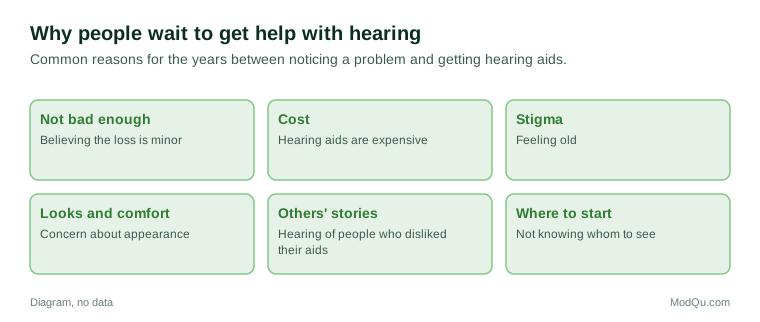
Studies of hearing aid use have found that many people wait years between first noticing hearing difficulty and getting hearing aids. Common reasons include:
- not believing the loss is bad enough;
- cost;
- stigma and feeling old;
- concern about appearance and comfort;
- hearing about others who did not like their aids;
- not knowing where to start.
Researchers have found links between untreated hearing loss and social isolation, and studies have explored a possible link with cognitive decline. These findings have led to more public messages encouraging people to have their hearing checked.
Hearing aids
Modern hearing aids are small digital devices that amplify sound and can be adjusted to a person's hearing profile. Styles include behind-the-ear, receiver-in-canal and in-the-ear models. Many connect by Bluetooth to phones and televisions, and some are rechargeable.
Fitting hearing aids is a process, not a single purchase. It usually includes a hearing assessment, selection, fitting, adjustments over several weeks and ongoing follow-up.
Example (hypothetical figures)
A retired teacher is quoted $5,200 for a pair of mid-range hearing aids, including fittings and follow-up for three years. A provincial program covers $500 every five years, and her retiree benefits cover another $1,000. She pays the remaining $3,700, spread over 12 months.
The cost of hearing aids and coverage
Hearing aids can be expensive, and prices vary widely between clinics, brands and technology levels. Prices often bundle the devices with professional services. Coverage comes from a patchwork of sources: some provincial programs, workplace and retiree benefits, Veterans Affairs Canada, workers' compensation for work-related noise loss, and tax credits. Many people pay most of the cost themselves.
Over-the-counter and online options
In some countries, over-the-counter hearing aids for adults with mild to moderate hearing loss can be bought without a professional fitting. In the United States, this category was created by regulation in 2022. Other devices, such as personal sound amplifiers and earbuds with hearing features, are widely available. These options can cost less, but buyers miss the professional assessment that can identify medical causes of hearing loss.
Living with hearing loss
People with hearing loss use many strategies besides hearing aids:
- captions on television and videos;
- sitting with their back to the wall in restaurants;
- asking people to face them when speaking;
- assistive listening systems in theatres and places of worship;
- phone apps that turn speech into text;
- cochlear implants for severe to profound loss.
Example
A woman with moderate hearing loss works in an open-plan office. With hearing aids that stream calls directly from her phone and live captions on video meetings, she says work is easier than it has been in years.
Protecting hearing
Noise-induced hearing loss is preventable. Protection includes earplugs and earmuffs at work, at concerts and when using power tools, keeping personal music volumes moderate, and taking breaks from noise. Occupational health rules set noise limits at work, but many people are exposed to loud noise in their leisure time.
Tinnitus
Tinnitus, a ringing, buzzing or hissing sound in the ears without an outside source, is common and often comes with hearing loss. For some people it is mild; for others it disturbs sleep and concentration. Management options include sound therapy, hearing aids with tinnitus features and counselling.
What hearing care providers want to know
Hearing clinics, manufacturers, retailers, insurers and health planners want to understand how many people have had a hearing test, how long they wait before getting help, what they pay, where they buy and how satisfied they are with their devices.
Key terms
- AudiologistA regulated health professional who diagnoses and manages hearing loss.
- Hearing instrument practitionerA professional who tests hearing and fits hearing aids.
- PresbycusisGradual hearing loss caused by ageing.
- TinnitusRinging or other sounds in the ears without an outside source.
- Sensorineural hearing lossHearing loss from damage to the inner ear or hearing nerve.
- Conductive hearing lossHearing loss from problems in the outer or middle ear.
- Cochlear implantA surgically implanted device that provides sound signals for severe hearing loss.
- AudiogramA chart showing the results of a hearing test.
Full glossary: hearing aid services terms on EditingTests.com.
Hearing health vocabulary test
How well do you know the language of this topic? Try 8 quick questions. Your score is shown straight away and is not saved.
What the hearing health survey asks
This survey is part of ModQu's Health and Wellness survey. The hearing health part takes about five minutes and covers:
- Whether you have noticed any difficulty hearing, and for how long.
- When you last had a hearing test, and who did it.
- Whether you use hearing aids, and how you bought them.
- What hearing aids cost you, and how you paid.
- What has stopped you, or others you know, from getting help sooner.
- How you protect your hearing from loud noise.
After that you can choose to continue with other short parts of the Health and Wellness survey, such as access to family doctors or virtual care and telehealth, or stop.
Ready to take part?
Your answers help show what people really think and do. Results are only ever reported as totals; no one can see your individual answers.
Start the surveyQuestions about this survey
Who can take part?
Adults aged 40 and over.
Do I have to give my name?
No. You may be asked for your age group, region and similar details so results can be broken down, but not your name. ModQu never asks for passwords, card numbers or account numbers.
How are the results used?
Answers are combined into totals and percentages and published in ModQu reports. Individual answers are never shown.
Is the vocabulary test part of the survey?
No. It is optional and separate, and your score is not stored.
Is the survey accessible if I have hearing loss?
Yes. The survey is written, with no audio, and works with screen readers and text enlargement.
Can I answer for a family member?
The survey asks about your own experience, but some questions ask whether family members noticed changes in your hearing before you did.