
Share how you garden
Tell us whether you garden, what you grow and how much you spend on gardening each year. Your answers are combined with other people's and reported only as totals.
Start the gardening as a hobby surveyAbout 5 minutes. No account needed. You can stop at any time.
What gardening covers
Gardening as a hobby means growing and caring for plants for pleasure, food or both. It includes:
- Ornamental gardening: flowers, shrubs, trees and lawns.
- Growing food: vegetables, fruit and herbs.
- Container gardening: plants in pots, window boxes and hanging baskets.
- Indoor plants: houseplants grown inside the home.
- Wildlife gardening: planting to support birds, bees and other wildlife.
- Specialist interests: such as roses, orchids, cacti, bonsai or water gardens.
- Garden design and landscaping: paths, patios, beds and structures.
People garden in many settings, and the activity looks very different in a cool, rainy climate than in a hot, dry one.
Where people garden
Not everyone has a private garden. People grow plants in:
- Private gardens and yards.
- Balconies, terraces and rooftops.
- Windowsills and indoors.
- Allotments or community plots, rented from a local authority or group. These are common in parts of Europe and are known by different names elsewhere.
- Community gardens, shared by neighbours.
- School and workplace gardens.
- Rural smallholdings, where growing food may be part of household income as well as a hobby.
Example
A person living in a city apartment with a small balcony grows tomatoes, chillies and herbs in pots. In the first summer only the herbs do well, because the balcony gets afternoon shade. The next year they move the tomatoes to a sunnier corner and use larger pots.
What people grow
What people grow depends on climate, space, time and taste. Common choices include:
- Herbs, such as basil, mint, parsley and coriander, which grow well in small spaces.
- Salad crops and leafy greens.
- Tomatoes, peppers and beans.
- Root vegetables, such as potatoes and carrots.
- Fruit, such as strawberries, berries, citrus or fruit trees.
- Flowers, for colour, scent and cutting.
- Native plants, suited to the local climate and wildlife.
- Houseplants, which have become very popular among younger adults in many countries.
Time and effort
Gardening can take a few minutes a week or many hours. The time needed depends on the size of the space, the plants, the season and the climate. Common tasks include:
- Sowing seeds and planting.
- Watering.
- Weeding.
- Pruning and deadheading.
- Mowing lawns.
- Feeding plants and improving soil.
- Dealing with pests and diseases.
- Harvesting and clearing at the end of the season.
Many people garden more in spring and summer in temperate regions, or in the cooler or rainy seasons in hot climates.
Costs and spending
Gardening can be cheap or expensive. Spending commonly includes:
- Plants and seeds.
- Compost, soil and fertilizers.
- Pots and containers.
- Tools, such as spades, forks, trowels, pruners, hoses and lawn mowers.
- Garden furniture and decorations.
- Allotment or plot rent.
- Water, where it is charged by use.
- Professional help, such as tree surgeons or landscapers.
Gardeners often save money by growing from seed, taking cuttings, swapping plants, making compost and saving seeds.
Example (hypothetical figures)
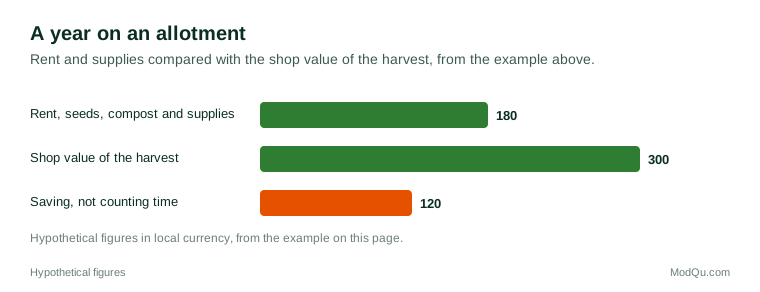
A gardener rents an allotment for 60 a year in their local currency and spends 40 on seeds, 50 on compost and 30 on other supplies, a total of 180. They estimate that the vegetables and fruit they harvest would cost 300 to buy in a shop, so the plot saves them about 120, not counting their time.
Why people garden
Reasons gardeners give include:
- Enjoyment and a sense of achievement.
- Fresh food and knowing how it was grown.
- Being outdoors and physical activity.
- Relaxation and wellbeing. Research has linked gardening and time in green spaces to wellbeing, though the strength of the effects varies between studies.
- Saving money on food.
- Supporting wildlife and the environment.
- Social contact, at community gardens and allotments.
- Tradition, as a family or cultural practice.
Water, wildlife and the environment
Environmental questions have become a large part of gardening:
- Water use: many regions face water restrictions during dry periods, and gardeners use rain barrels, drip irrigation and drought-tolerant plants.
- Peat-free compost: some countries are reducing or banning peat in garden compost to protect peatlands.
- Pesticides and herbicides: many gardeners are choosing fewer chemicals, and some products have been restricted.
- Pollinators: planting flowers for bees, butterflies and other insects.
- Lawns: debates about reducing lawn areas or mowing less to support wildlife.
- Invasive plants: species that spread beyond gardens and harm local ecosystems.
Example
A household in a dry region replaces half its lawn with native shrubs and gravel paths, and installs a rain tank connected to the roof. Their water use for the garden falls, and they notice more birds visiting.
Learning to garden
Many gardeners learn from family members, neighbours and other plot holders. Others use books, magazines, television programs, online videos, garden centre staff and gardening clubs. Seed packets and plant labels give basic growing information. Beginners often start with easy crops, such as herbs, salad leaves and beans, and learn from mistakes, such as planting too early or watering too little.
Trends and debates
Current trends include:
- Houseplants and indoor gardening, especially among younger people in cities.
- Growing your own food, which rose sharply in many countries during the COVID-19 pandemic.
- Waiting lists for allotments in some cities.
- Wildlife-friendly and low-maintenance gardens.
- Online plant shops and gardening content.
- Climate change, which is changing what can be grown in many places.
What people and businesses want to know
Questions businesses want answered include how many people garden, where, what they grow, how much time they spend, what they spend each year and where they buy supplies, and whether environmental concerns affect their choices.
Key terms
- AllotmentA plot of land rented for growing plants, often from a local authority.
- Container gardeningGrowing plants in pots and other containers.
- CompostDecomposed organic matter used to improve soil.
- DeadheadingRemoving faded flowers to encourage more blooms.
- PruningCutting back parts of a plant to shape it or improve growth.
- Drip irrigationWatering plants slowly through tubes at the roots.
- Native plantA plant that grows naturally in a particular region.
- PollinatorAn animal, such as a bee, that moves pollen between flowers.
Full glossary: horticulture terms on EditingTests.com.
Gardening as a hobby vocabulary test
How well do you know the language of this topic? Try 8 quick questions. Your score is shown straight away and is not saved.
What the gardening as a hobby survey asks
This survey is part of ModQu's Leisure and Lifestyle survey. The gardening as a hobby part takes about five minutes and covers:
- Whether you garden, and where: a garden, balcony, allotment, community garden or indoors.
- What you grow, such as flowers, vegetables, fruit, herbs or houseplants.
- How much time you spend gardening in a typical week, by season.
- How much you spend on gardening in a year, and where you buy supplies.
- Why you garden, and what you enjoy most.
- Whether water, wildlife or other environmental concerns affect what you do.
After that you can choose to continue with other short parts of the Leisure and Lifestyle survey, such as gambling and lotteries or cannabis, or stop.
Ready to take part?
Your answers help show what people really think and do. Results are only ever reported as totals; no one can see your individual answers.
Start the surveyQuestions about this survey
Who can take part?
Adults with access to a garden, balcony or plot.
Do I have to give my name?
No. You may be asked for your age group, region and similar details so results can be broken down, but not your name. ModQu never asks for passwords, card numbers or account numbers.
How are the results used?
Answers are combined into totals and percentages and published in ModQu reports. Individual answers are never shown.
Is the vocabulary test part of the survey?
No. It is optional and separate, and your score is not stored.
Can I garden without a garden?
Yes. Many people grow herbs, salad crops and flowers in pots on balconies and windowsills, keep houseplants, or rent a plot or join a community garden.
When is the best time to start?
It depends on the climate. In temperate regions many people start sowing in spring, while in hot climates the cooler or rainier months are often the main growing season.
How much time does a small garden need?
A few pots or a small bed may need only a few minutes a day for watering in warm weather, plus occasional weeding and feeding.