
Share what you collect
Tell us whether you collect anything, what you collect and where you buy and sell items. Your answers are combined with other people's and reported only as totals.
Start the collecting and memorabilia surveyAbout 5 minutes. No account needed. You can stop at any time.
What collecting covers
Collecting means gathering objects of a particular kind, usually over a long time, for interest, enjoyment or value. Almost anything can be collected. Common categories include:
- Stamps and postal history, a hobby known as philately.
- Coins and banknotes, known as numismatics.
- Trading cards, for sports, games and entertainment.
- Toys and figures, such as model cars, dolls, action figures and building sets.
- Sports memorabilia, such as signed shirts, programs, tickets and equipment.
- Music, including vinyl records, posters and concert items.
- Books and comics, including first editions and signed copies.
- Art, prints and ceramics.
- Watches, jewellery and vintage clothing.
- Natural objects, such as shells, fossils and minerals.
- Everyday items, such as fridge magnets, keyrings, postcards and bottle caps.
Some people collect seriously and spend large sums; others keep a small collection for pleasure. Memorabilia means objects valued because they are linked to a person, place or event, such as a famous match or a band.
Why people collect
Collectors give many reasons:
- Enjoyment of searching, finding and completing a set.
- Nostalgia, especially for items from childhood.
- Learning, about history, design, sport or places.
- Social connection, through clubs, fairs and online groups.
- Display, showing items at home.
- Investment, hoping that items will rise in value.
- Family connection, such as continuing a parent's collection.
Example
A man inherits his grandfather's stamp albums. At first he plans to sell them, but he starts reading about the countries and dates on the stamps and joins a local stamp club. A year later he is adding to the collection himself.
Where collectors buy and sell
Collectors use a wide range of places:
- Specialist shops, such as coin dealers, comic shops and record shops.
- Fairs, conventions and swap meets.
- Auction houses, from local auctions to large international sales.
- Online marketplaces and auction sites.
- Collector forums and social media groups.
- Flea markets, car boot sales and garage sales.
- Charity shops and second-hand stores.
- Direct from makers, such as limited-edition releases.
Buying online gives access to far more items, but buyers cannot always inspect them. Many collectors prefer meeting sellers in person for expensive items.
Condition, rarity and value
The value of a collectible usually depends on:
- Rarity: how many were made and how many survive.
- Condition: wear, damage, fading and whether items are complete.
- Demand: how many people want it, which can change with fashion.
- Provenance: the documented history of ownership, especially important for memorabilia.
- Originality: whether it has been repaired or altered.
- Packaging: for toys and some other items, the original box can add a large share of the value.
For some items, such as trading cards, comics and coins, independent grading companies assess condition and seal the item in a labelled case with a grade. Graded items often sell for more than ungraded ones, but grading costs money and takes time.
Example (hypothetical figures)
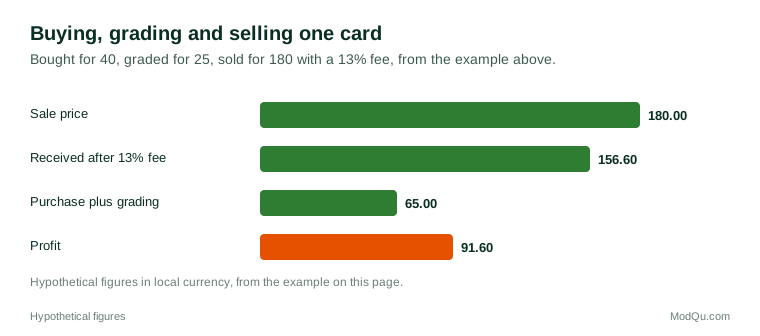
A collector buys a trading card for 40 in their local currency and pays 25 to have it graded. It receives a high grade and sells for 180, minus a 13% platform fee of 23.40, leaving 156.60. After the purchase price and grading fee, the profit is 91.60.
Fakes and fraud
Fakes are a major concern in many areas of collecting, especially signed memorabilia, coins, art and rare toys. Common problems include:
- Forged signatures on shirts, photos and balls.
- Reproductions sold as originals.
- Altered items, such as repaired cards or re-coloured stamps sold without disclosure.
- Misleading listings online, with unclear photos.
- Fake certificates of authenticity.
Collectors reduce the risk by buying from known dealers, asking for provenance, using authentication services, and being cautious about prices that seem too good to be true.
Example
A football fan buys a shirt online described as signed by a famous team. The certificate that comes with it names a company they cannot find. An authentication service later says the signatures do not match known examples, and the fan asks the platform for a refund.
Storing and caring for a collection
Collections can be damaged by light, damp, heat, insects and handling. Collectors use:
- Acid-free albums, sleeves and boxes.
- Display cases away from direct sunlight.
- Climate control or dehumidifiers for valuable items.
- Gloves for handling some items.
- Records and photographs of each item, useful for insurance.
Many home insurance policies limit cover for collections, so some collectors take out specialist insurance.
Investment and money
Some collectibles have risen sharply in value, and stories of rare finds attract attention. However, values can fall as quickly as they rise, markets for some items are small, and selling can involve high fees and take time. Many collectors and dealers say it is wise to collect for enjoyment first. Tax rules on selling collectibles vary between countries.
Example
A parent keeps a box of their child's toys from the 1990s. Years later, they look up prices online and find that a few boxed items are worth much more than they paid, while most of the loose toys sell for very little.
Trends and debates
Current trends in collecting include:
- Trading card booms, with large price swings.
- Limited releases and "drops", where items sell out quickly and are resold at higher prices.
- Nostalgia collecting, as people collect items from their own childhoods.
- Online communities and live-stream sales.
- Digital collectibles, including some sold as digital tokens, whose markets have been volatile.
- Cultural heritage concerns, such as laws limiting the trade in antiquities, fossils and items from protected species.
People disagree about whether collecting for profit changes the hobby, and about the effect of resellers who buy limited items in bulk.
What people and businesses want to know
Questions businesses want answered include how many people collect, what they collect, how much they spend, where they buy and sell, whether they collect for enjoyment or investment, and what worries them about fakes and fees.
Key terms
- MemorabiliaObjects valued because of their link to a person, place or event.
- PhilatelyThe collecting and study of stamps.
- NumismaticsThe collecting and study of coins and banknotes.
- ProvenanceThe documented history of an item's ownership.
- GradingAn independent assessment of an item's condition, given as a grade.
- Certificate of authenticityA document claiming an item is genuine.
- Limited editionAn item made in a fixed, small number.
- ReproductionA copy of an original item.
Full glossary: art market terms on EditingTests.com.
Collecting and memorabilia vocabulary test
How well do you know the language of this topic? Try 8 quick questions. Your score is shown straight away and is not saved.
What the collecting and memorabilia survey asks
This survey is part of ModQu's Leisure and Lifestyle survey. The collecting and memorabilia part takes about five minutes and covers:
- Whether you collect anything, and what you collect.
- How long you have collected, and why you started.
- Where you buy and sell items, such as shops, fairs, auctions or online.
- How much you spent on your collection in the last year.
- Whether you collect mainly for enjoyment, display or investment.
- Whether you have bought a fake or had other problems, and what happened.
After that you can choose to continue with other short parts of the Leisure and Lifestyle survey, such as gambling and lotteries or cannabis, or stop.
Ready to take part?
Your answers help show what people really think and do. Results are only ever reported as totals; no one can see your individual answers.
Start the surveyQuestions about this survey
Who can take part?
Adults.
Do I have to give my name?
No. You may be asked for your age group, region and similar details so results can be broken down, but not your name. ModQu never asks for passwords, card numbers or account numbers.
How are the results used?
Answers are combined into totals and percentages and published in ModQu reports. Individual answers are never shown.
Is the vocabulary test part of the survey?
No. It is optional and separate, and your score is not stored.
How do I find out what an item is worth?
Collectors often compare recent sold prices for similar items, ask specialist dealers or clubs, or use a valuation service. Asking prices online can be much higher than what items actually sell for.