
Share your view of sustainable fashion
Tell us whether you look for sustainable clothing, which labels you trust and whether you would pay more. Your answers are combined with other people's and reported only as totals.
Start the sustainable fashion surveyAbout 5 minutes. No account needed. You can stop at any time.
What sustainable fashion means
There is no single legal definition of sustainable fashion. The term is used for clothing and practices that aim to reduce environmental and social harm across the life of a garment, from fibre to disposal. It usually includes:
- Materials that use fewer resources or less harmful chemicals, or that are recycled.
- Production with lower energy and water use and less pollution.
- Fair working conditions, including safe factories and decent pay.
- Durability, so clothes last longer.
- Reuse and repair, through second-hand, rental and mending.
- End of life, so clothes can be recycled or break down safely.
Related terms include ethical fashion, which focuses on people and animals, slow fashion, which focuses on buying less and keeping clothes longer, and circular fashion, which aims to keep materials in use for as long as possible.
Materials and what they mean
Shoppers often see claims about materials. Common examples include:
- Organic cotton, grown without synthetic pesticides and fertilisers.
- Recycled polyester and nylon, often made from plastic bottles or used textiles.
- Linen and hemp, plant fibres that usually need less water and fewer chemicals than conventional cotton.
- Lyocell and other regenerated fibres made from wood pulp in processes that recover solvents.
- Wool, silk and leather, natural animal fibres that raise questions about animal welfare and land use as well as their environmental footprint.
- Deadstock fabric, unused fabric left over from other production.
No material is impact-free. Each has trade-offs in water, land, energy, chemicals, durability and recyclability, and how a garment is made and used can matter as much as the fibre.
Example
A shopper chooses between two plain T-shirts: one in organic cotton and one in a cotton and polyester blend made with recycled polyester. They pick the organic cotton shirt because it is a single fibre, which they have read is easier to recycle, even though both have sustainability claims on the label.
Labels, certifications and greenwashing
Many garments carry claims such as "eco", "green", "conscious" or "responsible". Some claims are backed by independent certifications that check fibres, chemicals or factories against published standards. Others are vague marketing.
Greenwashing is the term for making a product seem more environmentally friendly than it is. Common forms include vague words with no evidence, highlighting one small improvement while ignoring larger impacts, and using green imagery. Consumer protection authorities in several regions have issued guidance on environmental claims and taken action against misleading ones, and some regions are introducing rules that require claims to be specific and supported.
Ways shoppers check claims include looking for named, independent certifications, checking what share of a garment is made from the claimed material, reading the brand's published information about its suppliers, and being cautious about general terms.
Price and willingness to pay
Sustainable clothing often costs more than fast fashion. Reasons include higher material costs, smaller production runs, higher wages and certification fees. Many shoppers say they would pay more for sustainable clothing, but fewer actually do when they are at the till. Researchers call this the attitude-behaviour gap and note that price, availability, style and trust all play a part.
Example (hypothetical figures)
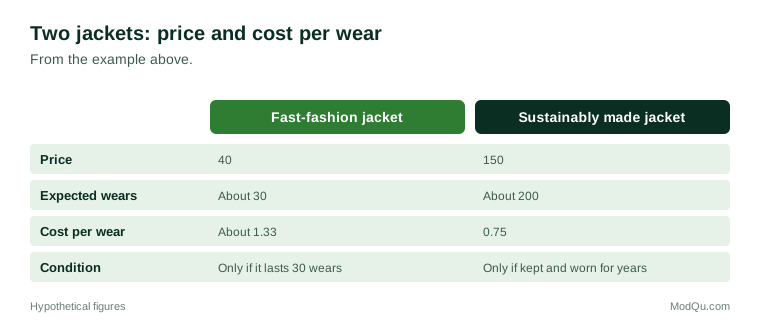
A shopper compares two jackets. A fast-fashion jacket costs 40 and they expect to wear it 30 times before it wears out. A sustainably made jacket costs 150 and they expect to wear it 200 times over several years. The first costs about 1.33 per wear (40 ÷ 30) and the second 0.75 per wear (150 ÷ 200). The dearer jacket is cheaper per wear, but only if they keep and wear it for that long.
Buying less and making clothes last
Many people who care about sustainable fashion say the most effective step is not buying a different product but using clothes longer. Common habits include:
- buying fewer, better-made items;
- choosing second-hand or vintage;
- repairing holes, replacing buttons and re-soling shoes;
- washing less often and at lower temperatures, and air-drying;
- renting or borrowing for one-off events;
- passing on, selling or donating clothes instead of throwing them away.
Example
A person sets a goal to buy no new clothes for a year except underwear and socks. They learn to sew on buttons and patch jeans, buy two items second-hand and borrow a suit for a wedding. At the end of the year they decide to keep the habit of buying second-hand first.
Second-hand as sustainable fashion
For many shoppers the most accessible sustainable choice is second-hand. Buying used clothes keeps garments in use for longer and usually costs less than buying new. Second-hand clothing is sold in charity and thrift shops, vintage shops, markets, online marketplaces and resale apps. Some brands now buy back their own used items and resell them. Shoppers who buy second-hand mention lower prices, unique items and environmental benefits, while those who avoid it mention hygiene, time spent searching and limited sizes.
What governments and brands are doing
Approaches differ between countries. Measures discussed or introduced in some regions include requirements for textile collection and recycling, rules on environmental claims, limits on destroying unsold goods, product information such as digital product passports, and due diligence rules that require large companies to check for human rights and environmental risks in their supply chains. Brands have responded with recycled ranges, repair services, resale platforms and published supplier lists, though critics say progress is slow compared with the volume of clothing produced.
Questions businesses want answered
Questions that businesses want answered about sustainable fashion include which claims shoppers notice and believe, how much more they would pay and for which items, whether they would use repair or take-back services, and whether concern about the environment actually changes how much they buy.
What people disagree about
- Whose responsibility. Some say consumers should buy less; others say governments and brands must change how clothes are made.
- Affordability. Sustainable fashion can be out of reach for people on low incomes, though second-hand and buying less can save money.
- Trust. Many shoppers are unsure which claims to believe.
- Natural versus synthetic. People disagree about whether natural fibres or recycled synthetics are better, since each has different impacts.
Key terms
- Sustainable fashionClothing made, bought and used in ways that aim to reduce harm to people and the environment.
- GreenwashingMaking a product seem more environmentally friendly than it is.
- Organic cottonCotton grown without synthetic pesticides and fertilisers.
- Slow fashionAn approach based on buying less and keeping clothes longer.
- Circular fashionKeeping clothes and materials in use for as long as possible through reuse, repair and recycling.
- CertificationIndependent checking of a product or process against a published standard.
- DeadstockUnused fabric or unsold garments left over from production.
- Due diligenceChecking supply chains for risks such as human rights abuses or environmental harm.
Full glossary: fashion design terms on EditingTests.com.
Sustainable fashion vocabulary test
How well do you know the language of this topic? Try 8 quick questions. Your score is shown straight away and is not saved.
What the sustainable fashion survey asks
This survey is part of ModQu's Fashion and Style survey. The sustainable fashion part takes about five minutes and covers:
- Whether you look for sustainable clothing when you shop.
- Which labels, certifications or claims you trust, and which you doubt.
- Whether you would pay more for sustainable clothing, and how much more.
- Which habits you practise: buying less, second-hand, repair, rental or recycling.
- What stops you buying more sustainable clothing: price, choice, style or trust.
- Who you think should do most to make fashion sustainable.
After that you can choose to continue with other short parts of the Fashion and Style survey, such as footwear or sportswear and athleisure, or stop.
Ready to take part?
Your answers help show what people really think and do. Results are only ever reported as totals; no one can see your individual answers.
Start the surveyQuestions about this survey
Who can take part?
Adults.
Do I have to give my name?
No. You may be asked for your age group, region and similar details so results can be broken down, but not your name. ModQu never asks for passwords, card numbers or account numbers.
How are the results used?
Answers are combined into totals and percentages and published in ModQu reports. Individual answers are never shown.
Is the vocabulary test part of the survey?
No. It is optional and separate, and your score is not stored.