
Share how you wear sportswear
Tell us whether you wear sports clothing day to day, what you spend and where you buy it. Your answers are combined with other people's and reported only as totals.
Start the sportswear and athleisure surveyAbout 5 minutes. No account needed. You can stop at any time.
What sportswear and athleisure mean
Sportswear is clothing made for physical activity: running tops, shorts, leggings, sports bras, tracksuits, swimwear, cycling kit, team shirts and the shoes worn with them. It is designed to move with the body, manage sweat and suit a particular sport or climate.
Athleisure is a newer word that joins "athletic" and "leisure". It describes sports-style clothing worn for everyday life rather than for exercise: leggings worn to the shops, a hoodie and joggers worn at home or on a flight, or trainers worn with a suit. Some athleisure items are ordinary sports clothes; others are designed to look smarter while keeping the comfort and stretch of sportswear.
The line between the two is blurred. The same pair of leggings might be worn to a yoga class in the morning and to a café in the afternoon. That is one reason sportswear has become one of the largest parts of the clothing market in many countries.
Why people wear sports clothes when not exercising
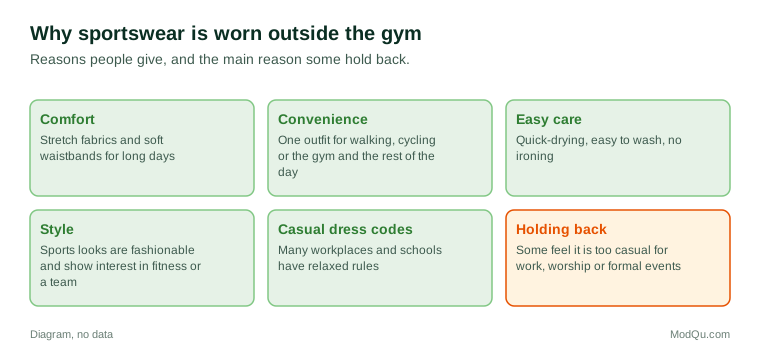
People give several reasons for wearing sportswear day to day:
- Comfort. Stretch fabrics, soft waistbands and loose fits are comfortable for long days, travel and working from home.
- Convenience. People who walk, cycle or go to the gym before or after work can wear one outfit all day.
- Practicality. Sports fabrics dry quickly, wash easily and often need no ironing.
- Style. Sportswear has become fashionable, and some people use it to show interest in fitness, a team or a particular look.
- Changing dress codes. Many workplaces, schools and social settings have become more casual.
Others have reservations. Some people feel sportswear looks too casual for work, places of worship or formal events, and some schools and employers set rules about it. Attitudes vary widely between countries, age groups and settings.
Example
A parent who works from home three days a week buys two pairs of joggers and two plain sweatshirts that can go from a video call to the school run to an evening walk. On office days they still wear trousers and a shirt because their team meets clients in person.
The main kinds of sportswear
- Performance wear made for a sport, such as running tights, padded cycling shorts, football boots and swimwear.
- Training and gym wear for general exercise: T-shirts, shorts, leggings and sports bras.
- Outdoor wear for walking, hiking and cold or wet weather: fleeces, waterproof jackets and thermal layers.
- Team and fan wear: replica shirts, scarves and caps that show support for a club or national side.
- Lifestyle and athleisure lines that borrow sports styles for everyday use.
- Adaptive and modest sportswear, such as clothes that are easy to put on for people with disabilities, or full-coverage swimwear and sports hijabs for people who dress modestly.
Fabric matters a lot in sportswear. Synthetic fibres such as polyester, nylon and elastane are common because they stretch, dry quickly and move moisture away from the skin. Natural fibres such as cotton and merino wool are also used, especially for comfort and warmth.
How people choose and what they spend
When buying sportswear people weigh comfort, fit, price, durability, how the item looks and whether it suits their activity. Brand also plays a large role in this category, especially in shoes and team wear, where logos and designs are part of the appeal.
Spending varies widely. Some people buy a few basic items from a supermarket or discount store and wear them for years. Others buy specialist gear for one or more sports and replace it often.
Example (hypothetical figures)
A runner tracks their sportswear spending for a year: 140 on two pairs of running shoes, 60 on shorts and tops, 45 on a lightweight rain jacket and 35 on hoodies and leggings worn mostly at home. That is 280 in total, of which half (140) went on shoes.
Where people buy sportswear
Sportswear is sold through:
- sports shops, from large chains to small specialist running, cycling or climbing shops;
- clothing chains with an active-wear range;
- supermarkets and discount stores;
- brand websites, online marketplaces and social media shops;
- club shops and stadiums for team kit;
- outlet stores and second-hand sellers.
Specialist shops can offer advice and fitting, for example gait analysis for running shoes or bra fitting for sports bras. Online shops offer wider ranges and price comparison. Questions that businesses want answered include which channels people use, how much they rely on reviews, and whether they wait for sales.
Caring for sportswear and making it last
Sports clothes are washed often, which wears them out faster than many other clothes. Common advice on care labels includes washing at lower temperatures, avoiding fabric softener on technical fabrics (it can reduce their ability to move moisture), and air-drying rather than tumble-drying to protect elastane. Odour can build up in synthetic fabrics, and some people replace items because of smell rather than visible wear.
Example
A cyclist finds that their padded shorts lose their stretch after a year. They read the care label, switch to cold washes and line drying, and rotate between two pairs. The next pair lasts noticeably longer.
Trends and debates
Several issues come up often in discussions of sportswear:
- Comfort as the norm. Comfort expectations set by sportswear have spread to work clothes and even formal wear.
- Environmental impact. Synthetic fabrics are made from fossil fuels, and washing them can shed microfibres into waste water. Some makers use recycled polyester or offer repair and take-back schemes, and people disagree about how much difference these make.
- Price and branding. Some buyers feel branded sportswear is worth the price for quality and design; others think basic items from cheaper stores perform just as well for everyday use.
- Inclusive ranges. Wider size ranges, maternity sportswear, adaptive clothing and modest options have grown, but many buyers still report gaps.
- Dress codes. Schools, employers and venues continue to debate when sports clothing is acceptable.
A survey can show how sportswear is actually worn: how many days a week people wear it outside exercise, what they spend, and what they would like to see changed.
Key terms
- AthleisureSports-style clothing worn for everyday life rather than exercise.
- Performance wearClothing designed for the demands of a particular sport.
- Moisture-wickingFabric that moves sweat away from the skin so it can evaporate.
- ElastaneA stretchy synthetic fibre added to fabrics for flexibility, also called spandex or Lycra.
- Base layerA close-fitting garment worn next to the skin to manage warmth and sweat.
- Compression wearTight-fitting garments that apply gentle pressure to muscles.
- Replica kitA copy of a sports team's official shirt and shorts sold to fans.
- MicrofibresTiny fibres that can be shed from synthetic fabrics when washed.
Full glossary: apparel manufacturing terms on EditingTests.com.
Sportswear and athleisure vocabulary test
How well do you know the language of this topic? Try 8 quick questions. Your score is shown straight away and is not saved.
What the sportswear and athleisure survey asks
This survey is part of ModQu's Fashion and Style survey. The sportswear and athleisure part takes about five minutes and covers:
- Whether you wear sportswear when you are not exercising, and how often.
- Which items you wear most: leggings, joggers, hoodies, trainers or others.
- How much you spend on sportswear in a year.
- Where you buy it: sports shops, clothing chains, online or second-hand.
- What matters most: comfort, price, brand, performance or look.
- Whether dress codes at work or school limit when you can wear it.
After that you can choose to continue with other short parts of the Fashion and Style survey, such as footwear or luxury goods, or stop.
Ready to take part?
Your answers help show what people really think and do. Results are only ever reported as totals; no one can see your individual answers.
Start the surveyQuestions about this survey
Who can take part?
Adults.
Do I have to give my name?
No. You may be asked for your age group, region and similar details so results can be broken down, but not your name. ModQu never asks for passwords, card numbers or account numbers.
How are the results used?
Answers are combined into totals and percentages and published in ModQu reports. Individual answers are never shown.
Is the vocabulary test part of the survey?
No. It is optional and separate, and your score is not stored.