
Share your experience of renting or swapping clothes
Tell us whether you have rented clothes, been to a clothes swap or would rent for special occasions. Your answers are combined with other people's and reported only as totals.
Start the renting and swapping clothes surveyAbout 5 minutes. No account needed. You can stop at any time.
Ways to wear clothes without buying them
There are several ways to use clothing without owning it permanently:
- One-off rental: hiring an outfit for a single event, such as a wedding, prom, graduation, gala or job interview. Formal suits and wedding clothes have been rented for generations; designer dresses and accessories are newer additions.
- Rental subscriptions: paying a monthly fee to receive a set number of items, wearing them, then returning them for new ones.
- Peer-to-peer rental: individuals renting their own clothes to others through online platforms or local groups.
- Clothes swaps: events or online groups where people bring clothes they no longer wear and take home others' items.
- Borrowing: from friends, family and colleagues, still the most common way of "renting" for free.
- Clothing libraries: community or membership schemes where people borrow items for a period, like books from a library.
- Specialist rental: maternity wear, ski and outdoor clothing, costumes and children's clothes that are outgrown quickly.
Why people rent or swap
People give different reasons:
- Cost: renting a designer outfit for one event costs a fraction of buying it.
- Variety: wearing something new without filling the wardrobe.
- One-off occasions: avoiding buying clothes that will be worn once.
- Environment: making more use of clothes that already exist.
- Trying before buying: some rental services let people buy items they like.
- Life stages: pregnancy, rapid weight change or children's growth, when clothes are needed for a short time.
- Social reasons: swaps are often social events, combined with food or workshops.
Example
A guest invited to three weddings in one summer rents a different formal outfit for each. They do not want to be photographed in the same outfit at events where many of the same people will attend, and they do not want to buy three outfits they will rarely wear again.
How rental services work
A typical online rental works like this: the customer chooses an item and a date, the item arrives a day or two before the event, they wear it, and they return it in a prepaid package. The rental company cleans it, checks for damage and sends it to the next customer. Prices usually depend on the item's retail value and the rental length, and often include cleaning.
Many services offer optional damage cover for a small fee, and charge for late returns, lost items or damage beyond normal wear. Some ask for a deposit. Local rental shops, especially for formal suits and traditional wedding clothing, often include fitting and alterations.
Example (hypothetical figures)
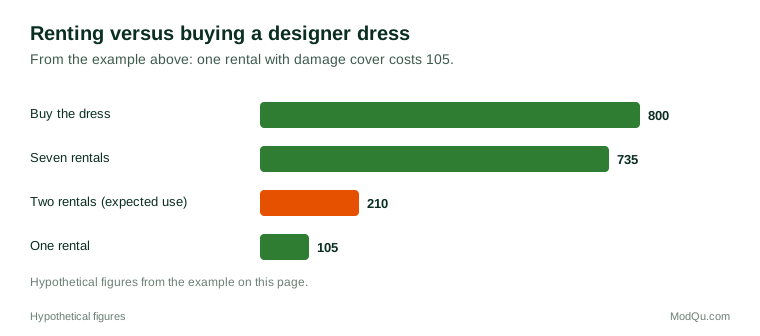
A designer dress costs 800 to buy. Renting it for four days costs 95, plus 10 for optional damage cover, making 105. The renter would need to rent it about seven times (7 × 105 = 735) before the total approached the purchase price. They expect to wear a dress like this twice in five years, so renting is far cheaper for them.
Clothes swaps
Clothes swaps are organised by friends, schools, workplaces, community groups, libraries and environmental groups. Common formats include:
- One-for-one: each item brought earns a token to take one item.
- Free-for-all: everyone brings what they like and takes what they like.
- Themed swaps: children's clothes, workwear, formal wear or plus sizes.
- Online swap groups, where people post items and arrange exchanges or postage.
Unclaimed items are usually donated to charity at the end. Swaps work best with clean items in good condition and a mix of sizes, and organisers often set simple rules about quality.
Example
A school runs a uniform swap at the end of each summer term. Parents bring outgrown jumpers, trousers and sports kit and take the next size up. The school's parent group gives unclaimed items to families who start mid-year.
What puts people off
People who have not rented or swapped clothes, or who tried once and stopped, mention:
- Hygiene: unease about wearing clothes others have worn, even after professional cleaning.
- Fit: a rented item cannot be altered, and there may be no time to exchange it before an event.
- Damage worries: fear of being charged for a spill or a tear.
- Availability: popular items and sizes may be booked out, and choice in larger or smaller sizes can be limited.
- Cost of subscriptions: monthly fees can add up to more than buying a few items.
- Effort: returning items, booking dates and waiting for deliveries.
- Ownership: some people enjoy owning their clothes and keeping them for memories.
Is renting better for the environment?
Renting is often presented as a greener choice because each garment is worn more times. Studies have found that the benefit depends on the details: delivery and return trips, dry cleaning, packaging and how long rented items last can reduce or cancel out the gains, especially when items are sent long distances for a single wear. Local rental, swaps and borrowing usually involve less transport. People disagree about how much rental reduces the number of new clothes bought, since some renters still buy as much as before.
Rental for traditional and formal wear
In many parts of the world renting formal and traditional clothing is long established. Suit and tuxedo hire shops serve weddings, proms and formal dinners. Wedding dress and traditional wedding outfit rental is common in many countries, where outfits can be elaborate and expensive and worn for only a few hours. Costume hire serves theatre, festivals and parties. These local services usually include fitting, small adjustments and cleaning, and are often booked weeks or months in advance during busy seasons.
Who uses rental and swaps
Rental and swaps are used by people of many ages and incomes, but patterns differ. Formal and wedding wear rental is long established in many countries. Online designer rental is concentrated in larger cities. Swaps are common in schools and community groups. Questions that businesses want answered include who has rented or swapped clothes, for what occasions, how often, and what would make them do it more.
Key terms
- Clothing rentalPaying to wear a garment for a set period and then returning it.
- Rental subscriptionA monthly plan that sends a rotating set of clothes to wear and return.
- Peer-to-peer rentalIndividuals renting their own items to others, often through an online platform.
- Clothes swapAn event or group where people exchange clothes they no longer wear.
- Clothing libraryA scheme where members borrow clothes for a period, like library books.
- Damage coverAn optional fee that covers accidental damage to a rented item.
- DepositMoney held by a rental company and returned if the item comes back in good condition.
- Late feeA charge for returning a rented item after the agreed date.
Full glossary: fashion merchandising terms on EditingTests.com.
Renting and swapping clothes vocabulary test
How well do you know the language of this topic? Try 8 quick questions. Your score is shown straight away and is not saved.
What the renting and swapping clothes survey asks
This survey is part of ModQu's Fashion and Style survey. The renting and swapping clothes part takes about five minutes and covers:
- Whether you have rented clothes, and for which occasions.
- Whether you have been to a clothes swap or borrowed clothes from others.
- Whether you would rent clothes for special occasions, and how much you would pay.
- What puts you off renting or swapping: hygiene, fit, cost, damage or effort.
- Whether you think renting and swapping are better for the environment.
- Whether you have used a rental subscription, and why you kept or cancelled it.
After that you can choose to continue with other short parts of the Fashion and Style survey, such as footwear or sportswear and athleisure, or stop.
Ready to take part?
Your answers help show what people really think and do. Results are only ever reported as totals; no one can see your individual answers.
Start the surveyQuestions about this survey
Who can take part?
Adults.
Do I have to give my name?
No. You may be asked for your age group, region and similar details so results can be broken down, but not your name. ModQu never asks for passwords, card numbers or account numbers.
How are the results used?
Answers are combined into totals and percentages and published in ModQu reports. Individual answers are never shown.
Is the vocabulary test part of the survey?
No. It is optional and separate, and your score is not stored.