
Share your experience of food and travel
Tell us whether food has been a main reason for a trip, whether you have taken a food tour or cooking class and how much of your budget goes on food. Your answers are combined with other people's and reported only as totals.
Start the food and culinary tourism surveyAbout 5 minutes. No account needed. You can stop at any time.
What this topic covers
Food tourism, also called culinary or gastronomic tourism, means travel in which food and drink are an important part of the experience. It ranges from trying local dishes on any holiday to trips planned entirely around eating, cooking or drinking. This topic covers:
- how much food influences where and when people travel;
- the kinds of food experiences travellers choose;
- how they find places to eat;
- what they spend on food while travelling;
- how they bring food experiences home;
- the effects of food tourism on local communities.
How food shapes travel choices
People's interest in food when travelling varies. Some are happy with familiar food; others choose destinations mainly for their cuisine. Ways food shapes travel include:
- choosing a country or region known for its cuisine;
- timing a trip for a harvest, food festival or seasonal dish;
- planning a city break around particular restaurants or markets;
- visiting wine, coffee, tea, cheese or chocolate regions;
- learning about a family's heritage through its traditional food;
- seeking food that suits religious or dietary needs, such as halal, kosher or vegetarian food.
Example
A couple who love spicy food plan a two-week trip around a country's regional cuisines. They book few attractions but research markets, street food areas and a family-run cooking school in each region. When they return, they say the food was what they remembered most and talk to friends about the dishes rather than the sights.
Kinds of food experience
Food tourism includes many kinds of experience:
- Street food and markets: tasting local dishes from stalls and visiting fresh food, night and covered markets.
- Restaurants, from family-run places to restaurants known for their chefs. Some travellers plan trips around restaurants listed in well-known guides.
- Food tours: guided walks that visit several places to taste local food and learn about it.
- Cooking classes, often including a market visit, run by local cooks or schools.
- Farm visits and producer tours: cheese makers, olive groves, spice farms, fishing villages.
- Drink tourism: wineries, breweries, distilleries, tea estates and coffee farms.
- Food festivals and events, often linked to harvests or local traditions.
- Food heritage: museums and routes about local food culture, and dishes or traditions recognized as cultural heritage, for example in UNESCO's lists of intangible cultural heritage.
How travellers find places to eat
Travellers use many sources:
- recommendations from local people, hotel staff and guides;
- online reviews and maps;
- food creators and social media videos;
- printed and online guidebooks;
- following queues of local people;
- food tours, which also show where to go later in the trip.
Many travellers say they want to eat "where locals eat", away from tourist areas. Some find that places made popular online become crowded with tourists and change their prices or menus.
Spending on food while travelling
Food is a large share of most travel budgets, and how much people spend depends on the destination and their approach. Some save on accommodation to spend more on food; others eat cheaply from markets and save for one special meal.
Example (hypothetical figures)
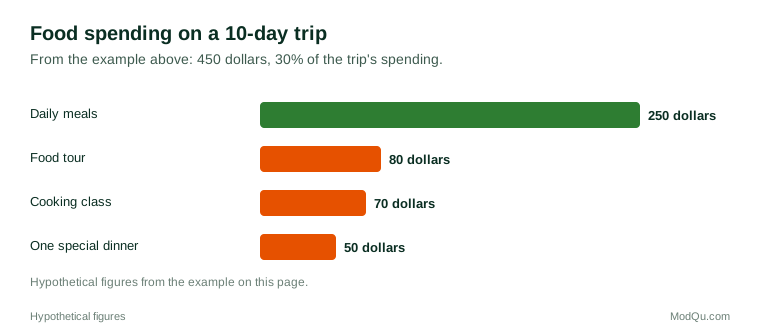
A traveller on a 10-day trip spends 1,500 dollars in total, excluding flights. Food costs 450 dollars: 250 dollars on daily meals, 80 dollars on a food tour, 70 dollars on a cooking class and 50 dollars on one special dinner. Food is 30% of the trip's spending, and the tour, class and dinner together are 200 dollars, or 44% of the food budget.
Figure 1 shows how the food spending in that example is divided.
Food safety and dietary needs
Food safety is a concern for many travellers, especially in places with unfamiliar hygiene standards or water quality. Common habits include choosing busy stalls with a fast turnover, eating food that is cooked fresh and hot, and being careful with tap water and ice where advice suggests it.
Travellers with allergies, coeliac disease or other dietary needs face extra challenges, such as language barriers and unfamiliar ingredients. Many carry translated cards explaining their needs. Travellers with religious dietary rules often look for certified halal or kosher food, which is easier to find in some places than others.
Example
A traveller with a severe nut allergy visits a country where nuts are common in local dishes. They carry a card in the local language explaining the allergy, choose cooking classes that agree in advance to leave out nuts, and pack safe snacks. They say they still enjoyed the food but had to plan much more than their travel companions.
Bringing food experiences home
Food experiences often continue after the trip. Travellers:
- buy spices, sauces, tea, coffee and sweets to take home, subject to customs rules on food;
- cook dishes they learned in a class;
- look for restaurants serving that cuisine at home;
- follow creators or chefs they discovered on the trip;
- return to the same destination for its food.
Customs rules on bringing food across borders differ by country, and some foods, such as fresh meat, dairy, fruit and plants, are often restricted to prevent pests and disease.
Effects on communities and debates
Food tourism can support local farmers, cooks, markets and small businesses, and help keep food traditions alive. It can also bring problems:
- rising prices for local residents in popular food areas;
- traditional dishes changed to suit tourists;
- crowding at markets that locals depend on;
- concern about who benefits from food tours and classes;
- waste and packaging from takeaway food.
Debates also include whether food tourism respects the cultures it celebrates, and how much travellers should rely on online rankings.
Questions that businesses want answered here include how often food is a main reason for a trip, which food experiences travellers choose, what share of their budget goes on food and how they find places to eat.
Key terms
- Food tourismTravel in which food and drink are an important part of the experience.
- GastronomyThe practice and study of good eating and the culture of food.
- Food tourA guided walk that visits several places to taste and learn about local food.
- Cooking classA lesson in preparing local dishes, often with a market visit.
- Street foodReady-to-eat food sold from stalls, carts or trucks.
- TerroirThe way a place's soil, climate and traditions shape the taste of its food or wine.
- Intangible cultural heritageTraditions, such as food practices, recognized as part of a community's culture.
- HalalFood prepared according to Islamic dietary law.
Full glossary: travel tourism terms on EditingTests.com.
Food and culinary tourism vocabulary test
How well do you know the language of this topic? Try 8 quick questions. Your score is shown straight away and is not saved.
What the food and culinary tourism survey asks
This survey is part of ModQu's Travel and Hospitality survey. The food and culinary tourism part takes about five minutes and covers:
- Whether food has been a main reason for a trip, and where.
- Which food experiences you have tried: street food, markets, food tours, cooking classes or producer visits.
- How you find places to eat when travelling.
- How much of your travel budget goes on food.
- Whether dietary needs or food safety affect your travel choices.
- Whether you bring food or recipes home, and how a trip changes what you eat.
After that you can choose to continue with other short parts of the Travel and Hospitality survey, such as holiday and leisure travel or air travel, or stop.
Ready to take part?
Your answers help show what people really think and do. Results are only ever reported as totals; no one can see your individual answers.
Start the surveyQuestions about this survey
Who can take part?
Adults who travel.
Do I have to give my name?
No. You may be asked for your age group, region and similar details so results can be broken down, but not your name. ModQu never asks for passwords, card numbers or account numbers.
How are the results used?
Answers are combined into totals and percentages and published in ModQu reports. Individual answers are never shown.
Is the vocabulary test part of the survey?
No. It is optional and separate, and your score is not stored.