
Share your views on sponsorship
Tell us whether you can name sponsors of your favourite team or event, whether sponsorship changes your view of a brand and which sponsorships you dislike. Your answers are combined with other people's and reported only as totals.
Start the sponsorship surveyAbout 5 minutes. No account needed. You can stop at any time.
What sponsorship is
Sponsorship is an arrangement in which a company pays money, or provides goods or services, to a team, event, organization or person in return for the right to be linked with them. Unlike an advert, which is a message the brand controls, sponsorship connects the brand with something people already care about.
Common forms include:
- Shirt and kit sponsorship of sports teams.
- Naming rights for stadiums, arenas, leagues and competitions.
- Event sponsorship of tournaments, races, festivals, concerts and exhibitions.
- Broadcast sponsorship of TV programs or sports coverage.
- Athlete and artist sponsorship, including equipment deals.
- Arts and culture sponsorship of museums, theatres and galleries.
- Community sponsorship of local clubs, schools and charity events.
Sponsorship ranges from global deals worth very large sums to a local shop paying for a youth team's shirts.
Why brands sponsor
Brands give many reasons for sponsoring:
- Awareness: putting the brand name in front of large audiences, at events and on screens.
- Image transfer: hoping some of the qualities people see in a team, athlete or event, such as excitement, success or creativity, rub off on the brand.
- Goodwill: being seen to support something fans care about.
- Hospitality: tickets and events for clients and staff.
- Content: access to players, artists and behind-the-scenes material for marketing.
- Sales: selling products at venues or as the official product of an event.
For the sponsored team or event, sponsorship is often a major source of income, alongside tickets and broadcast rights.
Do people notice and remember sponsors?
Sponsors are seen many times during matches and events, but recall varies a great deal. Long-running sponsors with names on shirts or stadiums are often remembered well. Many smaller sponsors are not remembered at all.
People also make mistakes. Research on sponsorship has repeatedly found that people often name brands that were not sponsors, especially large, well-known brands or brands that seem to "fit" an event. A competitor's advertising around an event can also lead people to think it is a sponsor.
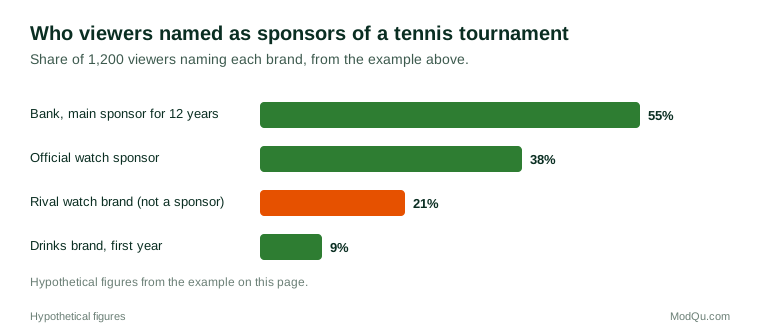
Example (hypothetical figures)
After a major tennis tournament, 1,200 viewers are asked to name its sponsors. The official watch sponsor is named by 38%. A rival watch brand, which was not a sponsor but ran adverts during the coverage, is named by 21%. A bank that has been the main sponsor for twelve years is named by 55%. A drinks brand in its first year as sponsor is named by 9%.
How sponsorship affects opinions
Fans often say they feel more positive about brands that sponsor their team, and some say they are more likely to buy them. The effect is usually stronger when:
- the sponsorship has lasted many years;
- the brand fits the sport or event, such as a sports drink at a marathon;
- the brand is seen to give something back, such as funding youth teams;
- the fan is strongly attached to the team.
The effect can be negative for fans of rival teams, who may avoid a brand linked to their rivals. It can also be negative when people dislike the sponsor's industry or think the sponsorship is excessive.
Example
A local building company has sponsored a town's football club for fifteen years, including the youth teams. When a fan needs a new kitchen, he gets quotes from three firms and chooses the sponsor, though its price is slightly higher, saying "they've always looked after the club".
Sponsorships people dislike
Some kinds of sponsorship are controversial:
- Betting companies sponsoring sports teams and competitions, especially where young fans see the logos.
- Alcohol and tobacco: tobacco sponsorship of sport is banned in many countries; alcohol sponsorship is restricted in some.
- Fossil fuel companies sponsoring sport, arts and museums, which climate campaigners criticize.
- Unhealthy food and drink brands sponsoring children's sport or major events.
- Governments or companies accused of human rights abuses using sponsorship to improve their image, which critics call "sportswashing".
- Renaming historic venues after sponsors, which many fans resent.
Some museums and festivals have ended sponsorship deals after public pressure, while others say they could not survive without the money.
Example
A city's main stadium has been known by its historic name for eighty years. When the club sells the naming rights to a mobile phone company, fans start a petition to keep the old name. The club agrees to use both names in official materials, but most fans and local media keep using the old one.
Ambush marketing
Ambush marketing is when a brand that is not an official sponsor tries to link itself with an event, for example through adverts with sports themes during a tournament, giving fans branded items near a venue, or sponsoring individual athletes. Organizers of major events often have strict rules to protect official sponsors, and some countries pass special laws for big events.
Measuring sponsorship
Brands and rights holders measure sponsorship in several ways:
- Exposure: how many times and for how long a logo appears on screen.
- Awareness and recall: surveys asking people to name sponsors.
- Opinion: whether people feel more positive about sponsors.
- Purchase intention and sales.
- Social media engagement with sponsor content.
Survey questions often compare fans with non-fans, or people who watched an event with those who did not.
Local and community sponsorship
Not all sponsorship involves big brands and big events. Local businesses sponsor youth teams, school fairs, charity runs, community festivals and amateur clubs, often for small sums or in kind, such as food, printing or kit. For many small clubs and events, this money is what keeps them running. People often say they think well of local businesses that support their community, and some choose them for that reason. Surveys about sponsorship therefore ask about local as well as national and global sponsors.
What people disagree about
People disagree about whether sponsorship by betting, alcohol and fossil fuel companies should be banned, whether naming rights spoil the history of venues and competitions, whether sponsorship money is essential for grassroots sport and the arts, and whether sponsorship actually changes what people buy.
Questions that brand owners, sports bodies, event organizers, agencies and regulators want answered include which sponsors people can name, whether sponsorship changes their opinion of brands, which sponsorships they dislike and how they react to naming rights.
Key terms
- SponsorshipPaying a team, event or person in return for the right to be linked with them.
- Naming rightsThe right to name a venue, league or event after a sponsor.
- Image transferThe idea that qualities of a sponsored team or event pass to the sponsor brand.
- Ambush marketingA non-sponsor trying to link itself with an event.
- SportswashingUsing sport sponsorship or ownership to improve a damaged reputation.
- HospitalityTickets and events that sponsors use for clients and staff.
- Official partnerA brand with formal rights to be linked with an event or team.
- Sponsor recallWhether people can name the sponsors of a team or event.
Full glossary: digital marketing terms on EditingTests.com.
Sponsorship vocabulary test
How well do you know the language of this topic? Try 8 quick questions. Your score is shown straight away and is not saved.
What the sponsorship survey asks
This survey is part of ModQu's Brands and Advertising survey. The sponsorship part takes about five minutes and covers:
- Whether you can name a sponsor of your favourite team, event or venue.
- Whether sponsorship makes you think better or worse of a brand.
- Whether you have bought from a brand because it sponsors something you care about.
- Which kinds of sponsorship you dislike, and why.
- How you feel about stadiums and events being renamed after sponsors.
After that you can choose to continue with other short parts of the Brands and Advertising survey, such as brand awareness or brand loyalty, or stop.
Ready to take part?
Your answers help show what people really think and do. Results are only ever reported as totals; no one can see your individual answers.
Start the surveyQuestions about this survey
Who can take part?
Adults.
Do I have to give my name?
No. You may be asked for your age group, region and similar details so results can be broken down, but not your name. ModQu never asks for passwords, card numbers or account numbers.
How are the results used?
Answers are combined into totals and percentages and published in ModQu reports. Individual answers are never shown.
Is the vocabulary test part of the survey?
No. It is optional and separate, and your score is not stored.