
Share your views on endorsements
Tell us whether you have bought something because a famous person or creator used it, whether you trust endorsements and which seem fake. Your answers are combined with other people's and reported only as totals.
Start the celebrity and influencer endorsements surveyAbout 5 minutes. No account needed. You can stop at any time.
What an endorsement is
An endorsement is when a well-known person publicly supports or uses a product, service or brand, usually in return for payment, free products or other benefits. Endorsers include:
- Celebrities: actors, musicians, athletes, television presenters and other famous people.
- Influencers or content creators: people with large followings on social media, video or podcast platforms.
- Micro-influencers: creators with smaller but often very engaged audiences, sometimes in a niche such as cooking, cycling or a local area.
- Experts: doctors, dentists, chefs or scientists, real or presented as such.
- Ordinary customers in testimonials.
Endorsements appear in television and print adverts, sponsored social media posts, product reviews, unboxing videos, live streams, brand ambassador roles and collaborations where a celebrity has their own product line.
Why brands use endorsements
Brands use famous people and creators to:
- get attention in a crowded media world;
- reach particular audiences, such as young people who watch little television;
- borrow trust and credibility from someone the audience likes;
- link the brand to qualities the person represents, such as success, style or health;
- create content that feels more personal than an advert.
Creators often describe their recommendations as more like advice from a friend than an advert. That closeness is what makes endorsements effective, and also what makes undisclosed paid posts a concern.
Why people buy, or not
People who say endorsements have influenced them often give reasons such as:
- they trust the person's taste or expertise;
- they saw the product being used, not just described;
- the creator gave honest pros and cons;
- they wanted to be like the person;
- the creator offered a discount code.
People who say endorsements do not influence them often say:
- they know the person is paid;
- the person would not really use the product;
- the same person promotes too many products;
- the endorsement does not fit the person, such as an athlete promoting fast food.
Example
A home cook follows a creator who reviews kitchen tools and often says when a product is not worth buying. When the creator recommends a particular knife in a clearly labelled sponsored video, she buys it, trusting the creator's past honesty. The same week, she ignores an advert in which a famous actor promotes a frying pan.
What makes an endorsement credible
Research on endorsements points to several factors that make people more likely to believe them:
- Expertise: the person knows about the product area.
- Trustworthiness: the person seems honest and has a history of honest views.
- Fit: the product matches what the person is known for.
- Authenticity: the person seems to really use and like the product.
- Attractiveness and likeability, which affect attention and liking.
Endorsements that seem fake usually lack one or more of these. Common signs people mention include scripted language, a creator promoting rival brands within weeks, products that do not fit the person's life, and "before and after" claims that seem too good.
Example (hypothetical figures)
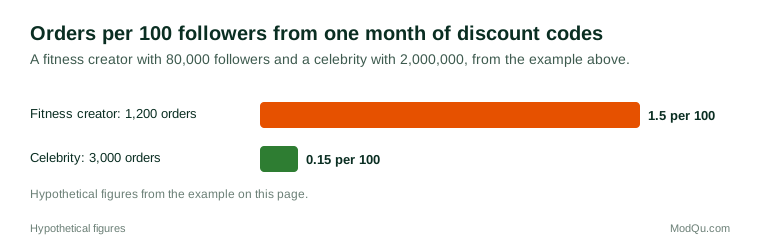
A sportswear brand gives the same discount code to two creators for one month. A fitness creator with 80,000 followers who trains in the brand's clothes every day brings 1,200 orders, or 1.5 orders per 100 followers. A celebrity with 2,000,000 followers who posts one photo brings 3,000 orders, or 0.15 per 100 followers. The smaller creator's audience bought ten times as often per follower.
Disclosure rules
Many countries require paid endorsements to be clearly labelled so people know they are adverts. Advertising regulators and consumer protection agencies, such as those in the United States, the United Kingdom, the European Union, Australia and India, have issued rules or guidance. Typical requirements include:
- labels such as "ad", "advert", "sponsored" or "paid partnership" at the start of a post;
- disclosing free gifts and family or business connections, not just payments;
- not making claims the creator cannot back up;
- following extra rules for regulated products such as medicines, alcohol and financial products.
Despite these rules, studies and regulators have found that many paid posts are not clearly labelled. People say they find it hard to tell what is paid and what is genuine.
Fake followers and fake reviews
Some accounts buy fake followers or likes to look more popular, and some products are promoted through fake reviews or networks of accounts. Brands now often check creators' audiences before paying them. Platforms remove fake accounts, and some regulators have fined companies for fake reviews.
Risks for brands
Endorsements carry risks. If a celebrity or creator is involved in a scandal, says something offensive or is found to use a rival product, the brand may be harmed. Brands often include clauses in contracts allowing them to end the deal in such cases. Endorsements of risky products, such as cryptocurrencies, betting or unproven health products, have led to criticism and, in some countries, fines for the people who promoted them.
Example
A sports star who endorses a soft drink is photographed drinking a rival brand at a press conference. The images spread quickly online and are widely joked about. The brand chooses to laugh along publicly but does not renew the contract the following year.
Children and endorsements
Children and teenagers spend much of their media time with creators, and many find it hard to tell when content is paid. Some countries have rules on influencer marketing to children, and on children who are influencers themselves, including protections for their earnings. Parents often raise concerns about toy unboxing videos and products such as energy drinks or skincare aimed at young audiences.
What people disagree about
People disagree about whether endorsements are honest recommendations or disguised adverts, whether creators should be held responsible for the products they promote, whether disclosure labels work, how much celebrities should be paid to promote products, and whether endorsements aimed at children should be banned.
Questions that brand owners, agencies, platforms and regulators want answered include whether people have bought something because of an endorsement, which kinds of endorsers they trust, which endorsements seem fake, and whether people notice disclosure labels.
Key terms
- EndorsementA well-known person publicly supporting a product, usually for payment.
- InfluencerA person with a large online following who can affect followers' choices.
- Micro-influencerA creator with a smaller, often highly engaged audience.
- Brand ambassadorA person with a longer-term role representing a brand.
- Sponsored postSocial media content a brand has paid for or supported.
- DisclosureA clear statement that content is paid for or connected to a brand.
- Discount codeA code that gives a reduced price and tracks sales from an endorser.
- AuthenticityThe sense that a person genuinely uses and likes what they promote.
Full glossary: influencer marketing terms on EditingTests.com.
Celebrity and influencer endorsements vocabulary test
How well do you know the language of this topic? Try 8 quick questions. Your score is shown straight away and is not saved.
What the celebrity and influencer endorsements survey asks
This survey is part of ModQu's Brands and Advertising survey. The celebrity and influencer endorsements part takes about five minutes and covers:
- Whether you have bought something because a famous person or creator used or recommended it.
- Which kinds of endorsers you trust most: celebrities, creators, experts or ordinary customers.
- Whether you notice labels such as "ad" or "paid partnership".
- Which endorsements have seemed fake to you, and why.
- Whether you have used a creator's discount code.
After that you can choose to continue with other short parts of the Brands and Advertising survey, such as brand awareness or brand loyalty, or stop.
Ready to take part?
Your answers help show what people really think and do. Results are only ever reported as totals; no one can see your individual answers.
Start the surveyQuestions about this survey
Who can take part?
Adults.
Do I have to give my name?
No. You may be asked for your age group, region and similar details so results can be broken down, but not your name. ModQu never asks for passwords, card numbers or account numbers.
How are the results used?
Answers are combined into totals and percentages and published in ModQu reports. Individual answers are never shown.
Is the vocabulary test part of the survey?
No. It is optional and separate, and your score is not stored.