
Share how you store food
Tell us which food storage products you use, whether you use reusable containers and how full your freezer is. Your answers are combined with other people's and reported only as totals.
Start the kitchen and food storage surveyAbout 5 minutes. No account needed. You can stop at any time.
What food storage covers
Food storage at home includes everything people use to keep food fresh, safe and organized between buying and eating it:
- Containers: plastic, glass, metal and silicone boxes with lids.
- Wraps and bags: cling film, foil, zip-lock bags, beeswax wraps and silicone bags.
- Jars and canisters, for dry goods such as rice, pasta, flour and spices.
- Appliances: refrigerators, freezers and, in some homes, separate chest freezers or cool rooms.
- Pantries and cupboards, for long-life foods.
- Traditional methods, such as drying, salting, pickling and fermenting, still widely used in many parts of the world.
Storage habits depend on climate, home size, household size, shopping patterns and whether a home has reliable electricity.
Fridges and freezers
Refrigerators slow the growth of bacteria and keep many foods fresh for longer. Food safety bodies in many countries suggest keeping the fridge at about 5°C or below, and freezers at about −18°C. Common points include:
- Fridge zones: some areas, such as the door, are warmer than others.
- Raw meat, often stored on the lowest shelf so juices do not drip onto other foods.
- Overfilling, which can stop cold air circulating.
- Freezers, which stop bacteria growing but do not kill them, so food is still handled carefully after thawing.
Fridge and freezer ownership varies around the world. In many wealthy countries almost every home has one; in parts of Africa and South Asia, many households do not, and people shop more often for fresh food.
Example
A family buys a second-hand chest freezer for the garage. They start buying meat in bulk when it is on offer and freezing soups in portions. After a year they realize they have forgotten what is at the bottom, so they begin labelling bags with the contents and date.
Containers and wraps
People choose storage containers by:
- Material: plastic is light and cheap; glass is long-lasting and can go in the oven or microwave in many cases; metal is durable; silicone is flexible.
- Size and stacking, to save space.
- Lids and seals, for leak-proofing.
- Safety for microwave, dishwasher and freezer use.
- Price.
Single-use wraps and bags are convenient, but many people are trying to use less plastic. Alternatives include reusable silicone bags, beeswax wraps, plates or bowls placed over dishes, and keeping takeaway containers to reuse.
Date labels
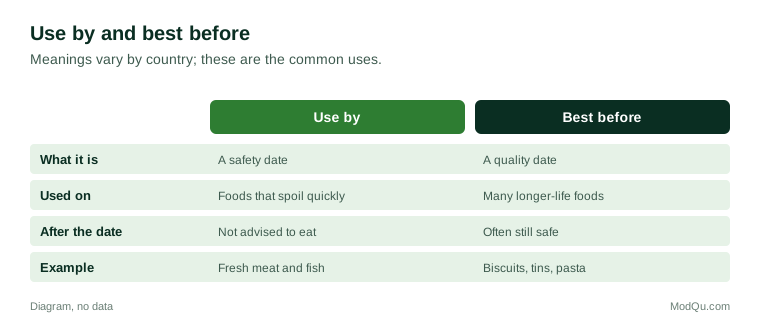
Date labels confuse many shoppers, and confusion leads to food being thrown away while still safe to eat. Common types include:
- Use by: a safety date, used for foods that spoil quickly, such as fresh meat and fish. Food safety bodies advise not to eat food after this date.
- Best before: a quality date. Food is often still safe after it, though it may not be at its best.
- Sell by or display until: dates for shops, not for consumers.
- Packed on or produced on: when the food was packed.
The use and meaning of labels differ by country, and some countries and retailers have removed best before dates from fresh fruit and vegetables to reduce waste.
Storage and food waste
The United Nations Environment Programme has estimated that a large share of food waste worldwide happens in households. Better storage is one of the ways people try to waste less. Common practices include:
- Planning meals and checking what is already at home before shopping.
- First in, first out: moving older food to the front.
- Freezing leftovers and food close to its date.
- Storing fruit and vegetables correctly, as some keep better in the fridge and others at room temperature.
- Labelling and dating containers.
- Using clear containers, so food is visible.
Example (hypothetical figures)
A household estimates that it throws away food worth 15 in their local currency a week. After starting to freeze leftovers and plan meals, they cut this to 6 a week. Over a year, that is a reduction from 780 to 312, saving 468.
Leftovers and food safety
Leftovers save money and effort, but safety rules matter. Food safety bodies in many countries commonly suggest:
- Cooling leftovers quickly and putting them in the fridge within about two hours.
- Eating refrigerated leftovers within a few days.
- Reheating until steaming hot all the way through.
- Reheating rice carefully, as cooked rice can carry bacteria that survive cooking.
- Not refreezing thawed raw food unless it has been cooked.
Advice varies by country and food, and many people follow family habits rather than official guidance.
Reusable and sustainable options
Interest in reusable storage has grown because of concern about plastic waste. Options include:
- Glass and stainless steel containers.
- Beeswax and plant-wax wraps.
- Reusable silicone bags.
- Bulk-buying dry goods into jars at refill shops.
- Lunch boxes and bento boxes.
People weigh higher upfront costs and the need to wash and store reusable items against reduced waste and long-term savings.
Example
A worker who buys lunch every day starts bringing leftovers in a glass container. The container cost more than a pack of disposable boxes, but after a few months they notice they spend much less on lunch and throw away fewer leftovers.
Trends and debates
Current trends and debates include:
- Plastic reduction, including bans on some single-use plastics in many countries.
- Concerns about chemicals in plastics, and interest in glass and steel.
- Smart fridges, with cameras or apps that track what is inside.
- Batch cooking and meal prep, popular on social media.
- Date label reform, to reduce confusion and waste.
- Energy use of second fridges and freezers.
What people and businesses want to know
Questions businesses want answered include which food storage products people use, whether they choose reusable or single-use options, how full their freezer is and what they keep in it, how they understand date labels, and how much food they think they throw away.
Key terms
- Use by dateA safety date for foods that spoil quickly.
- Best before dateA quality date; food is often still safe after it.
- First in, first outUsing older food before newer food.
- Freezer burnDry, discoloured patches on frozen food caused by air exposure.
- Batch cookingCooking large amounts at once to store and eat later.
- Beeswax wrapA cloth coated in wax, used instead of cling film.
- Airtight containerA container whose lid seals out air.
- Food wasteEdible food that is thrown away.
Full glossary: consumer goods terms on EditingTests.com.
Kitchen and food storage vocabulary test
How well do you know the language of this topic? Try 8 quick questions. Your score is shown straight away and is not saved.
What the kitchen and food storage survey asks
This survey is part of ModQu's Household Life survey. The kitchen and food storage part takes about five minutes and covers:
- Which food storage products you use, such as containers, wraps, bags or jars.
- Whether you use reusable containers and wraps, and why.
- How full your freezer usually is, and what you keep in it.
- How you understand use by and best before dates.
- How much food you think your household throws away in a typical week.
- What you do to keep food fresh for longer.
After that you can choose to continue with other short parts of the Household Life survey, such as cleaning and laundry or household chores and time use, or stop.
Ready to take part?
Your answers help show what people really think and do. Results are only ever reported as totals; no one can see your individual answers.
Start the surveyQuestions about this survey
Who can take part?
Adults.
Do I have to give my name?
No. You may be asked for your age group, region and similar details so results can be broken down, but not your name. ModQu never asks for passwords, card numbers or account numbers.
How are the results used?
Answers are combined into totals and percentages and published in ModQu reports. Individual answers are never shown.
Is the vocabulary test part of the survey?
No. It is optional and separate, and your score is not stored.
Can glass containers go straight from the freezer to the oven?
Not always. Sudden temperature changes can crack some glass, so many manufacturers advise checking the instructions first.
Is it safe to reuse takeaway containers?
Many people reuse them for storage. Some thin plastics are not designed for repeated heating or dishwashing, and labels show what each container is meant for.