
Share your DIY experience
Tell us which DIY jobs you did last year, which tools you own and where you learn how to do them. Your answers are combined with other people's and reported only as totals.
Start the diy and home tools surveyAbout 5 minutes. No account needed. You can stop at any time.
What DIY covers
DIY, short for do-it-yourself, means carrying out home repairs, maintenance and improvements yourself instead of paying a professional. It covers a wide range of work:
- Small repairs: fixing a dripping tap, replacing a light bulb, tightening a loose hinge.
- Decorating: painting, wallpapering and putting up shelves or pictures.
- Assembly: putting together flat-pack furniture.
- Maintenance: clearing gutters, sealing around baths and showers, bleeding radiators.
- Bigger projects: laying flooring, tiling, building garden structures, fitting a kitchen.
- Garden work: building fences, paths and raised beds.
- Upcycling and crafts: restoring or reworking old furniture and objects.
How much DIY people do depends on their skills, time, money, the type of home they live in, and whether they own or rent. Tenants are often limited in the changes they may make.
Why people do DIY
Reasons people give include:
- Saving money on labour costs.
- Difficulty finding tradespeople, or long waits.
- Enjoyment and satisfaction in making or fixing something.
- Control over how and when the work is done.
- Learning new skills.
- Personalizing a home.
Some people do DIY because they enjoy it; others because they feel they have no choice.
The tools people own
Many households keep a basic toolkit, and some build up large collections. Common tools include:
- Hand tools: hammer, screwdrivers, pliers, adjustable spanner, tape measure, spirit level, utility knife and hand saw.
- Power tools: cordless drill or drill-driver, impact driver, jigsaw, circular saw, sander and multi-tool.
- Painting tools: brushes, rollers, trays and dust sheets.
- Ladders and step stools.
- Safety gear: goggles, gloves, dust masks and ear protection.
- Specialist tools: tile cutters, pipe wrenches, wallpaper steamers and stud finders.
Cordless tools that share the same battery across a brand's range have become popular, which can make people loyal to one brand.
Example
A first-time homeowner buys a cordless drill to hang curtain rails. Over the next year they add a sander, a jigsaw and a second battery from the same range, and they start a small project restoring an old chest of drawers.
Renting, borrowing and sharing tools
Many tools are used only a few times. Rather than buying them, people:
- Rent from hire shops or hardware stores, especially for large items such as floor sanders or tile cutters.
- Borrow from friends, family or neighbours.
- Use tool libraries, community schemes where members borrow tools.
- Use neighbourhood sharing apps and groups.
- Buy second-hand and sell tools when finished.
Example (hypothetical figures)
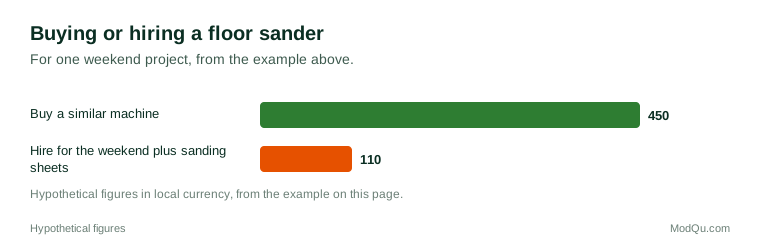
A person needs a floor sander for a weekend. Buying a similar machine would cost 450 in their local currency. Hiring one costs 70 for the weekend, plus 40 for sanding sheets, a total of 110. Hiring costs 340 less, though they would need to hire again for any future project.
How people learn
People learn DIY skills in many ways:
- Online videos, now one of the most common sources.
- Family members, especially parents and grandparents.
- Instructions and guides from manufacturers and stores.
- Workshops and classes at stores, community centres and colleges.
- Books and magazines.
- Trial and error.
Online videos make many jobs look simpler than they are. People often discover extra steps, tools or problems once they start.
Costs and savings
DIY can save money on labour, but there are costs to weigh:
- Tools and materials.
- Time, which may be much longer than a professional would take.
- Mistakes, which can mean buying more materials or calling a professional to fix the problem.
- Effects on home value or insurance, if work is poor or does not meet rules.
Many people do the simpler parts of a project themselves and pay professionals for the skilled or risky parts.
Example
A couple decide to tile their bathroom themselves after watching several videos. The tiling goes well, but they are unsure about moving the shower pipework, so they hire a plumber for that part only. The project takes three weekends instead of the one they planned.
Safety
DIY injuries are common. Typical causes include:
- Falls from ladders and steps.
- Cuts from knives, saws and broken materials.
- Injuries from power tools.
- Dust and fumes, from sanding, cutting and some paints and chemicals.
- Lifting heavy items.
- Hidden hazards, such as cables and pipes inside walls, and in older buildings, materials such as asbestos or lead paint.
Safety bodies in many countries publish advice on ladder use, protective equipment and working with older materials.
Legal limits and when to call a professional
Some work is restricted by law or building rules in many countries:
- Electrical work: in many countries, certain electrical work must be done or checked by a licensed electrician.
- Gas work: often allowed only by registered or licensed gas engineers.
- Structural changes, such as removing walls, which may need permission or inspection.
- Plumbing and drainage, which in some places need licensed plumbers.
- Work on listed or protected buildings.
Rules vary between and within countries. People commonly check local requirements before starting larger projects, and many hire professionals for any work involving gas, electricity or structure.
Trends and debates
Current trends include:
- Online video tutorials and DIY creators.
- Renter-friendly DIY, such as removable wallpaper and adhesive hooks.
- Upcycling and repair, linked to sustainability and saving money.
- Battery-powered tools replacing corded ones.
- Shortages of tradespeople in some areas, which push more people to try DIY.
- Debate about skills, with some people concerned that fewer young people learn practical skills at home or school.
What people and businesses want to know
Questions businesses want answered include which DIY jobs people did in the past year, which tools they own and plan to buy, whether they rent or borrow tools, where they buy materials, how they learn, how confident they feel, and when they decide to hire a professional instead.
Key terms
- DIYDo-it-yourself: carrying out home repairs and improvements yourself.
- Cordless drillA battery-powered tool for drilling holes and driving screws.
- Spirit levelA tool with a bubble in liquid that shows whether a surface is level.
- Stud finderA device that detects the wooden or metal supports behind a wall.
- Tool libraryA community scheme where members borrow tools.
- UpcyclingReworking old items into something of greater use or value.
- Flat-pack furnitureFurniture sold in pieces for the buyer to assemble.
- AsbestosA material used in some older buildings that is hazardous when disturbed.
Full glossary: homebuilding operations terms on EditingTests.com.
DIY and home tools vocabulary test
How well do you know the language of this topic? Try 8 quick questions. Your score is shown straight away and is not saved.
What the diy and home tools survey asks
This survey is part of ModQu's Household Life survey. The diy and home tools part takes about five minutes and covers:
- Which DIY jobs you did in the last year, and which you paid someone else to do.
- Which tools you own, and which you would like to buy.
- Whether you rent, borrow or share tools.
- Where you learn how to do DIY, and how confident you feel.
- How much you spent on DIY tools and materials in the last year.
- What makes you decide to call a professional instead.
After that you can choose to continue with other short parts of the Household Life survey, such as cleaning and laundry or household chores and time use, or stop.
Ready to take part?
Your answers help show what people really think and do. Results are only ever reported as totals; no one can see your individual answers.
Start the surveyQuestions about this survey
Who can take part?
Adults.
Do I have to give my name?
No. You may be asked for your age group, region and similar details so results can be broken down, but not your name. ModQu never asks for passwords, card numbers or account numbers.
How are the results used?
Answers are combined into totals and percentages and published in ModQu reports. Individual answers are never shown.
Is the vocabulary test part of the survey?
No. It is optional and separate, and your score is not stored.
Do I need permission for DIY work in a rented home?
Many leases limit the changes tenants may make, such as drilling holes or painting. Tenants often check their agreement or ask the landlord first.