
Tell us about household appliances
Tell us what appliance you last bought, how you chose it and whether you would repair or replace a broken one. Your answers are combined with other people's and reported only as totals.
Start the household appliances surveyAbout 5 minutes. No account needed. You can stop at any time.
What household appliances cover
Household appliances are usually grouped into:
- major appliances, sometimes called white goods: refrigerators, freezers, ranges and cooktops, ovens, dishwashers, washing machines and dryers;
- small appliances: microwaves, coffee makers, toasters, blenders, air fryers, vacuum cleaners and similar items;
- heating, cooling and air quality: air conditioners, heat pumps, dehumidifiers and air purifiers.
This page focuses mainly on major appliances, which are the largest and least frequent purchases.
Why people buy
Most major appliance purchases are triggered by:
- a breakdown, often requiring a quick decision;
- moving into a new home;
- a kitchen or laundry renovation;
- wanting new features, more capacity or better energy efficiency;
- sales events and rebates.
Purchases made because something broke are often rushed, with less research and more weight on what is available for quick delivery.
Example
A family's refrigerator stops cooling on a Friday evening. A repair technician cannot come until the following Wednesday, and the fridge is 14 years old. They buy a replacement the next morning from the store with the earliest delivery date, choosing among the models in stock rather than the ones they might have preferred.
How people choose
When people have time to research, common factors include:
- price and current promotions;
- size and whether it fits the space and doorways;
- capacity and features;
- brand reputation for reliability;
- energy and water efficiency;
- noise level;
- reviews and ratings;
- warranty and availability of service;
- appearance and finish, especially in kitchens.
Many shoppers stay with a brand that has served them well, and avoid a brand after a bad experience.
Energy efficiency
Appliances use energy and, for washers and dishwashers, water. The ENERGY STAR symbol identifies models that meet efficiency criteria, and in Canada the EnerGuide label shows a model's estimated yearly energy use. More efficient models can cost more to buy but less to run. Utility companies and governments sometimes offer rebates for efficient appliances or heat pumps.
Where people buy
Major appliances are sold by:
- appliance specialty stores, often with knowledgeable staff and service departments;
- big-box electronics and home improvement stores;
- department stores and mass merchandisers;
- warehouse clubs;
- online retailers and manufacturers' websites;
- scratch-and-dent and outlet stores, selling cosmetically damaged or display models at a discount;
- second-hand sellers.
Many shoppers research online and then buy from a store that offers delivery, installation and removal of the old appliance.
Example
A couple renovating their kitchen visit an appliance specialty store to see the ranges and refrigerators in person and ask about installation for a gas cooktop. They compare prices online afterwards, then buy all four appliances from the specialty store as a package because it offers free delivery, installation and haul-away and price-matches a big-box store.
Package deals, where buying several appliances together brings a discount or rebate, are common during renovation and new-home purchases.
Delivery, installation and haul-away
Delivery and installation can add significant cost and complexity. Gas appliances, built-in dishwashers and over-the-range microwaves may need professional installation. Removing and recycling the old appliance, called haul-away, may be free or charged. Delays and damaged deliveries are common complaints.
Warranties and extended warranties
New appliances come with a manufacturer's warranty, often one year on parts and labour, sometimes longer on certain parts. Retailers commonly sell extended warranties or protection plans. Some buyers find these give peace of mind; others see them as poor value because many appliances do not fail during the extended period, and because the plan may duplicate other coverage.
Repair or replace
When an appliance breaks, households weigh:
- the age of the appliance and its expected life;
- the cost of repair compared with a new model;
- how soon a technician can come and whether parts are available;
- the efficiency of a newer model;
- the environmental cost of throwing an appliance away.
A common rule of thumb is to replace when the repair cost is more than about half the price of a new appliance, especially if the appliance is near the end of its expected life.
Example (hypothetical figures)
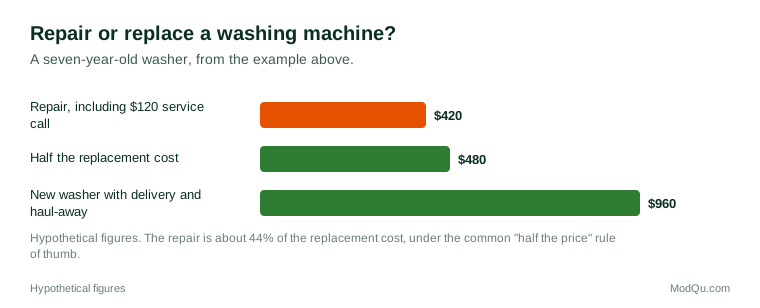
A seven-year-old washing machine needs a new pump and control board. The repair quote is $420, including a $120 service call. A comparable new washer costs $900, plus $60 for delivery and haul-away, a total of $960. The repair is about 44% of the replacement cost, so the household repairs it.
Many people say appliances do not last as long as they used to and that repair is harder to arrange. Right to repair rules being discussed or introduced in several places aim to make parts, manuals and diagnostic tools more available.
Smart appliances
Some appliances connect to Wi-Fi and phone apps, offering remote control, alerts and maintenance reminders. Some buyers value these features; others see little benefit, worry about privacy or security, or fear that software support will end before the appliance wears out.
Appliance makers also offer connected features that support repairs, such as error codes sent to a technician or the ability to diagnose a fault remotely. These can shorten repair visits, but depend on the manufacturer continuing to run the service.
Small appliances
Small appliances such as coffee makers, toasters, blenders and vacuum cleaners are bought more often and are usually replaced rather than repaired. Trends spread quickly in this category; air fryers, for example, became common in many kitchens within a few years. Shoppers rely heavily on online reviews and often buy small appliances online or at mass merchandisers, sometimes on impulse during sales events.
What manufacturers and retailers want to know
Manufacturers, retailers, repair services and energy programs want to understand why people buy appliances, how they research and choose brands, how much energy efficiency matters, where they buy, how they feel about delivery and extended warranties, and how they decide whether to repair or replace.
Key terms
- Major applianceA large household machine such as a refrigerator, stove, washer or dryer.
- White goodsAnother name for major household appliances.
- ENERGY STARA symbol identifying appliances that meet energy-efficiency criteria.
- EnerGuideA Canadian label showing an appliance's estimated yearly energy use.
- Extended warrantyA plan, usually bought separately, that covers repairs after the manufacturer's warranty ends.
- Haul-awayRemoving an old appliance when a new one is delivered.
- Scratch-and-dentAppliances with cosmetic damage sold at a discount.
- Right to repairRules or campaigns to make parts, manuals and tools available for repairs.
Full glossary: appliance manufacturing terms on EditingTests.com.
Household appliances vocabulary test
How well do you know the language of this topic? Try 8 quick questions. Your score is shown straight away and is not saved.
What the household appliances survey asks
This survey is part of ModQu's Shopping and Retail survey. The household appliances part takes about five minutes and covers:
- What appliance you last bought, and why.
- How you chose the brand and model, and where you researched.
- Where you bought it, and how delivery and installation went.
- Whether you bought an extended warranty, and why or why not.
- Whether you would repair or replace a broken appliance, and what would decide it.
- How much energy efficiency and smart features matter to you.
After that you can choose to continue with other short parts of the Shopping and Retail survey, such as online shopping or groceries and food shopping, or stop.
Ready to take part?
Your answers help show what people really think and do. Results are only ever reported as totals; no one can see your individual answers.
Start the surveyQuestions about this survey
Who can take part?
Adults who bought a major appliance in the last three years.
Do I have to give my name?
No. You may be asked for your age group, region and similar details so results can be broken down, but not your name. ModQu never asks for passwords, card numbers or account numbers.
How are the results used?
Answers are combined into totals and percentages and published in ModQu reports. Individual answers are never shown.
Is the vocabulary test part of the survey?
No. It is optional and separate, and your score is not stored.