
Tell us how you shop online
Tell us where you shop online, what you expect from delivery and returns, and why you sometimes do not finish a purchase. Your answers are combined with other people's and reported only as totals.
Start the online shopping surveyAbout 5 minutes. No account needed. You can stop at any time.
How online shopping has changed
Online shopping grew steadily for years and jumped sharply during the pandemic, when stores closed. Some of that growth has eased as people returned to stores, but online buying remains far more common than before. Many people now combine channels: they research online and buy in store, buy online and pick up in store, or browse in store and buy online.
Categories commonly bought online include clothing and footwear, electronics, books, household goods, beauty products, toys, and increasingly groceries and furniture.
Where people shop online
Shoppers use several kinds of online store:
- large marketplaces, which sell products from many sellers in one place;
- retailer websites of chains that also have physical stores;
- brand websites that sell directly to consumers;
- specialist online stores focused on one category;
- social media shops, where products are bought through posts and videos;
- second-hand and resale platforms;
- international sites, sometimes with lower prices but longer shipping and possible duties.
Example
A shopper looking for running shoes checks a marketplace for price, reads reviews on a specialist running site, and then buys directly from the brand's website because it offers free returns and a members' discount. Three websites played a part in one purchase.
What shoppers expect
Common expectations include:
- free shipping, often above a minimum order;
- fast delivery, with some shoppers expecting next-day or two-day delivery for common items;
- accurate delivery dates and tracking;
- easy returns, ideally free, with a simple process;
- clear product information and photos;
- secure payment and a range of payment options;
- responsive customer service.
Expectations are shaped by the largest retailers, which can make it hard for smaller stores to compete.
Delivery and pickup
Delivery options include home delivery by postal and courier services, delivery to parcel lockers or pickup points, curbside or in-store pickup and same-day delivery in some cities. Missed deliveries and parcels left at the door are common frustrations, and parcel theft from porches is a concern in many neighbourhoods.
Example (hypothetical figures)
A shopper adds $42 of items to a cart. Shipping is $9.99, or free on orders over $50. They add an $11 item they did not plan to buy to reach $53 and get free shipping. They spend $1.01 more than they would have with paid shipping, but receive an extra item.
Returns
Returns are a major part of online shopping, especially for clothing, where sizes and fit vary. Shoppers value free returns, long return windows and drop-off options. Some retailers have started charging for returns or shortening return windows because returns are costly to process. Some shoppers buy several sizes intending to return all but one.
Reviews and ratings
Most online shoppers read reviews before buying, especially for unfamiliar brands or expensive items. They look at star ratings, the number of reviews, recent reviews and photos posted by buyers. Concerns about fake reviews are widespread, and shoppers use different strategies to spot them, such as reading the most critical reviews or looking for detailed comments.
Why shoppers abandon carts
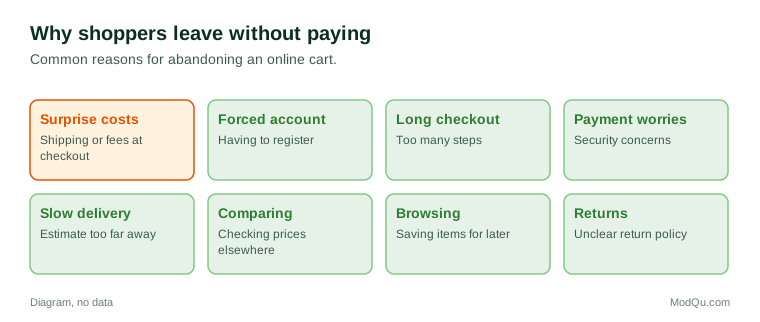
Many online shoppers add items to their cart and then leave without buying. Common reasons include:
- unexpected shipping costs or fees at checkout;
- being required to create an account;
- a long or confusing checkout;
- concerns about payment security;
- delivery that is too slow;
- comparing prices elsewhere;
- simply browsing or saving items for later;
- unclear return policies.
Example
A shopper spends 20 minutes choosing a lamp and reaches checkout, where shipping is $24 and the delivery estimate is two weeks. They close the tab and buy a similar lamp in a store that afternoon.
Payment, trust and safety
Online shoppers use credit and debit cards, digital wallets, account-based payment services and buy now, pay later plans. Saved payment details make repeat purchases faster but raise security concerns for some people. Fraud on online purchases, such as fake stores that take payment and never deliver, is a common complaint to consumer protection agencies.
Shoppers judge whether a site is trustworthy by its look and reputation, secure checkout, contact information, return policy, reviews and whether they have heard of it. Fake websites that copy well-known brands, and scam ads on social media, are recurring problems. Consumer agencies advise checking web addresses carefully and paying by credit card for protection.
Shopping from other countries
Ordering from international sites can bring lower prices or products not sold locally, but also longer delivery times, customs duties and taxes, difficult returns and different consumer protection rules. Some shoppers are surprised by charges collected on delivery.
Local and independent stores online
Many small and independent retailers sell online through their own sites, marketplaces and social media. Some shoppers make a point of buying from local businesses online, even if prices are higher, to support their community. Others find smaller sites less convenient or less trustworthy.
Shopping on social media
Social media has become a place to discover and buy products. Shoppers see items in posts, short videos and live streams from brands and creators, and some platforms let them pay without leaving the app. Recommendations from creators can feel more personal than advertising, but many shoppers say it is hard to tell when a post is paid. Consumer protection agencies expect paid endorsements to be clearly disclosed. Impulse purchases are common on social platforms, and so are complaints about products that look different from the video.
Example
A shopper watches a short video in which a creator demonstrates a kitchen gadget. A link in the post leads to a checkout page, and she buys it in under a minute. When it arrives, it is smaller than it looked, and she finds the return process slow because the seller is overseas.
What retailers want to know
Retailers, brands, marketplaces, delivery companies and payment providers want to understand where people shop online, how often, what they buy, what they expect from delivery and returns, how they use reviews and what makes them abandon a purchase.
Key terms
- MarketplaceAn online platform where many sellers offer products in one place.
- Cart abandonmentLeaving an online store without completing a purchase after adding items.
- Free shipping thresholdThe minimum order value for free delivery.
- Click and collectOrdering online and picking up in a store.
- Parcel lockerA secure locker where online orders can be collected.
- Return windowThe period during which items can be returned.
- Customs dutyA tax on goods imported from another country.
- Direct-to-consumerA brand selling straight to shoppers rather than through retailers.
Full glossary: e commerce terms on EditingTests.com.
Online shopping vocabulary test
How well do you know the language of this topic? Try 8 quick questions. Your score is shown straight away and is not saved.
What the online shopping survey asks
This survey is part of ModQu's Shopping and Retail survey. The online shopping part takes about five minutes and covers:
- Where you shop online most often, and what you buy.
- How fast you expect delivery to be, and what you will pay for faster delivery.
- How you feel about return policies and fees.
- How you use reviews before buying.
- Why you last abandoned an online cart.
- Any problems you have had, such as late deliveries, fake sites or parcel theft.
After that you can choose to continue with other short parts of the Shopping and Retail survey, such as groceries and food shopping or fashion and clothing, or stop.
Ready to take part?
Your answers help show what people really think and do. Results are only ever reported as totals; no one can see your individual answers.
Start the surveyQuestions about this survey
Who can take part?
Adults who shop online.
Do I have to give my name?
No. You may be asked for your age group, region and similar details so results can be broken down, but not your name. ModQu never asks for passwords, card numbers or account numbers.
How are the results used?
Answers are combined into totals and percentages and published in ModQu reports. Individual answers are never shown.
Is the vocabulary test part of the survey?
No. It is optional and separate, and your score is not stored.