
Share your experience of home projects
Tell us what projects you plan, how you find contractors and which jobs you do yourself. Your answers are combined with other people's and reported only as totals.
Start the home renovation and repairs surveyAbout 5 minutes. No account needed. You can stop at any time.
What this topic covers
This topic covers work done on a home by owners or for them:
- Repairs: fixing what is broken, such as a leaking roof, a failed water heater or a cracked foundation.
- Maintenance: regular upkeep, such as cleaning gutters, servicing a furnace or resealing a deck.
- Renovations: changing a space, such as a new kitchen, bathroom or basement.
- Additions: adding space, such as a new room, a second storey or a garage.
- Energy upgrades: insulation, windows, heat pumps and solar panels.
- Accessibility changes: ramps, grab bars, walk-in showers and stair lifts.
It covers homeowners mainly, though renters sometimes make small changes with their landlord's permission.
Why people renovate
Reasons for taking on a project include:
- something broke or wore out;
- making the home more comfortable or better suited to how the household lives;
- a growing or shrinking household, such as a new baby, an older parent moving in or children leaving;
- preparing to sell, to raise the price or speed up the sale;
- saving energy and lowering bills, sometimes with a rebate;
- ageing in place, so people can stay in their home as they get older;
- adding a rental suite to earn income.
Example
A couple in their late sixties plan to stay in their two-storey house. They replace the bathtub on the main floor with a walk-in shower, add grab bars and turn a main-floor den into a bedroom. They say the changes cost less than moving and let them stay near friends and their doctor.
Setting a budget
Budgets for home projects often grow once the work starts. Common reasons include:
- problems found behind walls or under floors, such as rot, old wiring or mould;
- choosing more expensive finishes than planned;
- changes made partway through;
- higher costs for materials and labour;
- permits and inspections.
Many people set aside a contingency, an extra amount for surprises, often a share of the total budget. Projects are paid for from savings, lines of credit, refinancing, credit cards or financing offered by contractors and stores.
Example (hypothetical figures)
A homeowner budgets $30,000 for a kitchen renovation and adds a 15 percent contingency of $4,500. When the old cabinets come out, the contractor finds water damage under the sink, which costs $3,200 to repair. The homeowner also upgrades the countertop for $1,800. The final cost is $35,000, which is $500 over the budget plus contingency.
Finding and hiring a contractor
Finding a reliable contractor is one of the main worries for homeowners. Common ways include:
- recommendations from family, friends and neighbours;
- online reviews and home services websites;
- local community groups;
- trade associations and manufacturer-certified installers;
- stores that offer installation.
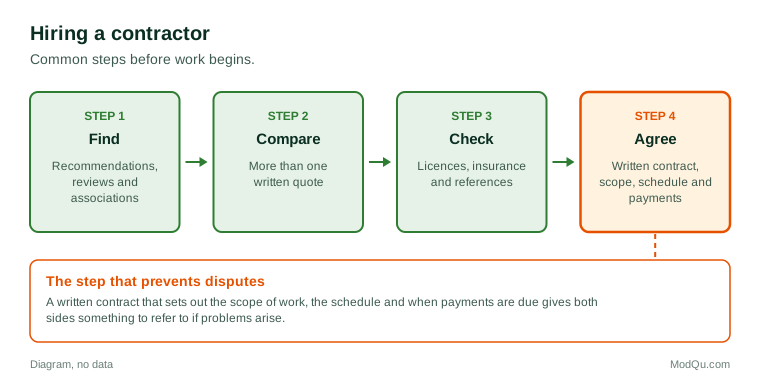
Steps people often take before hiring include:
- getting more than one written quote;
- checking licences where required, insurance and workers' compensation coverage;
- asking for references and photos of past work;
- agreeing on a written contract with a scope of work, schedule and payment plan;
- avoiding paying most of the cost upfront.
Provincial consumer protection offices warn about door-to-door sellers and contractors who ask for large cash deposits, offer a price that seems too good, or pressure people to sign right away.
Example
After a windstorm, a man knocks on doors offering to repair damaged roofs that day for a cash deposit. One homeowner instead calls their insurer and gets two quotes from local roofers recommended by neighbours. The repair starts a week later, but with a written contract and a warranty.
Doing it yourself
Many homeowners do some work themselves, using online videos, store workshops and help from friends. Common do-it-yourself jobs include painting, small repairs, landscaping, flooring, installing shelves and fixtures, and assembling furniture.
People often leave some jobs to professionals:
- electrical and gas work, which in many provinces must be done or inspected by licensed trades;
- structural changes;
- roofing;
- major plumbing;
- anything that needs a permit and inspection.
Doing it yourself can save money but takes time, and mistakes can cost more to fix. Questions businesses want answered include which jobs people do themselves, where they learn how, and where they buy tools and materials.
Permits, rules and rebates
Many renovations need a building permit from the municipality, especially structural work, additions, new plumbing or electrical work, and some decks and basement suites. Permits lead to inspections that check the work meets the building code. Skipping a permit can cause problems with insurance or when selling.
Federal, provincial and utility programs have offered rebates or loans for energy upgrades, such as insulation, windows and heat pumps. These programs change often, and many require an energy assessment before and after the work. Homeowners are usually advised to check what is available before starting, because some programs do not pay for work that has already been done.
Common problems
Homeowners often report:
- delays because of trades not showing up or materials arriving late;
- costs going over budget;
- poor communication with contractors;
- disputes about quality or what was included;
- living in a home during noisy, dusty work;
- difficulty finding trades for small jobs.
Small jobs are a particular problem. Many contractors prefer large projects, so a homeowner who needs a door rehung or a small leak fixed may wait weeks or pay a minimum charge. Some turn to handyman services, apps that connect people with local workers, or neighbours with the right skills.
Example
A homeowner's basement renovation is planned for six weeks. The drywall installer is booked on another job, the flooring arrives late, and the electrician has to come back twice for inspections. The project takes eleven weeks. The homeowner says the result is good, but next time they would plan for delays and keep in closer touch with the contractor each week.
What people disagree about
Opinion is divided on whether to renovate or move, how much to spend before selling, whether do-it-yourself work saves money, whether permits are worth the time and cost, and how contractors should be regulated. Surveys help show how these views differ by age, income and region.
Key terms
- RenovationChanging or updating part of a home.
- ContractorA person or company hired to do building work.
- QuoteA contractor's written price for a job.
- Scope of workA description of exactly what a job includes.
- ContingencyMoney set aside for unexpected costs.
- Building permitPermission from the municipality to do certain building work.
- Building codeRules that set minimum standards for construction.
- HoldbackPart of a payment held back until work is finished and checked.
Full glossary: homebuilding operations terms on EditingTests.com.
Home renovation and repairs vocabulary test
How well do you know the language of this topic? Try 8 quick questions. Your score is shown straight away and is not saved.
What the home renovation and repairs survey asks
This survey is part of ModQu's Home and Property survey. The home renovation and repairs part takes about five minutes and covers:
- What home projects you have done recently or plan this year.
- How much you expect to spend, and how you will pay.
- How you find and choose a contractor.
- Which jobs you do yourself, and where you learn how.
- Problems you have had with contractors, costs or delays.
- Whether you have used a rebate or program for energy upgrades.
After that you can choose to continue with other short parts of the Home and Property survey, such as buying a home or renting, or stop.
Ready to take part?
Your answers help show what people really think and do. Results are only ever reported as totals; no one can see your individual answers.
Start the surveyQuestions about this survey
Who can take part?
Homeowners.
Do I have to give my name?
No. You may be asked for your age group, region and similar details so results can be broken down, but not your name. ModQu never asks for passwords, card numbers or account numbers.
How are the results used?
Answers are combined into totals and percentages and published in ModQu reports. Individual answers are never shown.
Is the vocabulary test part of the survey?
No. It is optional and separate, and your score is not stored.
Can renters take part?
The survey is mainly for homeowners, but renters can answer questions about small projects and repairs.