
Share your experience of heating and cooling
Tell us how your home is heated, whether you have air conditioning and whether you would switch to a heat pump. Your answers are combined with other people's and reported only as totals.
Start the heating and cooling surveyAbout 5 minutes. No account needed. You can stop at any time.
What this topic covers
This topic covers the systems that keep homes warm in winter and cool in summer:
- Furnaces that burn natural gas, oil or propane and blow warm air through ducts.
- Boilers that heat water for radiators or in-floor heating.
- Electric baseboard heaters, common in some provinces and in apartments.
- Heat pumps, which move heat into the home in winter and out of it in summer.
- Wood and pellet stoves.
- Central air conditioning, window units and portable air conditioners.
- Thermostats, ventilation and air quality equipment.
It covers homeowners mainly, though renters are affected by how their building is heated and whether they can add cooling.
How Canadian homes are heated
How homes are heated depends a lot on the province, the age of the home and local energy prices. Natural gas furnaces are common in many parts of Canada, electric heating is common in provinces with plentiful hydroelectric power such as Quebec and Manitoba, and oil heating remains in use in parts of Atlantic Canada and in rural areas. Many homes also have a fireplace or wood stove as a backup.
People often do not choose their heating system. It comes with the home, and changing it is costly. Choices tend to arise when a furnace or boiler fails, during a renovation, or when buying a new home.
Air conditioning
Air conditioning has become much more common in Canadian homes as summers have grown hotter and heat waves more frequent. Options include:
- central air conditioning, connected to the furnace ducts;
- heat pumps, which also cool;
- window and portable units, often used by renters and in older homes without ducts;
- fans and other low-cost methods, such as closing blinds during the day.
Extreme heat can be dangerous, particularly for older adults, people with health conditions and people living alone in upper-floor apartments. Some municipalities and provinces have introduced rules on maximum indoor temperatures in rental housing, and some programs help people get air conditioners.
Example
An older woman living alone in a top-floor apartment finds her unit reaches over 30 degrees during a summer heat wave. Her landlord does not allow window units. With help from her daughter and a community program, she gets a portable air conditioner that vents through a window kit allowed by the building.
Heat pumps
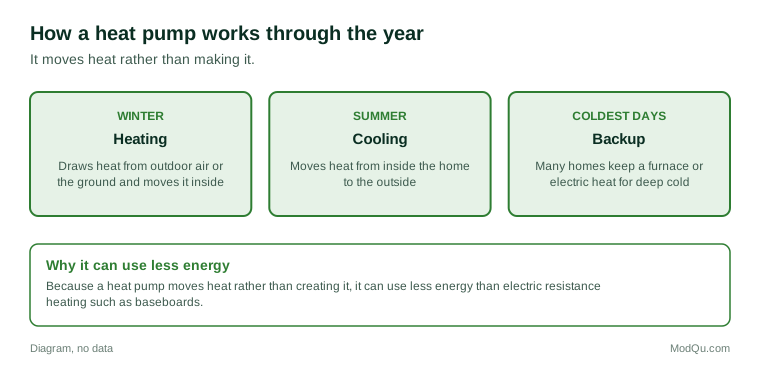
A heat pump works like a refrigerator in reverse: in winter it draws heat from outside air, the ground or water and moves it inside, and in summer it moves heat out. Because it moves heat rather than creating it, a heat pump can use less energy than electric resistance heating. Kinds include:
- air-source heat pumps, the most common, including ducted systems and ductless mini-splits;
- cold-climate heat pumps, designed to work at lower outdoor temperatures;
- ground-source (geothermal) heat pumps, which use pipes buried in the ground and cost more to install.
Many homes with heat pumps keep a backup, such as a furnace or electric heat, for the coldest days. Governments and utilities in Canada have offered grants, loans and rebates for heat pumps, and the details change often.
Example (hypothetical figures)
A homeowner with an oil furnace receives a quote of $18,000 to install a cold-climate heat pump. A government program and a utility rebate together cover $10,000, leaving $8,000. They estimate their yearly heating cost will fall from $3,200 to $1,700, a saving of $1,500 a year, so the net cost would be recovered in a little over five years if prices stay the same.
Costs and bills
Heating and cooling make up a large part of household energy bills. Costs depend on:
- the type and age of the system;
- the price of the energy it uses;
- how well the home is insulated and sealed;
- the size of the home;
- the climate and the season;
- thermostat settings and habits.
Many households lower costs by turning the thermostat down at night or when away, sealing drafts, adding insulation, or using a smart or programmable thermostat. Some provinces and utilities offer time-of-use electricity prices, which affect when it is cheapest to run heating and cooling.
Maintenance and replacement
Heating and cooling systems need regular care:
- filters changed or cleaned regularly;
- yearly servicing of furnaces and boilers;
- chimney and vent checks for fuel-burning systems;
- carbon monoxide alarms, which are required in many provinces for homes with fuel-burning appliances;
- clearing snow and debris from outdoor units.
Many homeowners rent their water heater or furnace, or buy a protection plan. Rental contracts and door-to-door sales of heating equipment have led to many consumer complaints, and some provinces have restricted door-to-door sales of these products.
Example
A family's furnace stops working on a cold January night. A technician says the furnace is 22 years old and needs a costly part. The family decides to replace it, and while comparing quotes they learn about a heat pump rebate. They install a heat pump with a smaller gas furnace as a backup.
Switching systems
People consider switching heating systems for reasons such as lower bills, comfort, adding cooling, reducing emissions, replacing an old system, or taking advantage of a rebate. Reasons for not switching include upfront cost, doubts about how well a heat pump will work in cold weather, the work involved, and finding a qualified installer.
Example
A couple in a 1950s bungalow heated with electric baseboards install two ductless mini-split units, one in the living area and one in the hallway near the bedrooms. They keep the baseboards for the coldest nights and say the house is now cooler in summer than it has ever been.
What people disagree about
Opinion is divided on whether heat pumps work well enough in the coldest parts of Canada, whether governments should phase out fossil fuel heating, how much rebates should cover, whether landlords should be required to provide cooling, and whether natural gas should remain a main heating fuel. These views often depend on region, the fuel people use now and the age of their home.
Key terms
- FurnaceA system that heats air and blows it through ducts.
- BoilerA system that heats water for radiators or in-floor heating.
- Heat pumpA system that moves heat into the home in winter and out in summer.
- Mini-splitA ductless heat pump with an outdoor unit and indoor wall units.
- GeothermalA heat pump that uses heat stored in the ground.
- Programmable thermostatA thermostat that changes temperature on a schedule.
- Carbon monoxide alarmA device that warns of a dangerous colourless, odourless gas.
- Time-of-use pricingElectricity prices that change by time of day.
Full glossary: heat pump systems terms on EditingTests.com.
Heating and cooling vocabulary test
How well do you know the language of this topic? Try 8 quick questions. Your score is shown straight away and is not saved.
What the heating and cooling survey asks
This survey is part of ModQu's Home and Property survey. The heating and cooling part takes about five minutes and covers:
- How your home is heated, and how old the system is.
- Whether you have air conditioning, and what kind.
- What you spend on heating and cooling, in ranges.
- How you maintain your system, and whether you rent or own it.
- Whether you would switch to a heat pump, and what would affect that choice.
- How comfortable your home is in winter and summer.
After that you can choose to continue with other short parts of the Home and Property survey, such as buying a home or renting, or stop.
Ready to take part?
Your answers help show what people really think and do. Results are only ever reported as totals; no one can see your individual answers.
Start the surveyQuestions about this survey
Who can take part?
Homeowners.
Do I have to give my name?
No. You may be asked for your age group, region and similar details so results can be broken down, but not your name. ModQu never asks for passwords, card numbers or account numbers.
How are the results used?
Answers are combined into totals and percentages and published in ModQu reports. Individual answers are never shown.
Is the vocabulary test part of the survey?
No. It is optional and separate, and your score is not stored.
Can renters take part?
Yes. Renters are asked about heating and cooling in their home, even if they did not choose the system.