
Tell us how you buy furniture
Tell us where you bought your last piece of furniture, whether you saw it first and how delivery went. Your answers are combined with other people's and reported only as totals.
Start the furniture and home furnishings surveyAbout 5 minutes. No account needed. You can stop at any time.
What home furnishings cover
Home furnishings include furniture such as sofas, beds, tables, chairs, desks and storage, as well as mattresses, rugs, lighting, curtains, bedding, cushions and decorative items. Some purchases are frequent and inexpensive, such as cushions or a lamp; others, such as a sofa or a dining set, are expected to last for many years.
People often buy furniture at turning points: moving home, moving in with a partner, having a child, a child leaving home, renovating or replacing something that has worn out.
Where people buy
Furniture is sold through many channels:
- furniture and home stores, from large chains to independent showrooms;
- big-box home retailers, known for flat-pack furniture and showroom displays;
- department stores and mass merchandisers;
- online-only furniture brands, some selling mattresses or sofas in a box;
- online marketplaces with many sellers;
- specialty stores for mattresses, office furniture or outdoor furniture;
- custom makers and local craftspeople;
- second-hand sources, including resale apps, local buy-and-sell groups, consignment and antique shops, and charity stores.
Seeing it in person or buying online
Many shoppers want to see and try furniture before buying, especially sofas, chairs and mattresses, where comfort and size matter. Online shopping offers more choice and often lower prices, but buyers must rely on photos, measurements and reviews.
Common habits include researching online and buying in store, testing in store and buying online, and buying smaller items online while buying large items in person. Some online brands offer free trial periods for mattresses or sofas to reduce the risk.
Example
A couple shop for a sofa. They sit on a dozen in three stores, note the models they like, then find a similar sofa online for $400 less. They decide to buy the one they tested, because the online model has no fabric samples and the return policy charges a large pickup fee.
Flat-pack furniture and assembly
Flat-pack furniture is shipped in boxes and assembled at home. It is cheaper to ship and store, and often less expensive to buy. Many people assemble it themselves; others pay for assembly through the retailer or a local service. Common frustrations include missing parts, unclear instructions and the time it takes. Flat-pack furniture can also be harder to move or rebuild without damage.
Example
A student furnishing his first apartment buys a flat-pack bed frame, desk and bookshelf. The bed takes four hours to assemble with a friend's help, and one panel arrives cracked. The store sends a replacement part in a week. He says he would pay for assembly next time for the bed, but the desk and shelf were easy.
Assembly services are offered by many retailers and by independent handyman services, often booked through apps. Prices depend on the size and number of pieces. Some buyers say paying for assembly erases most of the savings of flat-pack, while others see it as worth the time saved.
Delivery
Delivery is one of the most common sources of complaints about furniture purchases. Issues include:
- long waits, especially for custom or imported items;
- wide delivery windows that require a day at home;
- damage during delivery;
- items that do not fit through doors or up stairs;
- extra charges for delivery to an upper floor, unpacking or removing packaging;
- difficulty arranging returns of large items.
Example (hypothetical figures)
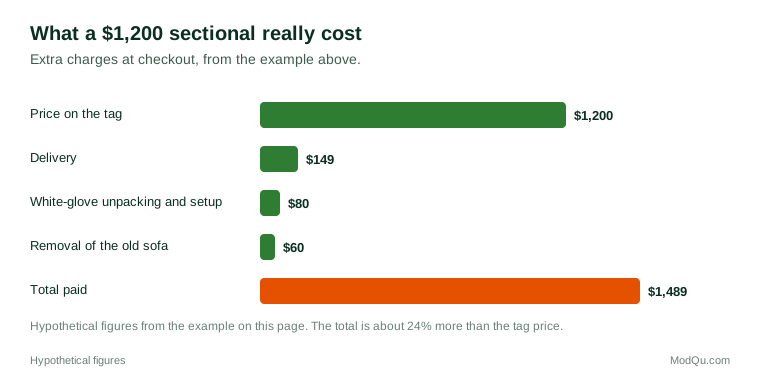
A shopper buys a $1,200 sectional. Delivery costs $149, white-glove delivery with unpacking and setup costs another $80, and removal of the old sofa costs $60. The total comes to $1,489, about 24% more than the price on the tag. She says she would have budgeted differently if she had known.
Quality and price
Shoppers find it hard to judge furniture quality. Frame materials, joinery, cushion fill and fabric durability are not easy to see. Some buyers choose inexpensive furniture expecting to replace it; others spend more for items they expect to keep for decades. Reviews, warranties and the reputation of the brand or store are common signals of quality.
Mattresses are a special case. Comfort is personal and hard to judge in a few minutes in a store, so many brands offer home trials of 100 nights or more. Shoppers say trials reduce the risk of buying, but returning a mattress can be awkward, and some trial policies require a minimum period of use before a return is accepted.
Financing and paying over time
Large furniture purchases are often paid over time through store credit plans, buy now, pay later services or credit cards. Promotions such as "no interest for 12 months" can be useful but may charge high interest if the balance is not paid by the end of the period, depending on the terms.
Second-hand and vintage furniture
Buying second-hand furniture is common and growing. It saves money, can offer better quality for the price, and reduces waste. Buyers must arrange pickup and transport, check condition and, for upholstered items and mattresses, think about cleanliness and pests. Mid-century and antique furniture attract buyers who want distinctive pieces.
Sustainability
Furniture is bulky and often ends up in landfill. Shoppers increasingly ask about wood sources, materials and how long items will last. Some retailers offer buy-back or resale programs, repair parts and furniture rental for short-term needs.
Small spaces and renters
People in apartments and rentals often look for compact, multi-purpose and easy-to-move furniture, such as sofa beds, storage beds and extendable tables. Frequent moves make many renters reluctant to spend heavily on furniture.
What retailers and manufacturers want to know
Retailers, manufacturers, delivery companies and resale platforms want to understand where people buy furniture, how they research, whether they need to see items first, what they expect from delivery and assembly, how they pay and how often they buy second-hand.
Key terms
- Flat-packFurniture sold in boxes and assembled by the buyer.
- White-glove deliveryDelivery that includes carrying items into the room, unpacking and setup.
- ShowroomA store area where furniture is displayed for customers to see and try.
- UpholsteryThe padding, springs and fabric covering on furniture such as sofas and chairs.
- Lead timeThe time between placing an order and delivery.
- WarrantyA seller's or maker's promise to repair or replace an item with defects for a set period.
- Deferred interestA financing offer where interest is charged later if the balance is not paid in time.
- Multi-purpose furnitureFurniture with more than one use, such as a sofa bed.
Full glossary: furniture design terms on EditingTests.com.
Furniture and home furnishings vocabulary test
How well do you know the language of this topic? Try 8 quick questions. Your score is shown straight away and is not saved.
What the furniture and home furnishings survey asks
This survey is part of ModQu's Shopping and Retail survey. The furniture and home furnishings part takes about five minutes and covers:
- What furniture or home furnishings you bought in the last two years, and why.
- Where you bought your last piece of furniture.
- Whether you saw it in person first, and how you researched it.
- How delivery and assembly went, and what extra costs you paid.
- How you paid, including any financing.
- Whether you have bought or sold second-hand furniture.
After that you can choose to continue with other short parts of the Shopping and Retail survey, such as online shopping or groceries and food shopping, or stop.
Ready to take part?
Your answers help show what people really think and do. Results are only ever reported as totals; no one can see your individual answers.
Start the surveyQuestions about this survey
Who can take part?
Adults who bought furniture in the last two years.
Do I have to give my name?
No. You may be asked for your age group, region and similar details so results can be broken down, but not your name. ModQu never asks for passwords, card numbers or account numbers.
How are the results used?
Answers are combined into totals and percentages and published in ModQu reports. Individual answers are never shown.
Is the vocabulary test part of the survey?
No. It is optional and separate, and your score is not stored.