
Tell us how you shop for clothes
Tell us where you buy clothes, whether you buy second-hand and what matters most when you choose. Your answers are combined with other people's and reported only as totals.
Start the fashion and clothing surveyAbout 5 minutes. No account needed. You can stop at any time.
Where people buy clothing
People buy clothing from many kinds of seller:
- department stores, with many brands under one roof;
- specialty chains, focused on a style, age group or category such as sportswear;
- brand stores and brand websites, selling one label directly;
- discount and off-price stores, selling brand-name clothing at lower prices;
- mass merchandisers and supermarkets, for basics and children's clothes;
- online-only retailers and marketplaces;
- second-hand shops, thrift stores and resale apps;
- independent boutiques and local designers.
Most people use a mix. A shopper might buy basics at a discount store, jeans from a favourite brand and a special outfit at a boutique.
What people consider when buying
Common factors in clothing choices include:
- price and whether an item is on sale;
- fit and size, which vary between brands;
- quality and how long an item will last;
- style and current trends;
- comfort and practicality;
- the brand and its reputation;
- the return policy, especially when buying online;
- where and how the item was made.
Example
A 28-year-old buys a winter coat. She reads reviews online, tries on three coats in a department store, then buys the one she likes on the brand's website during a sale. She chose that brand because a friend's coat from the same company has lasted six years.
Fast fashion
Fast fashion refers to clothing produced quickly and cheaply to follow current trends, with new styles arriving in stores and online very often. It makes trends affordable, but critics point to low-paid labour in supply chains, short-lived garments and the large amount of clothing that ends up in landfill. Ultra-fast online retailers, which release thousands of new items and ship directly from overseas, have grown quickly and attracted both customers and criticism.
Second-hand and resale
Buying second-hand has become more popular and more accepted. Shoppers use thrift stores run by charities, consignment shops, vintage stores, online resale platforms and local buy-and-sell groups. Reasons include saving money, finding unique items, reducing waste and reselling items to recover some of their cost.
Many people now also sell their own clothes. Resale platforms make it easy to list an item, but sellers must photograph, describe, ship and handle questions, which takes time.
Example (hypothetical figures)
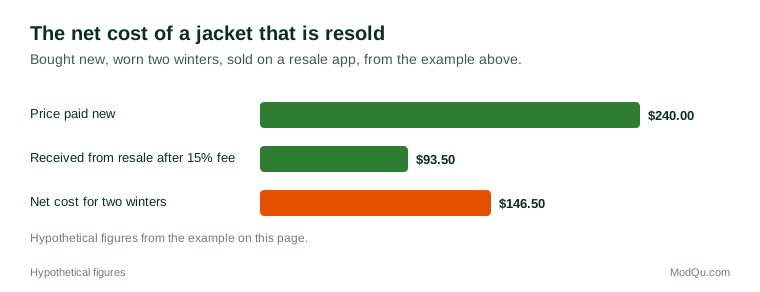
A shopper buys a new jacket for $240 and wears it for two winters. She sells it on a resale app for $110, minus a 15% platform fee of $16.50, receiving $93.50. Her net cost for two winters of use is $146.50.
Sustainability and ethics
Many shoppers say they care about the environmental and social effects of clothing. Concerns include water and chemical use, greenhouse gas emissions, microplastics from synthetic fabrics, waste, and working conditions in factories. However, surveys often find a gap between what people say and what they buy, because price, style and convenience usually come first.
Brands make claims such as "sustainable", "eco-friendly" or "made with recycled materials". Regulators in several countries have warned against vague or unsupported environmental claims, often called greenwashing.
Sizing, fit and returns
Fit is one of the main problems in buying clothes, especially online. Sizes differ between brands, and some shoppers order more than one size and return the rest. Clothing has among the highest return rates of any online category. Some retailers now charge for returns or offer fit tools, size charts and customer reviews that comment on fit.
Example
A man orders the same pair of trousers in two sizes, planning to return one. Both fit poorly, and the retailer charges a $7 return fee per parcel. He now buys trousers only in store and uses online shopping for socks and T-shirts, where sizes are more predictable.
Brand loyalty, sales and timing
Some shoppers are loyal to brands they trust for fit or quality, particularly for jeans, footwear, outdoor wear and underwear. Others shop mostly on price and style. Loyalty programs, member discounts and early access to sales are used to keep customers returning.
Clothing sales follow the seasons. Retailers clear stock at the end of each season, and major sale events such as Boxing Day and Black Friday draw shoppers who plan larger purchases around them. Some shoppers wait for sales for almost everything, while others buy when they need an item. Frequent sales have led some shoppers to doubt the "regular" price shown on a tag.
Social media and trends
Social media plays a large part in how trends spread. Short videos, creator recommendations and "haul" videos showing many purchases influence what people buy, especially younger shoppers. Trends now rise and fall faster than in the past.
Clothing for children and special needs
Parents buy clothing often because children grow quickly, so price and durability matter, and hand-me-downs and second-hand shopping are common. People with disabilities or particular needs may look for adaptive clothing with easier fastenings, which is offered by a growing number of brands.
Caring for clothes and making them last
How long clothing lasts depends partly on how it is washed, dried and stored. Washing in cold water, air drying and following care labels can extend the life of many garments. Repair services, such as tailors, shoe repair shops and community repair cafés, help people fix rather than replace clothes, and some brands now offer repairs or sell spare parts such as buttons and zippers. Interest in mending has grown, partly to save money and partly to reduce waste, though many people say they lack the time or skills.
What happens to unwanted clothing
People get rid of clothing by donating it, selling it, passing it to family and friends, using it as rags, or throwing it away. Donation bins and charity shops receive large volumes, and only part of what is donated is sold locally; the rest may be sold to textile recyclers or exported. Textile recycling into new fibre is still limited, and some cities and provinces are studying programs to keep textiles out of landfill. Many shoppers are surprised to learn how little donated clothing is resold in their own community.
What retailers and brands want to know
Retailers, brands, resale platforms and policy makers want to understand where people buy clothing, how much they spend, how often they buy second-hand, how much sustainability affects their choices, what drives returns and how social media shapes what they buy.
Key terms
- Fast fashionInexpensive clothing produced quickly to follow current trends.
- ResaleSelling previously owned items, often through online platforms.
- ConsignmentA shop sells an item for its owner and keeps part of the price.
- Off-price retailerA store selling brand-name goods below their usual price.
- GreenwashingMaking misleading or unsupported environmental claims.
- Capsule wardrobeA small set of versatile clothes that can be combined in many ways.
- Return rateThe share of items sold that customers send back.
- VintageSecond-hand clothing from an earlier era, often valued for its style.
Full glossary: fashion merchandising terms on EditingTests.com.
Fashion and clothing vocabulary test
How well do you know the language of this topic? Try 8 quick questions. Your score is shown straight away and is not saved.
What the fashion and clothing survey asks
This survey is part of ModQu's Shopping and Retail survey. The fashion and clothing part takes about five minutes and covers:
- Where you bought your last item of clothing, and why there.
- How much you spend on clothing in a typical year.
- Whether you have bought or sold second-hand clothing this year.
- How much a brand's environmental or ethical record affects what you buy.
- How often you return clothing bought online, and why.
- How social media affects what you buy.
After that you can choose to continue with other short parts of the Shopping and Retail survey, such as online shopping or groceries and food shopping, or stop.
Ready to take part?
Your answers help show what people really think and do. Results are only ever reported as totals; no one can see your individual answers.
Start the surveyQuestions about this survey
Who can take part?
Adults who bought clothing in the last year.
Do I have to give my name?
No. You may be asked for your age group, region and similar details so results can be broken down, but not your name. ModQu never asks for passwords, card numbers or account numbers.
How are the results used?
Answers are combined into totals and percentages and published in ModQu reports. Individual answers are never shown.
Is the vocabulary test part of the survey?
No. It is optional and separate, and your score is not stored.