
Share your body care routine
Tell us which body care products you use every day, whether you check ingredients and where you buy them. Your answers are combined with other people's and reported only as totals.
Start the deodorants and body care surveyAbout 5 minutes. No account needed. You can stop at any time.
What body care covers
Body care is the daily care of the skin on the body, as opposed to the face or hair. The main products are:
- Deodorants and antiperspirants, used mainly on the underarms.
- Soap and body wash, for washing in the shower or bath.
- Body lotions, creams and oils, to moisturize the skin.
- Hand wash and hand cream.
- Exfoliating scrubs and gloves.
- Foot creams and powders.
- Body sprays and mists, mainly for fragrance.
Habits differ widely. Some people use only soap and water; others follow a routine with several products. Climate, water quality, skin type, culture and cost all play a part.
Deodorants and antiperspirants
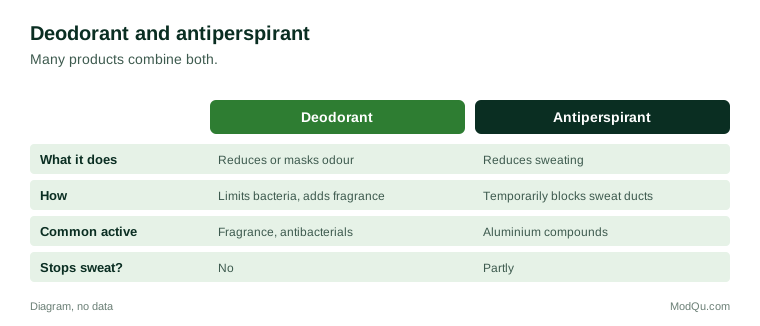
Sweat itself has little smell. Body odour develops when bacteria on the skin break down sweat, especially in areas such as the underarms. The two main kinds of underarm product work in different ways:
- Deodorants reduce or mask odour, usually by limiting bacteria and adding fragrance. They do not stop sweating.
- Antiperspirants reduce sweating, usually with aluminium-based ingredients that temporarily block sweat ducts. Many also contain deodorant ingredients.
Many products are both. Rules on how they are labelled differ by country; in some, products that reduce sweat are regulated more strictly than those that only reduce odour.
Formats include sprays, roll-ons, sticks, gels, creams and wipes. Preferences vary a great deal between countries: in some markets aerosol sprays are common, while in others sticks or roll-ons dominate.
Ingredients people ask about
People raise questions about several ingredients in body care products:
- Aluminium compounds in antiperspirants. Some people avoid them because of concerns they have read about. Major health and cancer research bodies have stated that current evidence does not show a link to breast cancer, but some shoppers still prefer aluminium-free products.
- Fragrance, which can cause irritation or allergic reactions in some people.
- Preservatives, such as parabens, which some people avoid even though regulators in many countries allow them within limits.
- Alcohol, which can feel drying on sensitive skin.
- Sulfates in body wash, which create lather and can feel harsh for some.
- Microplastics, which were once common in some scrubs. Several countries have banned plastic microbeads in rinse-off products.
Regulators in many countries and regions set lists of allowed and restricted ingredients. Ingredient lists are usually shown on the packaging using international naming, often called INCI names.
Example
A person with sensitive skin notices itching under their arms after switching to a strongly scented spray. They try a fragrance-free roll-on and the itching stops. They now check ingredient lists for fragrance before buying.
Soap, body wash and moisturizers
Bar soap is one of the oldest body care products. It is often cheaper per wash and uses less packaging. Body wash and shower gel come in bottles, with a wide choice of scents and formulas. Some people find bar soap more drying; others prefer it for environmental reasons.
Moisturizers help skin hold water and feel softer. They range from light lotions to thick creams and balms. People in cold, dry or very hot climates often use them more. Ingredients include glycerin, oils, shea butter, urea and ceramides.
Natural and aluminium-free deodorants
Natural deodorants, often aluminium-free, have become more popular. They use ingredients such as baking soda, plant extracts, magnesium or mineral salts. People who switch often report a period of adjustment when they feel they sweat more, and some find baking soda irritating. Results vary between people, and some return to antiperspirants for heavy sweating, sport or hot weather.
Example (hypothetical figures)
A person uses a standard antiperspirant costing 3 in their local currency that lasts five weeks. They switch to a refillable natural deodorant: the case costs 12 and each refill costs 7 and lasts six weeks. Over a year they would spend about 31 on the standard product (about 10 sticks) and about 68 on the refillable one (the case plus about 8 refills).
How people choose and buy
When choosing body care products, people weigh:
- Effect: how well a deodorant works, or how a lotion feels.
- Scent, or no scent.
- Skin type, including sensitive or dry skin.
- Price and offers.
- Brand loyalty, often built over many years.
- Ingredients and values, such as vegan or aluminium-free.
- Packaging, including refillable and plastic-free options.
These products are mainly bought in supermarkets, pharmacies and discount stores, often as part of regular shopping. Online purchases and subscriptions have grown. Many people stay with the same deodorant for years, while others switch often because of offers.
Example
A teenager chooses a body spray because friends at school use the same one. Two years later, after reading about skin irritation, they switch to an unscented stick and a plain body wash, both bought during a pharmacy promotion.
Sweating, health and when people seek help
Sweating is a normal way for the body to cool down. Some people sweat much more than usual, a condition called hyperhidrosis, and may look for stronger products or medical treatment. Sudden changes in body odour or sweating can have medical causes, and people often consult a pharmacist or doctor in such cases. This page does not give medical advice.
Trends and debates
Recent changes include:
- Refillable and plastic-free packaging, such as cardboard tubes and solid bars.
- Aluminium-free and natural products.
- Gender-neutral products rather than separate ranges for men and women.
- Whole-body deodorants, designed for use beyond the underarms.
- Concentrated and waterless products, to reduce shipping weight.
- Debate over aerosol sprays and their environmental impact.
What people and businesses want to know
Questions businesses want answered include which body care products people use daily, which formats they prefer, whether they check ingredients and which ones they avoid, how loyal they are to brands, how much they spend, and where they buy these products.
Key terms
- DeodorantA product that reduces or masks body odour.
- AntiperspirantA product that reduces sweating, often with aluminium compounds.
- Body odourSmell produced when skin bacteria break down sweat.
- Roll-onA liquid deodorant applied with a rolling ball.
- Body washA liquid soap for washing the body.
- MoisturizerA product that helps the skin hold water.
- INCI nameThe international name used for ingredients on cosmetic labels.
- HyperhidrosisA condition in which a person sweats much more than usual.
Full glossary: personal care products terms on EditingTests.com.
Deodorants and body care vocabulary test
How well do you know the language of this topic? Try 8 quick questions. Your score is shown straight away and is not saved.
What the deodorants and body care survey asks
This survey is part of ModQu's Beauty and Personal Care survey. The deodorants and body care part takes about five minutes and covers:
- Which body care products you use every day, such as deodorant, soap, body wash or lotion.
- Which formats you prefer, such as sprays, roll-ons, sticks or bars.
- Whether you check ingredients, and which ones you avoid.
- How loyal you are to brands, and what makes you switch.
- Where you buy body care products and how much you spend in a typical month.
- Whether you have tried natural, aluminium-free or refillable products.
After that you can choose to continue with other short parts of the Beauty and Personal Care survey, such as skin care or hair care and salons, or stop.
Ready to take part?
Your answers help show what people really think and do. Results are only ever reported as totals; no one can see your individual answers.
Start the surveyQuestions about this survey
Who can take part?
Adults.
Do I have to give my name?
No. You may be asked for your age group, region and similar details so results can be broken down, but not your name. ModQu never asks for passwords, card numbers or account numbers.
How are the results used?
Answers are combined into totals and percentages and published in ModQu reports. Individual answers are never shown.
Is the vocabulary test part of the survey?
No. It is optional and separate, and your score is not stored.
Do I need different products for different seasons?
Many people change routines with the weather, for example using richer moisturizers in cold, dry months and stronger antiperspirants in hot weather.
Is bar soap or body wash better?
Both clean the skin. People choose based on how their skin feels, scent, price per wash and packaging, and some find certain bar soaps more drying.