
Share what you buy for your pet
Tell us what you bought for your pet in the last month, where you shop and what you spend on toys and accessories. Your answers are combined with other people's and reported only as totals.
Start the pet toys and accessories surveyAbout 5 minutes. No account needed. You can stop at any time.
What pet accessories cover
Pet accessories are the products owners buy for comfort, safety, play and daily care. The main groups are:
- Toys: balls, ropes, chew toys, plush toys, puzzle feeders, wands and teasers for cats.
- Beds and comfort: beds, blankets, mats, crates and covers.
- Walking and control: collars, harnesses, leads, ID tags and reflective gear.
- Feeding: bowls, slow feeders, automatic feeders and water fountains.
- Housing: cages, hutches, aquariums, terrariums and cat trees.
- Travel: carriers, car seats, seat-belt clips and travel bowls.
- Hygiene: litter trays, waste bags, puppy pads and cleaning products.
- Clothing: coats, jumpers and boots, popular for small dogs and in cold climates.
- Technology: GPS trackers, pet cameras, smart feeders and activity monitors.
Why toys matter
Toys are more than treats for owners to give. Animal welfare experts describe play and enrichment as important for pets' wellbeing. Toys can:
- give exercise, especially for indoor pets;
- reduce boredom and destructive behaviour, such as chewing furniture;
- give mental challenge, through puzzle toys and scent games;
- help with teething in puppies;
- build the bond between pet and owner through play.
Different animals need different toys. Dogs often like chewing, chasing and tug. Cats prefer toys that copy hunting, such as feathers on a wand. Rabbits, guinea pigs and birds need things to chew, climb or forage.
Example
A dog left alone during the working day chews cushions. The owner buys a puzzle feeder that releases food when pushed and a sturdy chew toy, and gives them only when leaving. Within weeks the chewing stops, and the owner buys a second puzzle toy to rotate with the first so the dog does not lose interest.
How owners choose
Owners weigh several things when buying accessories:
- Safety: no small parts that can be swallowed, non-toxic materials, sturdy construction.
- Durability: many dog owners want toys that survive strong chewers.
- Price: some buy cheap toys often; others buy fewer, more durable items.
- The pet's preferences: many owners learn by trial and error which toys their pet will use.
- Looks: beds, bowls and collars that suit the home or the owner's style.
- Reviews and recommendations from other owners, trainers and vets.
- Environmental impact: natural, recycled or recyclable materials.
Many owners say they buy toys their pet ignores, while the pet prefers a cardboard box or a stick.
Where people buy
Owners shop in many places:
- specialist pet shops, including large chains and independent stores;
- supermarkets, mainly for basic items;
- online marketplaces and pet retailers, which offer wide choice and home delivery;
- subscription boxes that send toys and treats monthly;
- vets, mainly for health-related items;
- markets, discount stores and second-hand sellers;
- homemade: some owners make toys and beds themselves.
Example
A cat owner buys most supplies from an online retailer with free delivery but goes to an independent pet shop for a new cat tree, so they can see its size and stability before buying. They say they trust the shop staff's advice more than online reviews for large items.
What owners spend
Spending on toys and accessories varies widely. Some owners buy a few basics; others buy regularly and treat pets like family members, sometimes called pet humanization. Spending is often higher in the first year, when owners buy beds, crates, carriers and leads, and around holidays and pets' birthdays.
Example (hypothetical figures)
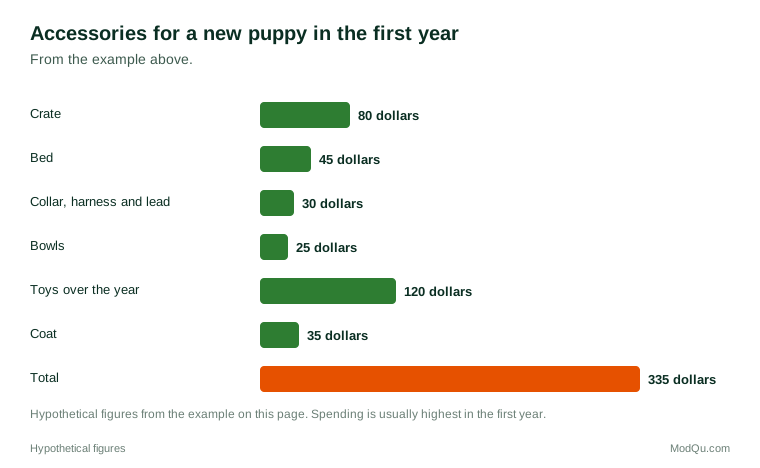
A new puppy owner spends 80 dollars on a crate, 45 on a bed, 30 on a collar, harness and lead, and 25 on bowls, a total of 180 dollars before the puppy arrives. Over the first year they buy toys costing about 10 dollars a month, 120 dollars in total, and a coat for 35 dollars. Their first-year accessory spending is 335 dollars.
Second-hand and homemade items
Not every owner buys new. Many pick up crates, carriers, cages and beds second-hand, through local selling groups or from friends whose pets have died or outgrown them. Others make toys from old T-shirts, cardboard boxes and tennis balls, or build cat shelves and rabbit runs themselves. Shelters often welcome donated blankets, towels and used accessories in good condition.
Example
A rabbit owner builds an indoor run from second-hand fencing panels and adds cardboard boxes as hiding places. They spend a fraction of the price of a new pen and change the layout every few weeks so the rabbits have something new to explore.
Pet tech
Technology for pets has grown. Common products include:
- GPS and Bluetooth trackers on collars;
- cameras that let owners see and talk to pets while away, some with treat dispensers;
- automatic feeders and water fountains;
- microchip cat flaps that only open for the owner's cat;
- activity monitors that track steps and sleep.
Owners like the reassurance these give, especially when pets are alone or prone to wandering. Common concerns are cost, battery life, subscription fees and whether the data is useful.
Safety, quality and waste
Some owners worry about product safety. Problems include toys that break into swallowable pieces, chemicals in cheap plastics, and poorly made harnesses or leads. Rules on pet product safety are often weaker than for children's toys and differ between countries.
Waste is another concern. Many pet toys are made of plastic and wear out quickly, and pet waste bags add to plastic waste. Some owners look for natural rubber, recycled materials, durable designs or compostable bags.
What people disagree about
Pet accessories raise a few debates:
- whether clothing and costumes benefit pets or mainly owners;
- whether some accessories, such as certain collars designed to correct behaviour, should be banned, as some countries have done;
- whether pet products should face stricter safety rules;
- how much spending on pets is reasonable.
Questions pet brands and retailers want answered include what owners buy, where they shop, how much they spend and what matters most when they choose.
Key terms
- EnrichmentActivities and items that keep a pet's mind and body active.
- Puzzle feederA toy that releases food when the pet solves it.
- HarnessStraps around a pet's chest and shoulders that a lead attaches to.
- Cat treeA structure with platforms and scratching posts for cats.
- Slow feederA bowl with ridges that makes a pet eat more slowly.
- Microchip cat flapA cat door that opens only for a registered microchip.
- Pet humanizationTreating pets as family members, including in spending.
- Subscription boxA regular delivery of products for a fee.
Full glossary: pet food manufacturing terms on EditingTests.com.
Pet toys and accessories vocabulary test
How well do you know the language of this topic? Try 8 quick questions. Your score is shown straight away and is not saved.
What the pet toys and accessories survey asks
This survey is part of ModQu's Pets and Animals survey. The pet toys and accessories part takes about five minutes and covers:
- What you bought for your pet in the last month.
- Where you usually buy pet toys and accessories.
- How much you spend on toys and accessories in a year.
- What matters most when you choose: safety, price, durability or looks.
- Whether you use pet technology such as trackers or cameras.
- Whether you look for eco-friendly pet products.
After that you can choose to continue with other short parts of the Pets and Animals survey, such as pet ownership or veterinary care, or stop.
Ready to take part?
Your answers help show what people really think and do. Results are only ever reported as totals; no one can see your individual answers.
Start the surveyQuestions about this survey
Who can take part?
Pet owners.
Do I have to give my name?
No. You may be asked for your age group, region and similar details so results can be broken down, but not your name. ModQu never asks for passwords, card numbers or account numbers.
How are the results used?
Answers are combined into totals and percentages and published in ModQu reports. Individual answers are never shown.
Is the vocabulary test part of the survey?
No. It is optional and separate, and your score is not stored.
How many toys does a pet need?
There is no set number. Many owners keep a few out and rotate the rest every week or two so toys stay interesting.
Does the survey ask about brands?
It may ask which kinds of products and shops you use. You can skip any question.