
Share what your pet eats
Tell us what type of food your pet eats, where you buy it and whether you have changed brands. Your answers are combined with other people's and reported only as totals.
Start the pet food and nutrition surveyAbout 5 minutes. No account needed. You can stop at any time.
What pet food and nutrition covers
Pet nutrition is about what animals eat and how diet affects their health. For dogs and cats, most owners buy commercially made food; owners of other pets buy pellets, seed mixes, hay, frozen food or live food depending on the species. The topic also covers treats, chews, supplements and the special diets a vet may prescribe.
Different animals have very different needs. Cats are obligate carnivores and need nutrients found in animal tissue. Dogs can digest a wider range of foods. Rabbits and guinea pigs need large amounts of hay, and guinea pigs need vitamin C from their diet. Reptiles and birds have needs specific to each species. This page describes how people feed their pets; it does not recommend any diet for a particular animal.
The main kinds of food
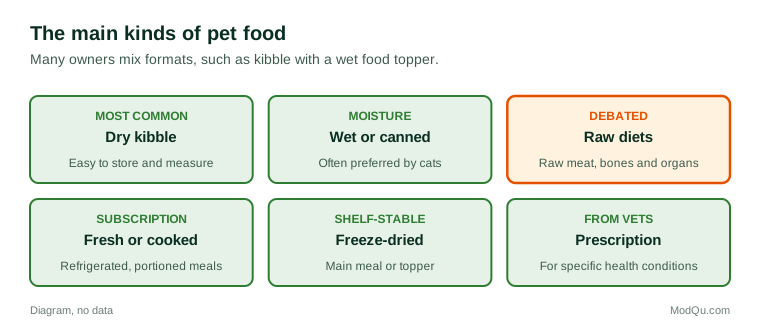
Pet foods are usually grouped by format:
- Dry food (kibble): the most common format for dogs and cats, easy to store and measure, and usually the least expensive per meal.
- Wet or canned food: higher in moisture, often preferred by cats and by owners of picky or older pets.
- Raw diets: raw meat, bones and organs, sold frozen or freeze-dried or made at home.
- Fresh or gently cooked food: refrigerated meals, often sold by subscription and portioned for one pet.
- Freeze-dried and air-dried food, used as a main diet or a topper.
- Prescription or therapeutic diets, sold through vets for conditions such as kidney, urinary or digestive problems.
- Home-cooked diets prepared by the owner, sometimes with a recipe from a veterinary nutritionist.
Many owners mix formats, for example kibble with a spoonful of wet food on top, or dry food during the week and fresh food as a treat.
How owners choose a food
Choosing a pet food involves many factors, and owners weigh them differently:
- The pet's age, size and health, with foods labelled for puppies, kittens, adults, seniors, large or small breeds and weight control.
- Advice from a vet, breeder, shelter or pet store staff.
- Ingredients, including grain-free, limited-ingredient and high-protein claims.
- Price per bag and per day.
- What the pet will eat, which can end the discussion for a picky animal.
- Brand trust, sometimes shaken by recalls.
Example
A cat owner reads that wet food helps cats take in more water and moves their cat from dry food to a mix of wet and dry. The cat likes the change, but the monthly food bill rises, and the owner starts buying wet food in cases of 24 to lower the price per can.
Reading a pet food label
Pet food labels carry a great deal of information, but much of it uses terms that owners find hard to compare. Key parts include:
- The product name, where words like "with", "dinner" or "flavour" signal different minimum amounts of the named ingredient under common labelling rules.
- The ingredient list, in order of weight before cooking.
- The guaranteed analysis, listing minimum protein and fat and maximum fibre and moisture.
- A nutritional adequacy statement, which says whether the food is complete and balanced for a life stage, based on nutrient profiles set by the Association of American Feed Control Officials (AAFCO), which Canadian makers also commonly follow.
- Feeding guidelines, which are a starting point rather than an exact amount.
Comparing two foods by protein percentage can mislead because wet foods contain much more water. Owners who compare foods on a dry-matter basis remove the water first.
Example (hypothetical figures)
A canned food lists 10% protein and 78% moisture. Its dry matter is 22% of the food, so protein on a dry-matter basis is 10 ÷ 22, or about 45%. A dry food lists 30% protein and 10% moisture; its dry matter is 90%, so dry-matter protein is 30 ÷ 90, or about 33%. The canned food is higher in protein once water is removed.
Premium, raw and fresh diets
Spending on pet food has moved toward premium products, a change often described as humanization: owners choosing food for their pets the way they choose food for themselves. Premium foods may highlight named meats, limited ingredients, local sourcing or the absence of certain grains or additives.
Raw feeding is among the most debated choices. Supporters point to the shiny coats and firm stools they see in their pets. Public health agencies, including the Public Health Agency of Canada, and many veterinary groups have warned that raw pet food can carry bacteria such as Salmonella and Listeria that can make both pets and people ill, especially young children, older adults and people with weak immune systems. Grain-free diets have also been studied for a possible link to a heart condition in some dogs, and that research has not reached a settled conclusion.
Where owners buy pet food
Pet food is sold through pet specialty stores, grocery stores, big-box retailers, farm and feed stores, vet clinics and online stores. Online subscriptions that deliver food on a schedule have become common because bags are heavy and owners do not want to run out. Some premium and fresh brands sell only online or only through specialty stores.
Example
A dog owner used to buy food at the grocery store. After switching to a premium brand sold only at pet stores, they start ordering online with auto-delivery every five weeks. When a delivery arrives late and the dog runs out, they buy a small bag at a pet store nearby, and consider keeping one spare bag at home.
Switching foods and recalls
Owners change pet food for many reasons: a price rise, a product being discontinued, a pet refusing to eat, a health change, advice from a vet, or a recall. Changes are often made gradually over several days, mixing old and new food, because sudden changes can upset digestion.
Recalls happen when a product may be contaminated, mislabelled or have the wrong nutrient levels. In Canada, the Canadian Food Inspection Agency posts recall notices for animal feed and some pet foods; in the United States, the Food and Drug Administration does so. A recall can lead owners to leave a brand for years. Questions businesses want answered include how loyal owners are to a brand, how often they switch, what makes them try a new food and which channels they use.
Key terms
- KibbleDry pet food made in small baked or extruded pieces.
- Complete and balancedA food that provides all required nutrients for a life stage on its own.
- Guaranteed analysisThe label section listing minimum protein and fat and maximum fibre and moisture.
- Dry-matter basisNutrient levels calculated after removing the water, so foods can be compared.
- Prescription dietA therapeutic food sold through vets for a health condition.
- Obligate carnivoreAn animal, such as a cat, that needs nutrients found in animal tissue.
- TopperA small amount of food added on top of a main meal.
- RecallRemoval of a product from sale because of a safety or quality problem.
Full glossary: pet food manufacturing terms on EditingTests.com.
Pet food and nutrition vocabulary test
How well do you know the language of this topic? Try 8 quick questions. Your score is shown straight away and is not saved.
What the pet food and nutrition survey asks
This survey is part of ModQu's Pets and Animals survey. The pet food and nutrition part takes about five minutes and covers:
- What type of food your pet eats: dry, wet, raw, fresh or a mix.
- Which brand or kind you buy, and why you chose it.
- Where you buy pet food, and whether you use a subscription.
- How much you spend on food and treats in a typical month.
- Whether you changed brands this year, and why.
- What you look for on a pet food label.
After that you can choose to continue with other short parts of the Pets and Animals survey, such as pet ownership or veterinary care, or stop.
Ready to take part?
Your answers help show what people really think and do. Results are only ever reported as totals; no one can see your individual answers.
Start the surveyQuestions about this survey
Who can take part?
Pet owners.
Do I have to give my name?
No. You may be asked for your age group, region and similar details so results can be broken down, but not your name. ModQu never asks for passwords, card numbers or account numbers.
How are the results used?
Answers are combined into totals and percentages and published in ModQu reports. Individual answers are never shown.
Is the vocabulary test part of the survey?
No. It is optional and separate, and your score is not stored.