
Share your festival and concert experiences
Tell us whether you attended a music festival this year, how much you spent in total and how far you travelled. Your answers are combined with other people's and reported only as totals.
Start the festivals and concerts surveyAbout 5 minutes. No account needed. You can stop at any time.
What festivals and concerts cover
This page covers live music events and the festivals built around them:
- Concerts by a single artist or a few acts, in clubs, theatres, arenas and stadiums.
- Multi-day music festivals, with many artists across several stages, often outdoors.
- Camping festivals, where people stay on site for the whole event.
- Genre festivals, such as jazz, folk, country, electronic, hip-hop, classical and blues festivals.
- Free community festivals, such as summer concert series in parks and cultural festivals.
- Cultural and multicultural festivals, with music, food and dance.
Theatre and other performing arts are covered on a separate page about live events and theatre.
How people choose events
People tend to choose concerts and festivals based on:
- The lineup: a favourite artist or a mix of acts they want to see.
- The experience: the setting, atmosphere, food and the chance to spend time with friends.
- Price, including tickets, travel and accommodation.
- Location and dates, and whether they can get time off.
- Who is going: many people go in groups and decide together.
- Past experience of the event or venue.
For concerts, the artist usually decides it. For festivals, many regular attendees buy tickets before the full lineup is announced because they trust the event itself.
Example
A group of four friends has attended the same folk festival every summer for six years. They buy early-bird passes in the winter, before any artists are announced. They say the lineup matters less than the setting, the familiar faces and the weekend together.
Tickets and passes
Festival and concert tickets come in several forms:
- Single-day and weekend passes for festivals.
- Early-bird tickets, sold at a lower price before the lineup is announced or well in advance.
- Tiered pricing, where prices rise as each batch of tickets sells out.
- VIP packages, with better viewing areas, separate washrooms, lounges or merchandise.
- Payment plans, which let buyers spread the cost.
- Dynamic pricing for some large concerts, where prices change with demand.
Large concert tours can sell out very quickly, and many fans compete for tickets during presales and the general sale. Resale prices for popular shows can be much higher than face value. Some provinces, including Ontario, have rules on ticket resale and fee disclosure.
The total cost of going
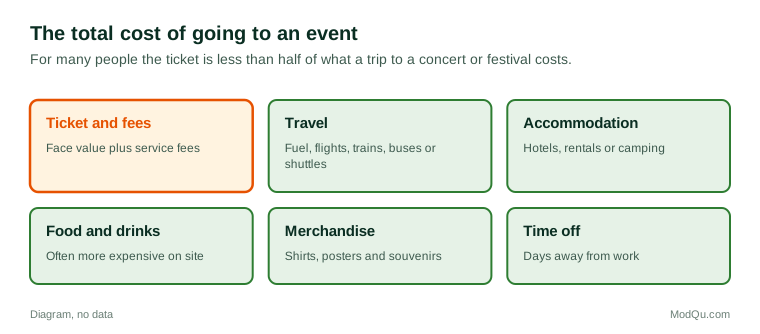
For many people, the ticket is only one part of the cost. Others include:
- Travel: fuel, flights, trains, buses or shuttles to the site.
- Accommodation: hotels, short-term rentals, or camping fees and gear.
- Food and drinks on site, often more expensive than outside.
- Merchandise, such as shirts and posters.
- Time off work.
Example (hypothetical figures)
A fan travels to another city to see a stadium concert. Their ticket costs $180 plus $32 in fees. A return bus ticket costs $95, one night in a shared hotel room costs $110 as their share, food costs $70 and a tour shirt costs $55. The total is $542, of which the ticket and fees are $212, or about 39%.
Travelling to events
Many people travel to festivals and concerts, from a short drive to another province or country. Some plan holidays around an event. Large events can bring many visitors to a town or city, filling hotels and restaurants, which is why local governments and tourism agencies often support them.
People travelling to events often mention:
- the cost and availability of accommodation, which can rise sharply for big events;
- transport home late at night, especially for events outside cities;
- shuttle buses from parking areas or transit stations;
- the risk of losing money if an event is cancelled because of weather, wildfire or other problems.
Example
A couple drives four hours to a three-day festival and camps on site. On the second day, a severe thunderstorm warning stops the music for several hours, and organizers ask campers to shelter in their cars. The show resumes that evening. They say the organizers handled it well because they sent clear updates through the festival's app.
Camping festivals and the on-site experience
At camping festivals, attendees stay on site for several days. The experience depends heavily on things that have little to do with music:
- clean washrooms and showers;
- water stations and shade;
- food options, including for special diets;
- quiet camping areas for families and people who want to sleep;
- phone charging and cell coverage;
- security, first aid and lost and found.
Reviews and word of mouth about these details can shape whether people return the next year.
Safety, health and accessibility
Large events need careful planning for safety. Concerns people raise include crowd crush at stages and exits, heat and dehydration, drug and alcohol use, harassment and sexual assault, theft and severe weather. Many festivals now have harm reduction services, medical tents, water stations, codes of conduct, and safe spaces or teams that attendees can approach for help.
Accessibility has also become a focus: accessible viewing platforms, accessible washrooms and campsites, sign language interpretation of performances, companion tickets for people who need support, and quiet areas.
Example
A festival-goer who uses a wheelchair checks the festival's accessibility page before buying a ticket. It lists an accessible viewing platform at the main stage, accessible washrooms near each stage and a free companion ticket. They contact the accessibility team in advance to reserve a parking spot near the gate and say the planning made the weekend possible.
What people disagree about
People disagree about whether dynamic pricing and high resale prices are fair, how much public money should support festivals, how to balance noise and traffic for nearby residents with the benefits of events, and how festivals should manage drugs and alcohol. Questions that venues, promoters and tourism groups want answered include whether people attended a music festival this year, how much they spent in total and how far they travelled.
Key terms
- LineupThe list of artists performing at a concert or festival.
- HeadlinerThe main act at a concert or festival, usually performing last.
- Early-bird ticketA lower-priced ticket sold well in advance.
- PresaleA ticket sale held before the general public sale, often for fan club members or card holders.
- VIP packageA higher-priced ticket with extra benefits such as better viewing or lounges.
- Harm reductionMeasures that reduce health risks without requiring people to stop a behaviour.
- WristbandA band worn to show a ticket or pass, often with a chip for entry and payments.
- Crowd managementPlanning and staffing to keep large crowds safe.
Full glossary: live events production terms on EditingTests.com.
Festivals and concerts vocabulary test
How well do you know the language of this topic? Try 8 quick questions. Your score is shown straight away and is not saved.
What the festivals and concerts survey asks
This survey is part of ModQu's Arts, Culture and Sport survey. The festivals and concerts part takes about five minutes and covers:
- Whether you attended a music festival or concert this year, and which kinds.
- How you chose the event, such as the lineup, the setting or friends going.
- How much you spent in total, including tickets, travel, accommodation and food.
- How far you travelled, and how you got there.
- What made the event good or bad, from washrooms to safety.
- Whether you plan to attend again, and what would stop you.
After that you can choose to continue with other short parts of the Arts, Culture and Sport survey, such as museums and galleries or live events and theatre, or stop.
Ready to take part?
Your answers help show what people really think and do. Results are only ever reported as totals; no one can see your individual answers.
Start the surveyQuestions about this survey
Who can take part?
Adults.
Do I have to give my name?
No. You may be asked for your age group, region and similar details so results can be broken down, but not your name. ModQu never asks for passwords, card numbers or account numbers.
How are the results used?
Answers are combined into totals and percentages and published in ModQu reports. Individual answers are never shown.
Is the vocabulary test part of the survey?
No. It is optional and separate, and your score is not stored.
What happens to my ticket if a festival is cancelled?
It depends on the event's terms and the reason for the cancellation. Many events refund or move tickets to a new date, but terms for weather and other events outside the organizer's control vary, so check them before buying.
Can I bring my own food and water to a festival?
Rules differ by event. Many festivals allow empty refillable water bottles and provide water stations, but limit outside food and drinks. The event's website usually lists what is allowed.