
Share how you spend time outdoors
Tell us which outdoor activities you do, how often you visit a park and what you spend on outdoor gear. Your answers are combined with other people's and reported only as totals.
Start the outdoor recreation surveyAbout 5 minutes. No account needed. You can stop at any time.
What outdoor recreation covers
Outdoor recreation means activities people do outside for enjoyment, exercise or relaxation. Common activities in Canada include:
- Walking and hiking, from neighbourhood walks to multi-day backcountry trips.
- Cycling, including road cycling, mountain biking and cycling on paved trails.
- Running, on roads, trails and tracks.
- Camping, in campgrounds, in recreational vehicles or in the backcountry.
- Paddling: canoeing, kayaking and stand-up paddleboarding.
- Fishing and hunting, which need provincial licences.
- Winter activities: cross-country skiing, snowshoeing, skating on outdoor rinks and ponds, and tobogganing.
- Wildlife watching and birdwatching.
- Picnics, beach days and nature photography.
- Gardening and community gardens.
Downhill skiing and golf are covered on a separate page about resort sports.
The parks people use
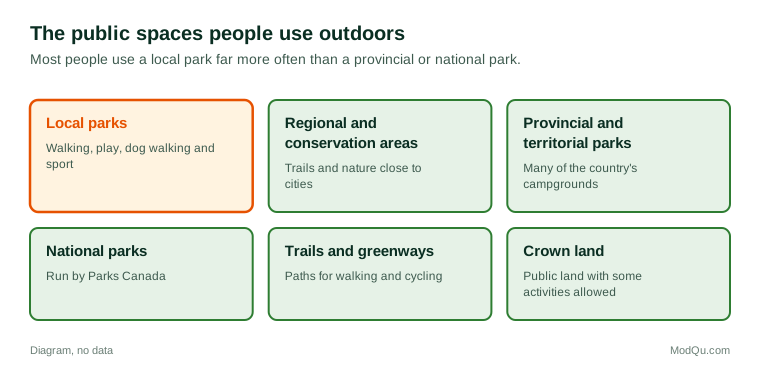
People use several kinds of public spaces for outdoor recreation:
- Local and city parks, which are used most often, for walking, play, dog walking and sport.
- Regional and conservation areas, often run by regional authorities.
- Provincial and territorial parks, which include many of the country's campgrounds.
- National parks, run by Parks Canada, along with national historic sites and marine conservation areas.
- Trails and greenways, including long-distance networks that connect trails across provinces.
- Crown land, public land where some activities such as backcountry camping are allowed under provincial rules.
Most people use a local park far more often than a national or provincial park, but many say a trip to a large park is a highlight of their year.
Example
A family living in a city apartment uses a neighbourhood park almost every day for the children's playground and the dog. Each summer, they also book three nights at a provincial park campground about two hours away. They say the daily park visits matter most for their routine, while the camping trip is what the children remember.
Camping and booking
Camping is popular, and demand for sites at popular parks can be high. Many provincial and national parks use online reservation systems that open months in advance, and the most popular sites and dates can book up within minutes. Camping options include:
- Front-country campgrounds, with sites people can drive to, washrooms and sometimes showers and electrical hook-ups.
- Backcountry camping, reached on foot or by canoe, with fewer facilities.
- Roofed accommodation, such as yurts, cabins and tent-cabins in some parks.
- Recreational vehicle (RV) camping, at public and private campgrounds.
Example
A couple who want a long weekend at a popular lakeside campground set an alarm for the morning reservations open. By the time they get through, their preferred loop is full. They book a weekday stay instead and find the campground quieter. They now plan most trips for weekdays.
Gear and spending
Outdoor recreation can cost very little, such as walking in a local park, or a great deal, such as a canoe trip with new equipment. Common spending includes:
- Clothing and footwear, such as rain jackets, hiking boots and base layers.
- Equipment: tents, sleeping bags, bikes, canoes, kayaks, skis and snowshoes.
- Park fees: day-use fees, parking, camping fees and annual passes.
- Travel: fuel, transport and food.
- Licences for fishing and hunting.
- Lessons and guided trips.
Many people reduce the cost by buying used gear, renting equipment, borrowing from friends, using library lending programs for items such as snowshoes, or joining clubs.
Example (hypothetical figures)
A beginner wants to try cross-country skiing. A new set of skis, boots and poles costs $450. A rental package costs $30 a day at the local ski club. If they ski 6 days in the first season, rental costs $180. They rent for the first season and buy a used set for $200 the next winter, once they know they enjoy it.
Who takes part, and barriers to access
Taking part in outdoor recreation varies by age, income, health, where people live and background. Barriers people describe include:
- Cost of gear, travel and fees.
- Transport: many parks are hard to reach without a car.
- Time, with work and family commitments.
- Not knowing where to go or how to start, or not feeling confident outdoors.
- Feeling unwelcome, which some newcomers, racialized people and others have described in outdoor spaces.
- Accessibility for people with disabilities, such as trail surfaces, washrooms and accessible campsites.
- Safety concerns, including wildlife, weather and getting lost.
Programs that aim to reduce barriers include free park entry for new citizens in some years, learn-to-camp programs, accessible trails and equipment, and community groups that lead outings for beginners.
Safety, crowding and protecting nature
Outdoor recreation has risks: changing weather, cold water, getting lost, wildlife encounters and injuries. Common safety advice includes checking the weather, telling someone the plan, carrying the right gear and following park rules. Search and rescue teams across Canada, many of them volunteers, respond to calls from people who are lost or injured.
Popular parks and trails can also become crowded, which can damage trails and habitats. Responses include reservation systems for day use, shuttle buses, limits on visitor numbers and messages about Leave No Trace principles, such as packing out garbage and staying on marked trails.
Example
A group of friends plans a day hike on a popular mountain trail. They find that the park now requires a free day-use reservation for the trailhead on weekends. They book a time slot, arrive early, and bring layers after reading that the weather can change quickly. On the way down, they pass a crowded parking lot of people turned away without reservations.
What people disagree about
People disagree about whether parks should charge more or less for entry and camping, how to share trails between hikers, cyclists and motorized users, how much to limit visitor numbers to protect nature, and how much public money should go to parks and trails. Questions that park agencies, outdoor retailers and tourism groups want answered include which outdoor activities people do, how often they visit a park and how much they spend on outdoor gear.
Key terms
- Front-country campingCamping at sites that can be reached by car, with facilities nearby.
- BackcountryRemote areas reached on foot, by canoe or by other non-motorized means.
- Day-use feeA charge for visiting a park during the day without staying overnight.
- Leave No TraceA set of principles for reducing the impact of outdoor activities on nature.
- Crown landLand owned by the provincial or federal government.
- Conservation areaA protected area managed to conserve nature and often open to recreation.
- PortageCarrying a canoe and gear over land between two bodies of water.
- Search and rescueTeams that find and help people who are lost or injured outdoors.
Full glossary: outdoor recreation management terms on EditingTests.com.
Outdoor recreation vocabulary test
How well do you know the language of this topic? Try 8 quick questions. Your score is shown straight away and is not saved.
What the outdoor recreation survey asks
This survey is part of ModQu's Arts, Culture and Sport survey. The outdoor recreation part takes about five minutes and covers:
- Which outdoor activities you do, and in which seasons.
- How often you visit local, provincial or national parks.
- How much you spent on outdoor gear, fees and trips this year.
- Whether you buy, rent or borrow equipment.
- What stops you from spending more time outdoors.
- What would improve parks and trails where you live.
After that you can choose to continue with other short parts of the Arts, Culture and Sport survey, such as museums and galleries or live events and theatre, or stop.
Ready to take part?
Your answers help show what people really think and do. Results are only ever reported as totals; no one can see your individual answers.
Start the surveyQuestions about this survey
Who can take part?
Adults.
Do I have to give my name?
No. You may be asked for your age group, region and similar details so results can be broken down, but not your name. ModQu never asks for passwords, card numbers or account numbers.
How are the results used?
Answers are combined into totals and percentages and published in ModQu reports. Individual answers are never shown.
Is the vocabulary test part of the survey?
No. It is optional and separate, and your score is not stored.
Do I need a pass to visit a national park?
Many Canadian national parks charge a daily admission fee or accept an annual pass. Some parks and sites are free, and rules can change, so check Parks Canada before visiting.
What should I take on a day hike?
Common advice includes water, food, extra layers, rain gear, a map, a light, a first aid kit and a way to call for help, and telling someone your plan and expected return time.