
Tell us about insuring your pet
Tell us whether your pet is insured, why you chose it or not and how your claims went. Your answers are combined with other people's and reported only as totals.
Start the pet insurance surveyAbout 5 minutes. No account needed. You can stop at any time.
Why pet insurance exists
Veterinary medicine now offers many of the same treatments as human medicine: imaging, surgery, cancer treatment, specialist referrals and emergency hospitals open around the clock. These services cost money, and unlike human health care in Canada, there is no public plan for pets. Owners pay the full cost themselves unless they have insurance.
Pet insurance is a way to turn an unpredictable large bill into a predictable monthly cost. It is most common for dogs and cats, though some insurers cover other animals.
The main types of plan
Plans usually fall into a few groups:
- Accident-only plans, which cover injuries such as broken bones, swallowed objects and bite wounds.
- Accident and illness plans, the most common type, which add illnesses such as infections, cancer, diabetes and digestive problems.
- Wellness or preventive add-ons, which pay set amounts toward routine care such as vaccines, check-ups, dental cleaning and parasite prevention.
Wellness add-ons are budgeting tools more than insurance: they cover expected costs rather than unexpected ones.
Example
A family with a new puppy buys an accident and illness plan. Eight months later the puppy swallows a sock and needs surgery. The bill is several thousand dollars. After the deductible and co-pay, the insurer reimburses most of it, and the family says the policy paid for itself in the first year.
How reimbursement works
Most pet insurance pays the owner back after the vet has been paid, though some insurers can pay the clinic directly. Three settings determine how much is paid:
- Deductible: the amount the owner pays first, either per year or per condition.
- Reimbursement rate: the share of eligible costs the insurer pays after the deductible, often 70% to 90%.
- Annual or lifetime limit: the most the plan will pay in a year or over the pet's life, or per condition.
Example (hypothetical figures)
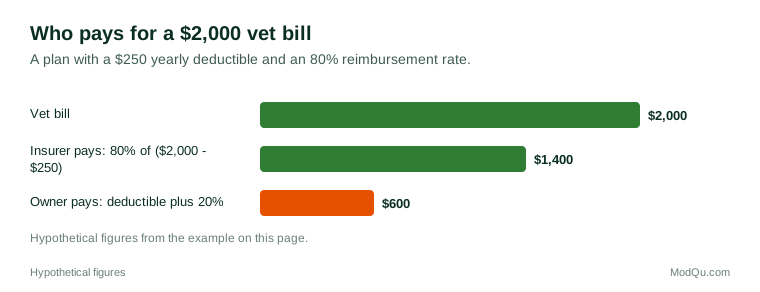
A cat needs treatment costing $2,000. The plan has a $250 yearly deductible and an 80% reimbursement rate. The insurer pays 80% of ($2,000 - $250), which is $1,400. The owner pays $600 in total.
Pre-existing conditions and waiting periods
Pet insurance generally excludes conditions that showed signs before coverage started or during waiting periods. Waiting periods are often short for accidents and longer for illnesses and some orthopaedic conditions. Many insurers ask for the pet's medical records before paying the first claim.
Owners who buy insurance when their pet is young usually face fewer exclusions. Owners who wait until a pet is older or already unwell may find important conditions excluded.
Breed, age and price
Premiums depend on:
- species, breed and size, since some breeds are prone to particular conditions;
- age, with premiums usually rising as the pet ages;
- where the owner lives, since vet costs vary by city and region;
- deductible, reimbursement rate and limits chosen.
Rising premiums as pets age are a common reason owners cancel, sometimes just as the pet becomes more likely to need care.
Common exclusions
Exclusions differ between insurers, but often include:
- pre-existing conditions;
- routine care, unless a wellness add-on is bought;
- breeding and pregnancy costs;
- cosmetic procedures;
- some hereditary or congenital conditions on basic plans;
- dental illness on some plans;
- behavioural treatment on some plans.
Reading the exclusions closely is one of the most common pieces of advice owners give each other.
Why many owners do not buy it
Owners who choose not to insure give reasons such as:
- the monthly cost;
- a belief that they could pay a large bill from savings;
- bad experiences with refused claims, their own or others';
- confusion about what is covered;
- an older pet with existing conditions that would be excluded;
- a plan to put money aside each month instead.
Some owners choose a dedicated savings account for vet costs. This works well if a large bill comes after enough has been saved, and less well if it comes early.
Example
A dog owner decides to save $60 a month in a "vet fund" instead of buying insurance. In the third year, the dog needs surgery costing much more than the fund holds. The owner pays the balance with a credit card and later says they would choose insurance for their next dog.
The cost of care and hard decisions
When owners face a large bill without insurance, they may have to choose between treatment, a less expensive option or euthanasia. Veterinarians report that cost often shapes these decisions. Insured owners say insurance lets them decide based on what is best for the animal. This is one of the main reasons veterinarians often recommend insurance to new owners.
Comparing plans
Plans that look similar can pay out very differently. Owners who compare carefully tend to check:
- whether the deductible applies once a year or separately to each condition;
- whether limits apply per year, per condition or for the pet's lifetime;
- whether exam fees, prescription food and alternative therapies are covered;
- how the insurer treats conditions affecting both sides of the body, such as knee problems in dogs;
- whether premiums rise automatically with age or only when the insurer changes rates;
- how long claims usually take to pay.
Comparison sites help with prices, but the details above usually need the policy wording itself.
How people buy pet insurance
Owners buy pet insurance online directly from insurers, through comparison sites, through offers at vet clinics, through breeders and shelters that provide a few weeks of free coverage, and as an employee benefit at some workplaces. Many first hear about insurance at their pet's first vet visit.
Claims and satisfaction
Claim experiences vary. Owners value fast payment, simple online claims and clear explanations when something is not covered. Frustrations include requests for long medical histories, slow payment and claims refused for pre-existing conditions the owner did not know about. How the first claim is handled often decides whether an owner keeps the policy.
Key terms
- Accident and illness planPet insurance covering injuries and illnesses.
- Wellness planAn add-on that pays set amounts toward routine care.
- DeductibleThe amount the owner pays before the insurer starts paying.
- Reimbursement rateThe share of eligible costs the insurer pays after the deductible.
- Annual limitThe most the plan pays in one year.
- Waiting periodThe time after buying a policy before certain conditions are covered.
- Pre-existing conditionA health problem that showed signs before coverage started.
- Hereditary conditionA health problem passed down through a breed or family line.
Full glossary: personal lines insurance terms on EditingTests.com.
Pet insurance vocabulary test
How well do you know the language of this topic? Try 8 quick questions. Your score is shown straight away and is not saved.
What the pet insurance survey asks
This survey is part of ModQu's Insurance survey. The pet insurance part takes about five minutes and covers:
- Whether your pets are insured, and what type of plan you have.
- Why you chose to insure, or why not.
- How you bought the policy and how you compared options.
- How your premium has changed as your pet has aged.
- Your experience of any claim, including refusals.
- How you would pay for a large unexpected vet bill.
After that you can choose to continue with other short parts of the Insurance survey, such as car insurance or home and tenant insurance, or stop.
Ready to take part?
Your answers help show what people really think and do. Results are only ever reported as totals; no one can see your individual answers.
Start the surveyQuestions about this survey
Who can take part?
Dog and cat owners.
Do I have to give my name?
No. You may be asked for your age group, region and similar details so results can be broken down, but not your name. ModQu never asks for passwords, card numbers or account numbers.
How are the results used?
Answers are combined into totals and percentages and published in ModQu reports. Individual answers are never shown.
Is the vocabulary test part of the survey?
No. It is optional and separate, and your score is not stored.