
Share your experience of meal kits and ready meals
Tell us whether you have used a meal kit service, why you stopped or continued, and how often you buy ready meals. Your answers are combined with other people's and reported only as totals.
Start the meal kits and prepared meals surveyAbout 5 minutes. No account needed. You can stop at any time.
What the options are
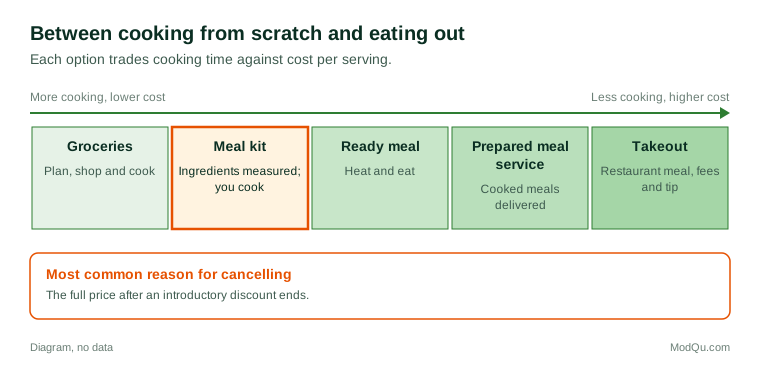
"Meal kits and prepared meals" covers several kinds of product that sit between cooking from scratch and eating out:
- Meal kit subscriptions: a weekly box delivered to the door with recipes and pre-measured ingredients, which the customer cooks. Customers choose meals from a menu each week and can usually skip weeks or cancel.
- Prepared meal subscriptions: fully cooked meals delivered chilled or frozen, needing only reheating. Some focus on particular diets, such as high-protein, vegetarian or lower-carbohydrate meals.
- Grocery store meal kits: kits sold in stores without a subscription.
- Grocery store ready meals: rotisserie chicken, salads, pasta dishes, sushi, hot food counters and heat-and-eat meals.
- Frozen meals: from single-serve dinners to family-size dishes.
- Home-delivered meals for older adults, often run by community groups, which provide meals to people who find cooking hard.
This page focuses on meal kits and prepared or ready meals. Restaurant takeout and delivery apps are covered in other topics.
Why people use them
People give several reasons for using meal kits and prepared meals:
- Saving time on planning, shopping and, for ready meals, cooking.
- Reducing decisions: not having to decide what to make each night.
- Learning to cook: kits teach recipes and techniques.
- Variety: trying dishes they would not otherwise make.
- Portion control and diets: meals with set portions and nutrition information.
- Less food waste: buying only what a recipe needs.
- Gifts and trial offers: many people first try a meal kit through a discount or a gift.
Example
A couple who both work long hours try a meal kit with a large first-box discount. For two months it ends their nightly "what's for dinner" discussion and they enjoy cooking together. When the discount ends and the full price appears, they cut back to every other week, then cancel, but keep making several of the recipes from the cards they saved.
What they cost
Meal kits and prepared meals usually cost more per serving than cooking the same dish from groceries, and less than most restaurant meals. Shipping fees, premium meal choices and add-ons can raise the cost.
Example (hypothetical figures)
A household compares one dinner for two four ways. Cooking a similar recipe from groceries costs about $12. A meal kit costs $11.50 per serving, or $23 for two, plus a share of a $10.99 weekly shipping fee spread over three meals, about $3.66, for $26.66. A grocery store ready meal for two costs $18. A takeout meal for two costs $45 with fees and tip. The meal kit costs about $14.66 more than cooking from groceries and about $18.34 less than takeout.
Price is the most common reason people give for stopping. Discounts are often large for new customers, so the regular price can come as a surprise. Questions that businesses want answered here include how many people have tried a meal kit, how many still use one, and what would make them continue.
Packaging and food waste
Meal kits come with a lot of packaging: boxes, insulated liners, ice packs and small bags or containers for each ingredient. Many services use recyclable or compostable materials, and some take packaging back, but customers often mention the packaging as a drawback.
On the other hand, some research has suggested that pre-portioned ingredients can reduce food waste at home, because customers buy only what they need. Whether meal kits have a lower or higher overall environmental impact than shopping for groceries depends on the meal, the packaging, delivery and how much food would otherwise have been thrown away.
Example
A customer likes their meal kit but finds the recycling bin full every week. They switch to a service that takes back insulated liners and ice packs, and later to buying store-made kits at their grocery store, which have less packaging and no delivery.
Ready meals and frozen meals
Ready and frozen meals have been around much longer than meal kit subscriptions, and many more households use them. Grocery stores have expanded ready-meal sections, hot food counters and store-made dishes, often at prices close to or below takeout.
People use ready meals for:
- weeknight dinners when time is short;
- lunches at work;
- people living alone who find cooking for one hard;
- older adults and people with health conditions that make cooking difficult;
- students and people without a full kitchen.
Common concerns about ready meals include sodium, portion sizes, cost compared with cooking, and taste. Many people mix approaches: a ready rotisserie chicken with a home-made salad, or a frozen meal for lunch and a cooked dinner.
Why people stop or continue
Many meal kit customers cancel within months. Reasons people give for stopping include:
- the full price after a trial offer;
- recipes that take longer than promised;
- repetitive menus;
- portions too small or too large;
- packaging;
- missed or late deliveries and damaged items;
- forgetting to skip a week and receiving a box they did not want;
- having learned the recipes and no longer needing the kit.
People who keep using meal kits often say it fits a particular stage of life, such as a busy period with young children, or that the time saved is worth the extra cost. Some use kits only occasionally, for example during busy months.
Example
A parent of a newborn signs up for a prepared meal service for three months. The fully cooked meals mean the household eats properly during a tiring period without cooking. When the baby is older, they cancel and go back to cooking, but say they would use the service again in a similar time.
Trends and what people disagree about
The meal kit industry grew quickly, especially during the COVID-19 pandemic, when people ate at home more. Growth slowed afterwards, and some services closed or merged. Grocery stores and prepared meal services have competed more strongly, and many services now offer ready-to-heat meals alongside kits.
People disagree about whether meal kits are worth the cost, whether their packaging is a serious problem or offset by less food waste, and whether ready meals are a healthy option or too processed. Subscription practices are also debated, such as how easy it should be to skip a week or cancel.
Key terms
- Meal kitA box of pre-measured ingredients with recipes for the customer to cook.
- Prepared mealA fully cooked meal that only needs reheating.
- SubscriptionA recurring order that continues until the customer skips or cancels.
- Introductory offerA discount for new customers, often on the first boxes.
- Ready mealA pre-made meal sold in grocery stores, chilled, hot or frozen.
- Cost per servingThe total cost of a meal divided by the number of portions.
- Insulated linerPackaging that keeps a delivered box cold.
- Food wasteEdible food that is thrown away.
Full glossary: food science terms on EditingTests.com.
Meal kits and prepared meals vocabulary test
How well do you know the language of this topic? Try 8 quick questions. Your score is shown straight away and is not saved.
What the meal kits and prepared meals survey asks
This survey is part of ModQu's Food and Drink survey. The meal kits and prepared meals part takes about five minutes and covers:
- Whether you have used a meal kit or prepared meal service, and which kind.
- Why you started, and why you stopped or continued.
- How often you buy ready or frozen meals from grocery stores.
- What you spend on meal kits and ready meals in a typical month.
- How you feel about the packaging and food waste.
- What would make you use them more or less.
After that you can choose to continue with other short parts of the Food and Drink survey, such as eating habits or coffee, tea and beverages, or stop.
Ready to take part?
Your answers help show what people really think and do. Results are only ever reported as totals; no one can see your individual answers.
Start the surveyQuestions about this survey
Who can take part?
Adults.
Do I have to give my name?
No. You may be asked for your age group, region and similar details so results can be broken down, but not your name. ModQu never asks for passwords, card numbers or account numbers.
How are the results used?
Answers are combined into totals and percentages and published in ModQu reports. Individual answers are never shown.
Is the vocabulary test part of the survey?
No. It is optional and separate, and your score is not stored.
I have never used a meal kit. Can I take part?
Yes. The survey asks non-users about ready meals and what would make them try a meal kit.