
Share your experience of vet care
Tell us how often your pet sees a vet, what it costs and how you choose a clinic. Your answers are combined with other people's and reported only as totals.
Start the veterinary care surveyAbout 5 minutes. No account needed. You can stop at any time.
What veterinary care covers
Veterinary care is health care for animals provided by licensed veterinarians and the teams who work with them. For household pets it usually includes:
- Preventive care: yearly or twice-yearly check-ups, vaccinations, parasite prevention, and advice on diet and weight.
- Spaying, neutering and microchipping, usually done when an animal is young.
- Dental care, from checks during an exam to cleaning and tooth removal under anaesthetic.
- Diagnosis and treatment of illness and injury, including blood tests, X-rays and ultrasound.
- Surgery, from routine procedures to complex operations.
- Emergency and after-hours care, often at separate emergency hospitals.
- Specialist care, such as cardiology, oncology, dermatology or orthopaedics, by referral.
- End-of-life care, including palliative care and euthanasia.
In Canada, veterinarians are licensed by provincial regulatory bodies, and in the United States by state boards. A clinic team usually includes registered veterinary technicians (called veterinary technologists in some provinces), assistants and reception staff. This page describes how people use vet care; it does not give medical advice about any animal.
Kinds of clinic
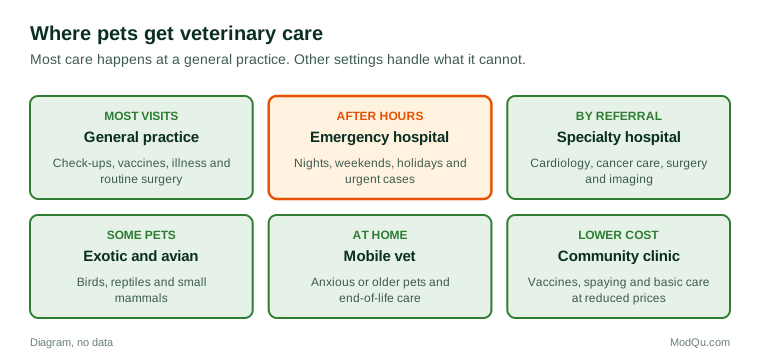
Pet owners can choose among several kinds of practice:
- General or family practices that see dogs, cats and sometimes small mammals for most routine needs.
- Emergency hospitals open overnight, on weekends and on holidays.
- Specialty and referral hospitals with board-certified specialists and advanced equipment.
- Exotic and avian practices for birds, reptiles and less common pets.
- Mobile vets who visit the home, often used for anxious animals, older pets and end-of-life care.
- Low-cost and community clinics, sometimes run by humane societies, offering vaccines, spay and neuter surgery or basic care at reduced prices.
- Virtual consultations by phone or video for questions that do not need a physical exam.
Ownership of clinics has also changed. Many clinics that were once owned by the vets who worked in them are now part of larger groups, which some owners notice through changes in prices, booking systems or staff.
How owners choose a vet
Owners often pick a first vet because the clinic is close to home or was recommended by a friend, a breeder or a shelter. Over time, other factors matter:
- Trust in the veterinarian and being able to see the same vet each visit.
- Price, and whether costs are explained before treatment.
- Availability: how soon an appointment can be booked and whether the clinic takes new patients.
- Experience with the animal, especially for exotic pets.
- Hours and location, including evening and weekend appointments.
- How the pet copes, since some animals are calmer at clinics that offer separate cat waiting rooms or low-stress handling.
Example
A cat owner moves to a new town and calls three clinics. Two are not taking new patients for at least a month. The third can see the cat next week but is a 25-minute drive away. The owner books there, and later switches to a closer clinic once it starts accepting new patients.
How often pets see a vet
Many vets recommend a check-up at least once a year, and more often for young and senior animals. In practice, visit frequency varies a great deal. Dogs tend to see a vet more often than cats, partly because cats are harder to transport and often hide signs of illness. Owners of small mammals, birds and reptiles may visit only when something seems wrong, sometimes because finding a vet who treats those animals is difficult.
Cost, the stress of the trip for the animal, and a belief that an indoor or young pet does not need regular visits are common reasons people give for skipping check-ups.
What vet care costs and how people pay
Prices are set by each clinic and vary by region, type of practice and the animal's size. Common charges include an exam fee, vaccines, medications, tests, anaesthesia, surgery and hospital stays. Emergency hospitals usually charge more than daytime clinics because they are staffed around the clock.
People pay for vet care in several ways:
- Out of pocket, from savings or a monthly budget.
- Pet insurance, which reimburses part of eligible costs after a deductible, depending on the policy.
- Wellness plans sold by clinics, which spread the cost of routine care over monthly payments.
- Credit cards, payment plans or third-party financing for large bills.
- Help from charities or crowdfunding in some cases.
Example (hypothetical figures)
A dog needs surgery estimated at $4,000. The owner has a policy that pays 80% of eligible costs after a $500 yearly deductible. The insurer pays 80% of $3,500, which is $2,800, and the owner pays the remaining $1,200 ($500 deductible plus $700). Without the policy, the owner would have paid the full $4,000 and says they might have looked for a less costly option.
When cost affects care
Rising vet bills are one of the most discussed issues in pet ownership. When owners face a large estimate, they may ask for a step-by-step plan, choose a less intensive treatment, seek a second opinion, travel to a lower-cost clinic, or delay care. Vets also describe the strain of working with owners who cannot afford recommended treatment, and the profession has discussed ways to offer a range of care options at different prices.
Example
An older cat is diagnosed with a kidney problem. The vet offers two plans: daily medication and a special diet with checks every three months, or a referral to a specialist for further tests. The owner chooses the first plan because the specialist hospital is two hours away and the cat becomes very stressed in the car.
Trends and points of debate
Several changes are visible in vet care: more owners buying pet insurance, more emergency and specialty hospitals, more virtual consultations, and shortages of veterinarians and technicians in some areas. Owners and vets disagree about how prices should be shown, whether clinics should post fee lists, how much pressure owners feel to accept the most complete treatment, and whether virtual care can replace an in-person exam. Questions businesses want answered include how often pets see a vet, how owners pay, how many have insurance and how often cost stops people from getting care.
Example
A dog owner notices their dog limping on a Sunday. Instead of going to the emergency hospital, they book a video call through their insurer's app. The vet on the call suggests rest and a regular clinic visit on Monday, which the owner prefers to a weekend emergency fee.
Key terms
- Veterinary technicianA trained, registered professional who assists vets with nursing, tests and procedures.
- Wellness planA clinic plan that spreads the cost of routine care into monthly payments.
- DeductibleThe amount an owner pays before insurance starts paying.
- ReferralSending a pet to a specialist for further tests or treatment.
- EstimateA written list of expected costs given before treatment.
- TriageDeciding which emergency cases are seen first based on how urgent they are.
- Preventive careCheck-ups, vaccines and parasite control meant to stop problems early.
- EuthanasiaEnding an animal's life humanely to relieve suffering.
Full glossary: veterinary medicine terms on EditingTests.com.
Veterinary care vocabulary test
How well do you know the language of this topic? Try 8 quick questions. Your score is shown straight away and is not saved.
What the veterinary care survey asks
This survey is part of ModQu's Pets and Animals survey. The veterinary care part takes about five minutes and covers:
- When your pet last saw a vet, and why.
- How you chose your current clinic, and whether you have switched.
- What you paid for vet care in the past year, roughly.
- Whether you have pet insurance or a wellness plan.
- Whether cost has ever stopped or delayed vet care for your pet.
- What would make vet care better for you and your pet.
After that you can choose to continue with other short parts of the Pets and Animals survey, such as pet ownership or choosing a pet, or stop.
Ready to take part?
Your answers help show what people really think and do. Results are only ever reported as totals; no one can see your individual answers.
Start the surveyQuestions about this survey
Who can take part?
Pet owners.
Do I have to give my name?
No. You may be asked for your age group, region and similar details so results can be broken down, but not your name. ModQu never asks for passwords, card numbers or account numbers.
How are the results used?
Answers are combined into totals and percentages and published in ModQu reports. Individual answers are never shown.
Is the vocabulary test part of the survey?
No. It is optional and separate, and your score is not stored.