
Share how you support animal charities
Tell us whether you have given to an animal charity in the last year, which cause it was for and how you gave. Your answers are combined with other people's and reported only as totals.
Start the giving to animal charities surveyAbout 5 minutes. No account needed. You can stop at any time.
What animal charities do
Animal charities work to protect animals, care for them or change how people treat them. They range from a few volunteers fostering kittens to large national and international organizations. Most fall into one or more of these groups:
- Shelters and rescue groups that take in lost, abandoned or surrendered pets, care for them and find them new homes.
- Veterinary charities that provide low-cost or free care for the pets of people on low incomes.
- Wildlife rescue and rehabilitation centres that treat injured or orphaned wild animals and return them to the wild.
- Conservation groups that protect endangered species and their habitats.
- Farm animal welfare groups that work to improve conditions for animals raised for food.
- Working and service animal charities, such as those that train guide dogs or care for retired working animals.
- Advocacy and campaigning groups that seek changes in law, policy and company practice.
- Spay and neuter programmes that reduce the number of unwanted animals, including street dogs and feral cats.
In some countries, a national animal welfare society also has legal powers to investigate cruelty and bring cases to court.
Why people give to animal causes
People give to animal charities for reasons that are often personal:
- Their own pets: many givers have adopted from a shelter or lost a pet and want to help other animals.
- Concern about cruelty and suffering: news stories and images of neglected animals often prompt gifts.
- Love of wildlife and nature: giving to protect a species or habitat they care about.
- Food and ethics: some givers support farm animal welfare because of their own food choices.
- Local connection: supporting the shelter in their town or a wildlife centre they have visited.
Example
A family adopts an older dog from a local rescue group. Each year on the anniversary of the adoption they give to the group, and they buy food from the group's online wish list at holiday time. When the dog dies, they ask friends to give to the same group in its memory.
How people give
Animal charities raise money in many ways, and givers often use more than one:
- one-off donations online, by card, at events or in collection tins;
- regular monthly gifts, sometimes linked to "sponsoring" a named animal that cannot be rehomed;
- adoption fees when taking a pet home;
- buying items from shelter wish lists, such as food, blankets and cat litter;
- charity shops and online stores that sell goods for the cause;
- gifts in wills, which are an important source of income for many animal charities;
- fundraising events such as sponsored dog walks.
Many people also give time. Shelters rely on volunteers to walk dogs, clean, foster animals at home, drive animals to vets and help at events.
Example (hypothetical figures)
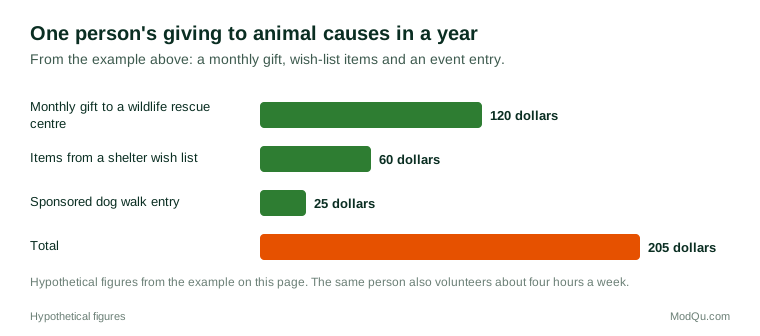
A retired teacher gives 10 dollars a month to a wildlife rescue centre, 120 dollars a year in total. They also buy 60 dollars of items from a shelter's wish list and pay 25 dollars to enter a sponsored dog walk. Their total giving to animal causes for the year is 205 dollars, plus about four hours a week of volunteering at the shelter.
How people choose a charity
Some people give to whichever animal charity asks first. Others compare carefully. Common things givers look at include:
- whether the charity works locally, nationally or internationally;
- what kind of animals it helps;
- whether it rehomes animals, and its policy on euthanasia;
- how it spends money, including the share on animal care, campaigns and fundraising;
- whether it is registered with the national charity regulator or a public register;
- reviews and word of mouth from people who have adopted or volunteered there.
Some independent groups assess animal charities on cost-effectiveness, often comparing how much suffering a gift might prevent. Their conclusions sometimes differ from the causes that attract the most public giving, which tend to be pets and well-known wild species.
Pets, wildlife and farm animals
Giving to animal causes is not spread evenly. In many countries, charities for cats and dogs receive a large share of public giving. Well-known wild species, such as big cats, elephants, whales and pandas, also attract strong support. Farm animals, fish and insects, which exist in much larger numbers, receive a smaller share.
People explain this in different ways. Pets are close to people's daily lives, and well-known wild species are familiar from films and documentaries. Some givers deliberately choose less popular causes because they think their money will go further there.
Example
A student who stopped eating meat decides to give to a group that campaigns for better conditions for farmed chickens. Their parents, who give to the local dog shelter, ask why. The student explains that far more chickens are affected, and the parents decide to keep giving to the shelter but add a small gift to the student's chosen group.
Trust and transparency
Animal charities face the same trust questions as other charities, plus some of their own. Givers ask:
- how animals are cared for and what happens to those that cannot be rehomed;
- whether "sanctuaries" offering animal encounters for visitors put welfare first;
- whether appeals that show suffering animals are honest and how the images were obtained;
- whether a charity's campaign work matches what supporters expect.
Many givers now look for published accounts, inspection reports and clear policies. Visiting a shelter or centre in person is another way people check before giving.
What people disagree about
Animal giving raises some strong disagreements:
- whether to focus on pets, wildlife or farm animals;
- whether shelters should be "no-kill" and how this affects how many animals they can take in;
- whether conservation money should go to rare species or whole habitats;
- whether campaigning for law changes is a good use of donations;
- how animal charities should present suffering in their adverts.
Questions charities and researchers want answered include who gives to animal causes, which causes they choose, how they prefer to give and what makes them trust a charity.
Key terms
- Animal shelterA place that takes in lost, abandoned or surrendered animals and finds them homes.
- Rescue groupA charity, often volunteer-run, that saves animals and rehomes them, sometimes through foster homes.
- RehabilitationTreating an injured or orphaned wild animal so it can return to the wild.
- FosteringCaring for a shelter animal at home until it is adopted.
- Adoption feeA charge paid when taking an animal home from a shelter.
- Wish listA list of items a shelter needs donated, such as food and bedding.
- Gift in a willA donation left to a charity after a person's death.
- Spay and neuter programmeA scheme that sterilizes animals to reduce unwanted litters.
Full glossary: charitable giving management terms on EditingTests.com.
Giving to animal charities vocabulary test
How well do you know the language of this topic? Try 8 quick questions. Your score is shown straight away and is not saved.
What the giving to animal charities survey asks
This survey is part of ModQu's Charities and Giving survey. The giving to animal charities part takes about five minutes and covers:
- Whether you have given to an animal charity in the last year, and how often.
- Which causes you supported: pets, wildlife, farm animals or others.
- How you gave: money, items, adoption fees, events or volunteering.
- How you chose the charity and what you checked.
- How much you trust animal charities to use money well.
- Whether you would leave a gift to an animal charity in your will.
After that you can choose to continue with other short parts of the Charities and Giving survey, such as donating to charity or volunteering, or stop.
Ready to take part?
Your answers help show what people really think and do. Results are only ever reported as totals; no one can see your individual answers.
Start the surveyQuestions about this survey
Who can take part?
Adults.
Do I have to give my name?
No. You may be asked for your age group, region and similar details so results can be broken down, but not your name. ModQu never asks for passwords, card numbers or account numbers.
How are the results used?
Answers are combined into totals and percentages and published in ModQu reports. Individual answers are never shown.
Is the vocabulary test part of the survey?
No. It is optional and separate, and your score is not stored.